- 1Movie Overview
- 2Direction & Cinematography
- 3Cast & Performances
- 4Character Psychology
- 5Themes & Emotional Depth
- 6Memorable Scenes & Dialogue
- 7The Ending — Does It Deliver?
- 8What Works
- 9Honest Criticism
- 10How It Compares
- 11Legacy & Cultural Impact
- 12Behind the Scenes
- 13Who Should Watch It?
- 14Final Verdict

- Genre: Romance, Drama, Comedy
- Director: Jon García
- Year: 2018
- Runtime: 1h 30m
- Language: English (EN)
- TMDB Rating: ⭐ 5.7/10
Movie Overview
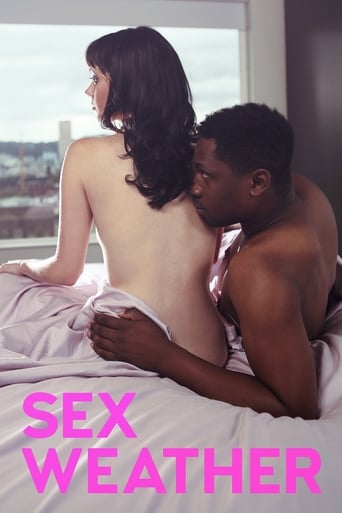
Sex Weather opens on a scene familiar to anyone who's ever made a questionable decision at a wrap party. Filmmaker Darrel (Al'Jaleel McGhee) wakes up next to Sydney (Amber Stonebraker), a crew member from his just-completed movie. The awkwardness is immediate and palpable. What follows is not a plot in the traditional sense, but a feature-length conversation that unfolds over the course of a single day, almost entirely within the confines of Darrel's apartment.
They talk about the night before, sure, but that's just the entry point. The conversation quickly spirals out to encompass their shared history, tepid reviews of Darrel's film, creative anxieties, and the ghost of a relationship that never quite materialized years ago. It’s a slow, methodical excavation of past wounds and future possibilities, punctuated by interruptions from the outside world in the form of phone calls and text messages that threaten to derail their fragile bubble.
This isn't a story about grand events. It's about the small shifts in power and intimacy that happen when two people are forced to be completely honest with each other, perhaps for the first time.
I kept waiting for a contrived third-act complication, and it thankfully never came. The drama is entirely self-contained.
Direction & Cinematography
With Sex Weather, director Jon García sets himself a difficult task: make a 90-minute conversation in a single location feel dynamic. For the most part, he succeeds. The direction is unobtrusive by necessity, relying on a simple, effective visual grammar. García and his cinematographer, John-Michael S. Lowe, use the cramped space of the bedroom to their advantage, often framing one character in the foreground while the other is slightly out of focus in the background, mirroring their emotional distance.
There’s a particular shot early on where the camera holds on Sydney’s face as she listens to Darrel ramble on, and you can see the entire history of their dynamic play out in her micro-expressions—annoyance, affection, disappointment. It’s a patient choice that pays off. Personally, I think the film’s pacing is its strongest directorial asset; it mirrors the natural rhythms of a long, difficult talk, complete with lulls, sudden bursts of energy, and moments of quiet reflection.
But that same patience can sometimes border on inertia. A few scenes, particularly around the midpoint, felt like they were circling the same point a few too many times. The tone remains consistent, but I'll admit I found my attention drifting during a monologue about the nature of art that felt a little too on-the-nose.
Cast & Performances
The performances in Sex Weather are everything; if they didn't work, the entire film would collapse. Al'Jaleel McGhee plays Darrel with a convincing mix of artistic ego and deep-seated insecurity. He physically deflects, turning away or busying himself with making coffee whenever the conversation gets too personal. It's a portrait of a man who is more comfortable discussing the theory of connection than actually connecting.
Amber Stonebraker, as Sydney, is the film's anchor. What surprised me most was her ability to convey active, frustrated listening. She’s not just waiting for her turn to speak. You can see her processing Darrel’s defenses, deciding when to push and when to pull back. That moment she finally decides to dance, breaking the tension with a physical act of joy, felt completely earned because of the restraint she'd shown up to that point.
I'll admit I didn't expect the supporting cast, appearing mostly via phone calls, to make much of an impact, but Alan Burrell as Darrel's brutally honest friend provides a necessary, and funny, dose of outside perspective. His blunt delivery over the phone gives a gut-punch of reality that the two leads are trying to avoid.
Character Psychology
Darrel wants validation. On the surface, he's desperate for good reviews for his film, but what he's really after is external confirmation of his worth as an artist and a person. He uses his intellect and his knowledge of film theory as a shield to keep from having to engage with the messiness of his own life. What he needs is to be present in his own reality, not the theoretical one he directs.
Sydney, on the other hand, wants clarity. She isn't asking for a declaration of love, but for a moment of genuine, un-theorized reality. She needs to know if the man she's with is the artist or the person.
Themes & Emotional Depth
This is a film about regret, plain and simple. It's about the conversations you wish you'd had years ago and the terrifying, liberating possibility of finally having them. What stayed with me after the credits was this idea of the 'do-over' and whether people can ever really escape the roles they’ve assigned each other.
Beyond that, it's about the way creative people—or maybe all people—use their work as a proxy for their emotions. When Darrel and Sydney argue about a negative review of his movie, they're not really talking about the movie. They're talking about his inability to take criticism, her role as a supportive bystander, and the fundamental disconnect in how they see the world. It’s a smart way to explore a relationship without having the characters just say “I feel sad” or “you hurt me.”
Memorable Scenes & Dialogue
The first is the opening sequence. Waking up, the slow realization, the first cautious words. García lets the silence do a lot of the work. The way they physically navigate the small space of the bed without touching speaks volumes about their uncertainty. It's a perfectly calibrated scene of social horror and quiet hope.
Later, there's a scene where they put on a record and dance. It’s a simple, lovely moment that works as a release valve. After so much talking, analyzing, and arguing, their wordless interaction feels more honest than anything they've said out loud. It’s a brief truce in their emotional negotiation.
Finally, the moment Darrel reads a bad review out loud to Sydney. He's performing his own failure, trying to control the narrative by being the one to deliver the bad news. McGhee's line readings are key here; he swings between feigned indifference and genuine hurt, and Stonebraker’s silent reactions are just as important.
The Ending — Does It Deliver?
The film doesn't have a traditional climax, but rather a point of decision. After all the talking, a choice has to be made—not just about 'them', but about who they are going to be as individuals from this day forward. It’s a quiet climax, but it feels earned by every minute of conversation that preceded it.
What stayed with me after the credits was a feeling of fragile optimism. The ending doesn’t provide a neat bow or a fairytale resolution. It offers the possibility of a beginning, which feels more honest and a lot more interesting. It’s an exhale.
What Works
The central performances from Al'Jaleel McGhee and Amber Stonebraker are the film's engine, and they are excellent. The chemistry feels authentic, born of a shared history that the script cleverly alludes to rather than spells out. The dialogue is sharp and feels true to how creative, self-conscious people actually talk. The decision to confine the action almost entirely to one location is brave and pays off, creating a necessary intimacy and pressure.
Honest Criticism
It bothered me slightly that the film's intellectualism sometimes gets the better of it. A few of Darrel's monologues about art and film feel less like genuine character insight and more like the screenwriter's thesis statement. That scene where he breaks down film theory didn't land for me; it pulled me out of the story by feeling too scripted in a film that otherwise thrives on naturalism.
How It Compares
The obvious touchstones are Richard Linklater's *Before Sunrise* and Andrew Haigh's *Weekend*. It shares their dialogue-heavy, real-time feel and their focus on the intricacies of a nascent connection. Personally, I think *Sex Weather* is more grounded in professional anxiety than the philosophical meandering of *Before Sunrise*, which makes it feel a bit more relatable, if less romantic.
Where it falls short of those films is largely a matter of polish and scope. The single-location, micro-budget nature is both a strength and a limitation. It doesn't have the beautiful European cityscapes of Linklater's film or the broader social context of *Weekend*. But in its own constrained way, it achieves a similar kind of emotional scrutiny.
Legacy & Cultural Impact
Let's be realistic: *Sex Weather* is a small, independent film that didn't make a huge splash on the festival circuit or at the box office. It didn't win any major awards. Its legacy isn't about industry influence but about its value as a strong example of the 'two-hander' drama. It's the kind of film that serves as an excellent calling card for its director and two leads, showcasing what can be done with a sharp script and committed actors, even without a significant budget.
It entered a streaming landscape crowded with similar titles, but for those who found it, it started a conversation about what constitutes a romance in the modern, gig-economy, creative-class world. Its influence is quiet, likely showing up on 'hidden gem' lists for fans of the mumblecore genre.
Behind the Scenes
The film was reportedly shot in just six days, a fact that amplifies the impressive chemistry between the two leads. That compressed schedule likely added to the claustrophobic, intense feeling of the story. Director Jon García is known for his work in Portland, Oregon, and this film is very much a product of that city's indie scene. On rewatch, I noticed the dialogue feels very natural, and it turns out the actors had a lot of latitude to shape their lines, which contributes to that lived-in, slightly improvisational quality.
Who Should Watch It?
If you love dialogue-driven films like the *Before* trilogy or you're a fan of the mumblecore movement, this is absolutely for you. Viewers who need a lot of plot, action, or a conventional rom-com structure should probably look elsewhere.
Final Verdict
I wasn't expecting much, but I was quietly impressed. *Sex Weather* is a small film with big things to say about connection, ego, and the courage it takes to have one honest conversation. It's a chamber piece that hinges entirely on its two lead performances, and thankfully, they deliver. The rating is justified by the film's emotional intelligence and its commitment to its simple, effective premise. If you have the patience for a movie that is almost entirely two people talking, you'll be rewarded.
More details, ratings, and cast information on IMDb, TMDB, Wikipedia. YouTube