- 1Movie Overview
- 2Direction & Cinematography
- 3Cast & Performances
- 4Character Psychology
- 5Themes & Emotional Depth
- 6Memorable Scenes & Dialogue
- 7The Ending — Does It Deliver?
- 8What Works
- 9Honest Criticism
- 10How It Compares
- 11Legacy & Cultural Impact
- 12Behind the Scenes
- 13Who Should Watch It?
- 14Final Verdict

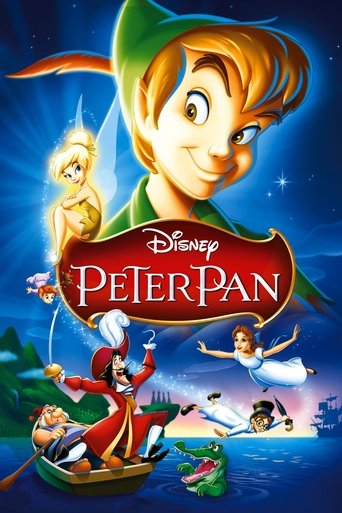
- Genre: Animation, Family, Adventure, Fantasy
- Director: Clyde Geronimi
- Year: 1953
- Runtime: 1h 17m
- Language: English (EN)
- TMDB Rating: ⭐ 7.2/10
Movie Overview
Wendy Darling tells stories of Peter Pan to her younger brothers every night, never expecting the cocky boy to actually appear at her window. When he does, with his mischievous fairy Tinker Bell in tow, he whisks them off to Neverland — a place where children never grow up. What starts as a dream quickly turns dangerous as Captain Hook, still nursing his crocodile trauma, sees Peter's return as a chance for revenge.
The film moves at a breakneck pace once the Darlings arrive in Neverland, bouncing between pirate ships, mermaid lagoons, and underground homes. Personally, I think the Lost Boys get shortchanged — they're more comic relief than real characters. But the real conflict emerges when Wendy starts sensing the cost of eternal childhood.
That final confrontation on the pirate ship still holds up. What stayed with me after the credits wasn't the action, but the quiet moment when Wendy realizes Neverland can't last forever.
Direction & Cinematography
Clyde Geronimi keeps the film visually playful — the scene where Peter teaches the kids to fly is all swooping camera movements that mimic their joy. At first I thought the pace was too rushed, but on rewatch, it matches Peter's restless energy.
Disney's signature multiplane camera gets subtle use here. When Wendy first sees Neverland from above, the layers of depth make it feel endless. And the character animation for Captain Hook is some of the studio's best work — every twitch of his mustache conveys panic.
What surprised me most was how dark some scenes play. The mermaid sequence has an eerie quality that modern animated films rarely attempt. It's not scary, but it's unsettling in a way that lingers.
Cast & Performances
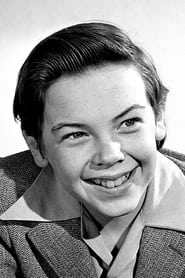
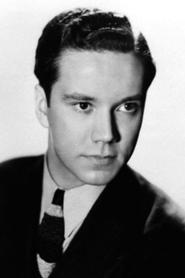
Bobby Driscoll's Peter Pan sounds exactly like a boy who's never faced consequences — brash, careless, and completely confident. His line reading of "Aw, you can't catch me!" when taunting Hook is pure childish arrogance.
Hans Conried steals every scene he's in as Hook, mixing theatrical villainy with genuine terror. Watch how his voice jumps an octave when the crocodile appears. I'll admit I didn't expect such a comedic performance to hold up this well.
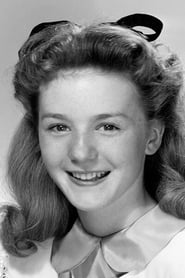
Kathryn Beaumont's Wendy feels slightly underwritten, but she nails the transition from excitable girl to someone realizing childhood's limits. Her quiet "I think I'll go home now" lands harder than any swordfight.
Character Psychology
Peter wants endless adventure without responsibility — and Neverland gives him exactly that. What he needs is to grow up, which is why he'll never admit to needing anything at all.
Wendy's the one who actually changes. She thinks she wants never-ending stories, but discovers she'd rather live a real life than stay in a perfect dream.
Themes & Emotional Depth
This is Disney's most honest film about growing up. Neverland isn't just fun — it's a trap that keeps its visitors from maturing. The Lost Boys don't even remember their mothers.
The film's heart is in Wendy's dilemma. She's drawn to Peter's world but realizes, in small moments, that stasis isn't living. When she mends Peter's shadow, it's the first motherly thing she's ever done — and it changes everything.
Memorable Scenes & Dialogue
1) The flight to Neverland sequence still dazzles. The way the music swells as they pass Big Ben, with London's lights twinkling below, captures the thrill of childhood freedom better than any dialogue could.
2) Hook's musical breakdown after Peter escapes the plank is hilarious physical comedy. His collapsing onto a tiny stool, then sliding to the floor in despair, makes the villain oddly sympathetic.
3) Tinker Bell's near-death scene works because of its silence. No words, just Wendy realizing her jealousy almost killed someone — and Peter's panic making him briefly vulnerable.
The Ending — Does It Deliver?
The final fight with Hook delivers exactly what the film promises — swashbuckling fun with real stakes. I kept waiting for Peter to show some growth, and he finally does when saving Wendy instead of toying with Hook further.
The actual ending surprised me. Peter doesn't learn anything permanent, but Wendy does. That last shot of Peter returning to Neverland alone feels triumphant and lonely at once.
What Works
Hook's animation is perfection — his dramatic flourishes and cowardly tics make him steal every scene. The flight sequences still feel magical 70 years later thanks to those sweeping camera moves. And "You Can Fly" remains one of Disney's most joyfully staged musical numbers, with the kids' movements perfectly synced to the music.
Honest Criticism
The Native American tribe is the film's biggest misstep, a dated stereotype that grinds the story to a halt. Tiger Lily gets nothing to do beyond being a plot device. Some of the Lost Boys' antics feel like padding in an already short runtime.
How It Compares
Compared to Spielberg's Hook (1991), this version understands Peter's character better — he's not meant to be likable, just captivating. But the 2003 live-action Peter Pan handles Wendy's coming-of-age arc with more depth.
Among Disney's own films, it's more thematically interesting than Snow White but lacks the emotional punch of Bambi. The comedy lands better than in Alice in Wonderland though.
Legacy & Cultural Impact
Peter Pan was Disney's biggest hit since Snow White, earning $87 million against a $4 million budget. It secured Disney's reputation as THE animator of fairy tales.
The film's problematic depictions of Native Americans have rightly been criticized in recent years — the "What Makes the Red Man Red" sequence hasn't aged well. But Hook remains one of animation's great villains.
Behind the Scenes
- Originally, Walt Disney wanted Cary Grant to voice Peter Pan. Bobby Driscoll got the role after Disney heard his natural speaking voice.
- This was the last Disney film where all nine Old Men of Animation worked together.
- Hans Conried also voiced Mr. Darling — Disney saved money by having him play both father and Hook.
Who Should Watch It?
Families with kids aged 5-10 will find the perfect mix of adventure and humor. Adults who grew up with it will enjoy the nostalgia. Anyone sensitive to racial stereotypes should skip it — those scenes haven't aged well at all.
Final Verdict
Peter Pan earns its classic status through sheer charm, even if some elements feel dated now. I'm giving it an 8.2 because Hook alone makes it worth watching. That final flight over London still gives me chumps — proof that some magic doesn't fade.
More details, ratings, and cast information on IMDb, TMDB, Wikipedia. YouTube