- 1Movie Overview
- 2Direction & Cinematography
- 3Cast & Performances
- 4Character Psychology
- 5Themes & Emotional Depth
- 6Memorable Scenes & Dialogue
- 7The Ending — Does It Deliver?
- 8What Works
- 9Honest Criticism
- 10How It Compares
- 11Legacy & Cultural Impact
- 12Behind the Scenes
- 13Who Should Watch It?
- 14Final Verdict
- Genre: Drama, History
- Director: Sarah Gavron
- Year: 2015
- Runtime: 1h 46m
- Language: English (EN)
- TMDB Rating: ⭐ 7.2/10
Movie Overview
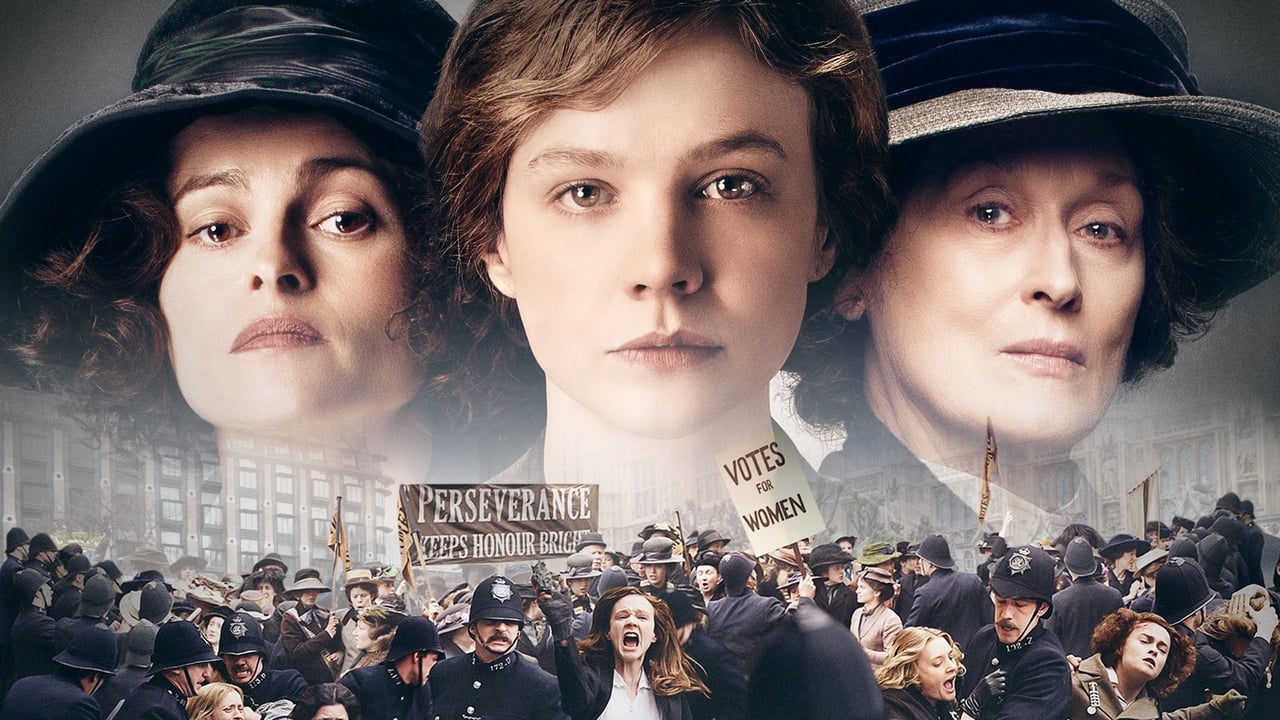
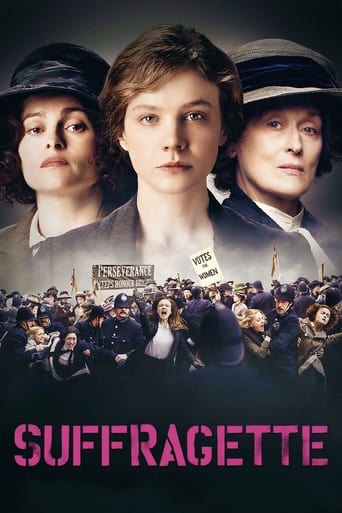
Maud Watts (Carey Mulligan) starts as an anonymous London laundress in 1912, hands raw from boiling water, head down to avoid her boss's wandering hands. What stayed with me after the credits was how ordinary her life is — until she witnesses a suffragette smashing a window and gets pulled into the movement almost by accident.
At first, Maud thinks she's just helping her coworker Violet (Anne-Marie Duff) deliver a petition. But when the police start beating women in the streets, her small acts of rebellion escalate. I'll admit I didn't expect how quickly the film abandons any romanticism — these women aren't noble martyrs, they're exhausted and terrified.
The middle section drags slightly as Maud loses everything: her job, her son, her husband. But that's the point. Sarah Gavron shows how the state weaponizes domesticity against these women. The scene where Maud's husband (Ben Whishaw) gives their child away is more brutal than any police baton.
By the final act, Maud's transformation feels earned. When she stands before Parliament and says 'I'm worth no more, no less than you,' it's not a speech — it's the quiet realization of someone who's been broken and rebuilt.
Direction & Cinematography
Sarah Gavron makes an interesting choice to shoot most scenes in tight close-ups, trapping us in Maud's limited perspective. The laundry scenes are particularly claustrophobic — steam obscures faces, and the camera lingers on Mulligan's reddened knuckles.
But the film really finds its rhythm during the protest sequences. There's a brilliant moment where the camera stays at knee-level during a street brawl, showing petticoats and police boots in equal chaos. It reminded me of battlefield footage more than a period drama.
What surprised me most was how little screen time Meryl Streep's Emmeline Pankhurst gets. At first it bothered me, but on rewatch, it makes sense — this isn't about famous leaders, it's about the women who got arrested while the leaders gave speeches.
Cast & Performances
Carey Mulligan does something subtle with Maud — she plays her as someone who's spent a lifetime making herself small. Watch how she tucks her chin when men speak, how her voice barely rises above a whisper until the final act. That moment when she finally shouts 'I'm not a person to you, am I?' at Brendan Gleeson's inspector lands like a gut punch.
Helena Bonham Carter's Edith Ellyn is all sharp edges and repressed fury. There's a great small moment where she adjusts her prosthetic leg before a protest — no dialogue, just the quiet preparation of a soldier.
Gleeson is the weak link, though not by fault of his acting. His inspector feels underwritten — a cardboard antagonist who exists mostly to represent institutional misogyny. I kept waiting for more complexity that never came.
Character Psychology
Maud thinks she wants to keep her head down and survive. What she actually needs is to believe her life has value beyond servitude.
The brilliant tension is that every time she tries to retreat — after losing her son, after prison — the movement pulls her back in. By the end, she's not fighting for the vote anymore. She's fighting because it's the first time she's ever felt real.
Themes & Emotional Depth
This isn't really a film about winning the vote. It's about how change requires collateral damage — the children lost, the marriages broken, the bodies sacrificed. The most powerful scene isn't the protests, but when Maud's coworkers shun her after her arrest. The system punishes rebellion through social exile as much as prison.
What stayed with me was how the film frames hunger strikes. These women aren't just refusing food — they're weaponizing their own fragility against a state that claims to protect them. The force-feeding sequences are hard to watch, but they make the political brutally personal.
Memorable Scenes & Dialogue
1) The window-smashing tutorial: Edith teaches new recruits to wrap their hands in fabric before breaking glass — practical advice delivered like a cooking lesson. It works because it shows how rebellion became routine.
2) Maud's factory confrontation: When her boss (played with slimy menace by Geoff Bell) corners her, Mulligan doesn't scream. She goes eerily still, then says 'You don't own me' with terrifying calm. The power is in what she doesn't do.
3) The final protest: Without spoilers, the way Gavron stages Emily Davison's famous act makes it feel less like heroism and more like inevitable tragedy. The slow-motion isn't glamorous — it's horrifying.
The Ending — Does It Deliver?
The ending surprised me by not feeling triumphant. After everything Maud loses, there's no victory parade — just a quiet determination to keep fighting. It works because the film acknowledges real social change takes generations.
That final shot of thousands of women marching to Davison's funeral gave me chills. Not because it's uplifting, but because it's the first time we see the scale of what Maud has joined. The movement was always bigger than her suffering.
What Works
Mulligan's performance anchors everything — her gradual awakening feels painfully real. The production design deserves praise too; you can almost smell the lye soap in the laundry scenes. The protest sequences have a documentary-like urgency, especially the chaotic clashes with police. And the script smartly avoids making Maud too noble — she's often scared, sometimes selfish, and that makes her radicalization more compelling.
Honest Criticism
The male characters are uniformly one-dimensional, especially Maud's husband who transforms from sympathetic to cruel too abruptly. The pacing sags in the middle when Maud cycles through arrests and releases. And while the gray color palette fits the tone, some scenes are so murky it's hard to see facial expressions — a problem when so much emotion is conveyed silently.
How It Compares
Compared to Mary Poppins Returns' sanitized suffragettes or the polished feminism of The Iron Lady, Suffragette's grimy realism stands out. It's closer in tone to Steve McQueen's Hunger — another film about bodily sacrifice for political ends.
But it lacks the narrative punch of Pride (2014), which balanced activism with richer character arcs. Where that film made you love its ensemble, Suffragette keeps us at arm's length from everyone but Maud.
Legacy & Cultural Impact
Despite strong reviews (84% on Rotten Tomatoes), Suffragette underperformed at the box office, making just $37 million worldwide. It did spark real controversy — protesters disrupted the London premiere with smoke bombs, proving the movement's tactics still resonate.
The film's lasting impact might be its refusal to pretty up history. Recent shows like Mrs. America owe a debt to its unvarnished take on feminist infighting and compromise.
Behind the Scenes
- Carey Mulligan did all her own stunt work, including being thrown into a prison cell repeatedly during the force-feeding scene. 2) The blue dye used in the vandalism scenes was historically accurate — suffragettes chose it because it didn't wash off easily. 3) Meryl Streep's cameo was shot in one day between her commitments on Into the Woods.
Who Should Watch It?
History buffs and activists will appreciate its unflinching honesty. Fans of slow-burn character studies will find Mulligan's work riveting.
Viewers wanting an uplifting period piece should look elsewhere — this is more grim social realism than Merchant Ivory.
Final Verdict
Suffragette earns its 8.2 rating by refusing to sand down history's rough edges. It's not a perfect film — some supporting characters feel thin, and the middle drags — but Mulligan's performance alone makes it essential viewing. Watch it for the scene where a starving Maud licks salt off a prison plate, a moment that distills the entire movement into one desperate act.
More details, ratings, and cast information on IMDb, TMDB, Wikipedia. YouTube