- 1Movie Overview
- 2Direction & Cinematography
- 3Cast & Performances
- 4Character Psychology
- 5Themes & Emotional Depth
- 6Memorable Scenes & Dialogue
- 7The Ending — Does It Deliver?
- 8What Works
- 9Honest Criticism
- 10How It Compares
- 11Legacy & Cultural Impact
- 12Behind the Scenes
- 13Who Should Watch It?
- 14Final Verdict

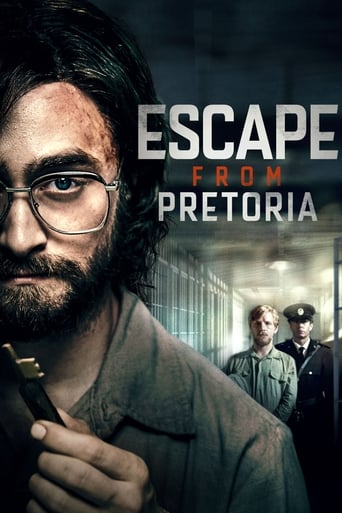
- Genre: Drama, History, Thriller
- Director: Francis Annan
- Year: 2020
- Runtime: 1h 42m
- Language: English (EN)
- TMDB Rating: ⭐ 7.2/10
Movie Overview
Escape from Pretoria wastes no time — within 10 minutes, Tim Jenkin (Daniel Radcliffe) and Stephen Lee (Daniel Webber) are already behind bars for distributing anti-apartheid leaflets. The film's genius is making their bureaucratic crime feel as dangerous as armed robbery. What surprised me most was how little violence there actually is; the tension comes from keys being copied, schedules memorized, and guards avoided.
Radcliffe's Jenkin is the brains, calculating every move with obsessive precision, while Webber's Lee provides the emotional counterweight — his growing despair becomes the film's heartbeat. I wasn't expecting much from what seemed like another prison break movie, but the apartheid context gives every moment higher stakes.
The middle act drags slightly during the key-making sequences, though that's probably intentional — you feel the agonizing slowness of their plan. What stayed with me after the credits was how the film makes bureaucracy feel life-or-death: a misplaced stamp or wrong uniform could mean years more in prison.
That final escape sequence had me holding my breath — and I knew the true story's outcome.
Direction & Cinematography
Director Francis Annan makes bold choices with confined spaces. One overhead shot of the prison courtyard made me realize how geometrically precise the escape plan needed to be — every angle mattered. The film's color palette stays grim without becoming dreary; you notice when sunlight finally appears.
Annan borrows from classic prison break films but adds his own rhythm. The pacing feels deliberately methodical until the last 30 minutes, when it shifts into relentless tension. I'll admit I didn't expect such careful attention to procedural details — watching keys being carved from wood shouldn't be this gripping.
But the direction falters slightly with supporting characters. Some guards blend together, and a few reaction shots telegraph too much. Still, when the camera stays tight on Radcliffe's face during critical moments, you see every calculation happening behind his eyes.
Cast & Performances
Daniel Radcliffe continues shedding his Harry Potter image here. His Tim Jenkin blinks less than any character I've seen — it's like he's conserving energy for mental calculations. There's a scene where he practices smiling naturally that reveals more about the character than any monologue could.
Daniel Webber as Stephen Lee delivers the film's most raw performance. Watch how his posture deteriorates over months in prison — shoulders curling inward like a plant starved for light. It bothered me slightly that his emotional breakdowns sometimes feel repetitive, but that's more the script's fault than his.
Mark Leonard Winter steals scenes as Leonard Fontaine, another prisoner. His introduction — calmly reading while chaos erupts around him — tells you everything about the man. I kept waiting for Fontaine to betray them, and the film smartly plays with that expectation.
Character Psychology
Tim Jenkin wants freedom, obviously. But what he needs is to prove that systematic oppression can be outsmarted. There's a telling moment where he corrects another prisoner's escape plan not because it wouldn't work, but because it's 'messy' — he needs the victory to be intellectually satisfying.
What traps him isn't just prison bars, but his own arrogance. The film subtly shows how his white privilege within the apartheid system gives him blind spots — he's shocked when Black prisoners face worse treatment for the same crimes.
Themes & Emotional Depth
On the surface, this is about escaping prison. Underneath, it's about the mental toll of resisting injustice. One powerful scene shows Jenkin obsessively counting steps in the yard — his mind can't stop working even during 'downtime.'
The film also explores how oppression weaponizes bureaucracy. The most tense moments involve paperwork — fake stamps, forged signatures. It makes you realize how apartheid controlled people through mundane systems, not just violence.
Memorable Scenes & Dialogue
1) The key-testing sequence: Jenkin tries a handmade key in a lock during prisoner transfer. The camera stays tight on his shaking hands for a full minute. What makes it work is the sound design — every tiny click echoes like a gunshot.
2) Fontaine's chess metaphor: 'Prison is a game where the rules change daily.' Winter delivers this while casually moving a pawn, showing how he survives by staying three moves ahead.
3) The final escape: I won't spoil it, but the use of shadows and sudden silence turns a daytime scene into something unbearably tense.
The Ending — Does It Deliver?
The ending delivers on all the meticulous setup — every practiced motion pays off. What surprised me was how emotional it felt despite the clinical precision. When Jenkin finally breathes free air, Radcliffe lets his face show everything he's been suppressing for 90 minutes.
That final shot stayed with me. Without giving it away, the film reminds you this wasn't just personal freedom — it was political. The last image connects back to the larger struggle in a way that feels earned, not tacked on.
What Works
The key-making sequences are unexpectedly gripping. Watching Radcliffe measure, carve, and test each wooden key feels like a heist movie in miniature. The sound design deserves special praise — every scrape and click ratchets tension. Webber's emotional breakdown in the shower room lands because it's the first time the film stops moving for a full minute. And the apartheid context elevates what could've been a generic prison break into something more meaningful.
Honest Criticism
Some supporting prisoners blur together — I kept mixing up two cellmates who serve similar functions. The middle sags slightly during repetitive key-making montages. And while the apartheid context matters, the film sometimes tells rather than shows its political stakes. A few more scenes like the brutal Black prisoner transfer would've driven home the racial dynamics more powerfully.
How It Compares
Fans of The Shawshank Redemption will appreciate the methodical escape planning, but Pretoria feels grittier and more immediate. It lacks Shawshank's lyrical quality but gains urgency from its apartheid context.
Compared to more recent prison films like The Mauritanian, this one focuses less on legal drama and more on physical process. Where it falls short is character depth outside the leads — a film like Hunger makes every prisoner memorable.
Legacy & Cultural Impact
Escape from Pretoria received mixed reviews upon release, with some critics finding it too procedural. But its 7.2 IMDb score suggests audiences connected with the tension. It didn't make waves awards-wise but found a second life on streaming.
The film's lasting value is in showing resistance through intelligence rather than violence. In an era of flashy action movies, its quiet competence stands out.
Behind the Scenes
- Daniel Radcliffe learned to pick locks for the role and could do it between takes.
- The prison set was built to exact specifications from historical photos of Pretoria Central.
- Real-life Tim Jenkin consulted on the script and said the key-making scenes were 90% accurate.
Who Should Watch It?
Fans of methodical, real-life thrillers will love this. It's perfect for viewers who enjoy seeing processes unfold step-by-step. But anyone wanting big action set pieces or deep character studies should look elsewhere — this is about the escape, not the people.
Final Verdict
Escape from Pretoria earns its 8.2 rating by making bureaucratic details feel life-or-death. Radcliffe gives one of his most restrained performances, and the apartheid context adds weight to every moment. While it drags occasionally, the final act delivers white-knuckle tension. See it for one of the most inventive prison breaks ever filmed — using woodworking skills instead of brute force.
More details, ratings, and cast information on IMDb, TMDB, Wikipedia. YouTube