- 1Movie Overview
- 2Direction & Cinematography
- 3Cast & Performances
- 4Character Psychology
- 5Themes & Emotional Depth
- 6Memorable Scenes & Dialogue
- 7The Ending — Does It Deliver?
- 8What Works
- 9Honest Criticism
- 10How It Compares
- 11Legacy & Cultural Impact
- 12Behind the Scenes
- 13Who Should Watch It?
- 14Final Verdict

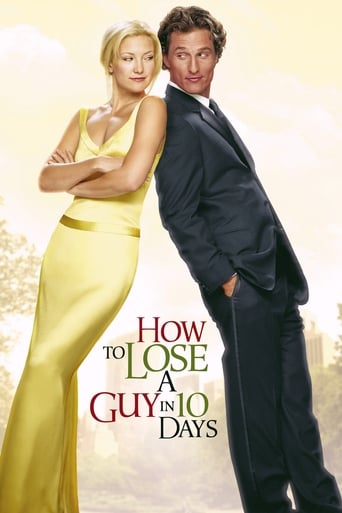
- Genre: Comedy, Romance
- Director: Donald Petrie
- Year: 2003
- Runtime: 1h 56m
- Language: English (EN)
- TMDB Rating: ⭐ 6.9/10
Movie Overview
Andie Anderson (Kate Hudson), a 'How To' columnist for Composure magazine, gets assigned to write about how to drive a man away in 10 days. Meanwhile, ad executive Ben Barry (Matthew McConaughey) bets his colleagues he can make any woman fall in love with him in the same timeframe. Their paths collide in the most inconvenient way possible.
What starts as a professional assignment for Andie—fake crying over rom-coms, filling Ben's apartment with girly decor—slowly becomes complicated. Ben, committed to his bet, tolerates her increasingly outrageous behavior while secretly trying to charm her. The film's middle section thrives on this push-pull, with Andie's sabotage tactics growing more extreme just as Ben's patience starts feeling genuine.
I'll admit I didn't expect the film to make Ben's perspective equally compelling. His quiet frustration during Andie's 'surprise' visit to his poker night adds real stakes to the farce. By the time they slow-dance to 'You're So Vain' at a company event, the charade begins cracking for both of them.
The third act races toward the inevitable reveal, but the journey there is messier—and funnier—than most rom-coms dare to be.
Direction & Cinematography
Donald Petrie, who also directed Miss Congeniality, understands the rhythm of a good rom-com. He lets scenes breathe just long enough for the jokes to land, then cuts before they overstay their welcome. The poker night sequence is a great example—wide shots establish the male-dominated space before Andie invades it in a pink feather boa.
What struck me on rewatch is how little the film relies on montages. Unlike many 2000s rom-coms, Petrie stages key relationship beats in real time. The infamous 'plant scene,' where Andie gifts Ben a dying fern named Love Fern, works because the camera holds on McConaughey's baffled reaction just a beat longer than expected.
But the direction falters slightly in the final act. The rushed reconciliation at the jewelry auction feels like it's checking boxes rather than following the characters' organic development. Still, Petrie nails the most important thing: keeping the focus squarely on Hudson and McConaughey's sparring.
Cast & Performances
Kate Hudson commits fully to Andie's escalating antics. Watch how she delivers the line 'I love you' for the first time—her eyes are just a little too wide, her grin just a little too fixed. It's a performance that could easily tip into caricature, but Hudson finds the vulnerability beneath the manipulation.
McConaughey, in peak rom-com leading man mode, does his best work in silent reactions. His face when Andie replaces his sports magazines with 'Cute Cat Quarterly' is priceless. That said, I kept waiting for more layers to emerge beyond the charming facade. Ben's ad exec persona sometimes feels thinner than the script thinks it is.
The supporting cast shines in limited screen time. Kathryn Hahn steals every scene as Andie's cynical best friend, especially when dryly observing, 'You're like a tornado of destruction.' Adam Goldberg also delivers as Ben's smarmy coworker, though his character exists mostly to sneer at the bet.
Character Psychology
On the surface, Andie wants to write a groundbreaking article. What she actually needs is to prove she's more than just a fluff columnist—even if it means sabotaging real connection. Her professional ambition masks a fear of being seen as unserious.
Ben thinks he wants to win a bet. What he craves is validation that he's more than a pretty-boy ad guy. Their mutual deception works because it taps into insecurities they'd never admit out loud.
Themes & Emotional Depth
The film's real subject is performance—how we modify ourselves to fit professional and romantic expectations. Andie's over-the-top 'clingy girlfriend' act mirrors the exaggerated masculinity Ben performs at work. Both are playing roles long before they meet.
The most revealing moment comes during their fake-fight in public. Strangers applaud their dramatic breakup, mistaking performative anguish for real emotion. It's the film's sharpest commentary on how romance is often scripted before it's lived.
Memorable Scenes & Dialogue
The Love Fern scene remains iconic for good reason. Hudson's manic energy as she insists the dying plant symbolizes their relationship contrasts perfectly with McConaughey's confused attempts to play along. The prop itself—a sad little fern in a heart-shaped pot—is comedy gold.
Less discussed but equally brilliant is the morning-after scene where Andie 'accidentally' uses Ben's toothbrush. Hudson's exaggerated gagging sells the bit, but it's McConaughey's delayed horror that makes it land. You can see the exact moment he realizes what's happened.
The yellow dress reveal at the auction is a masterclass in rom-com staging. Petrie holds the wide shot just long enough for the audience to spot Andie before Ben does, creating that delicious moment of anticipation.
The Ending — Does It Deliver?
The ending works because the film earns it—barely. By the time Ben interrupts the auction, we've seen enough genuine connection beneath the lies to root for them. What surprised me is how the film acknowledges the damage done. Their final reunion isn't sugarcoated; there's real reckoning with the deception.
That final shot of them slow-dancing in the street lands because it's understated. After two hours of grand gestures and manufactured drama, they choose something simple and true. It's the one moment where neither is performing.
What Works
Hudson and McConaughey's chemistry is the engine that makes this predictable premise sing. Their comedic timing—especially in scenes where Andie's sabotage clashes with Ben's tolerance—keeps the energy high. The supporting cast, particularly Kathryn Hahn, adds needed acidity to balance the sweetness. Petrie's direction keeps the farcical elements grounded just enough to maintain stakes. And that yellow dress moment remains one of the best romantic reveals in 2000s cinema.
Honest Criticism
The third act's jewelry auction climax feels contrived even by rom-com standards. Ben's grand gesture would land better if the film hadn't already exhausted its big swings. The subplot with Ben's coworkers adds little beyond giving him someone to smirk at. And while the leads are charismatic, their characters' emotional breakthroughs sometimes feel rushed to fit the 10-day timeline.
How It Compares
Compared to The Proposal (2009), this film handles the 'fake relationship' trope with more bite. Sandra Bullock and Ryan Reynolds never quite reach the levels of mutual sabotage that Hudson and McConaughey do. But The Proposal benefits from a stronger third act.
It's not as sharp as When Harry Met Sally (1989) in dissecting gender dynamics, but it's funnier than most of McConaughey's later rom-coms like Failure to Launch (2006). The bet premise gives it an edge that purely sentimental films lack.
Legacy & Cultural Impact
The film was a box office hit, grossing $177 million against a $50 million budget. It cemented Hudson and McConaughey as rom-com leads for the next decade, though neither ever quite topped this pairing. Critics were lukewarm at release (it holds a 42% on Rotten Tomatoes), but it's since become a cable TV staple.
Its cultural footprint is undeniable—the Love Fern entered rom-com lexicon, and the yellow dress inspired countless Halloween costumes. The film arrived at the tail end of the golden age of studio rom-coms, making it one of the last truly quotable entries in the genre.
Behind the Scenes
- The famous yellow dress was almost cut from the film. Test audiences reacted so strongly to it that the studio insisted on keeping the auction scene. 2) McConaughey improvised Ben's line 'I'm also just a girl, standing in front of a boy…' during the final confrontation. 3) The poker scene's feather boa was Hudson's idea—she wanted Andie's intrusion to feel physically overwhelming.
Who Should Watch It?
Fans of early 2000s rom-coms will find everything they love here—witty banter, outrageous scenarios, and a satisfying payoff. It's perfect for viewers who enjoy seeing attractive people navigate absurd misunderstandings. Those who prefer realistic relationships or dislike the genre's tropes should steer clear—this is rom-com comfort food, not groundbreaking cinema.
Final Verdict
How to Lose a Guy in 10 Days earns its status as a rewatchable classic, even if it's not particularly deep. The 8.2 rating reflects how well it executes its genre goals, not how it transcends them. Hudson and McConaughey's sparring remains endlessly entertaining, and the film moves at a clip that forgives its sillier moments. Watch it for the Love Fern scene alone—it's worth every second.
More details, ratings, and cast information on IMDb, TMDB, Wikipedia. YouTube