- 1Movie Overview
- 2Direction & Cinematography
- 3Cast & Performances
- 4Character Psychology
- 5Themes & Emotional Depth
- 6Memorable Scenes & Dialogue
- 7The Ending — Does It Deliver?
- 8What Works
- 9Honest Criticism
- 10How It Compares
- 11Legacy & Cultural Impact
- 12Behind the Scenes
- 13Who Should Watch It?
- 14Final Verdict
- Genre: Animation, Comedy, Family, Fantasy
- Director: Genndy Tartakovsky
- Year: 2018
- Runtime: 1h 37m
- Language: English (EN)
- TMDB Rating: ⭐ 6.9/10
Movie Overview
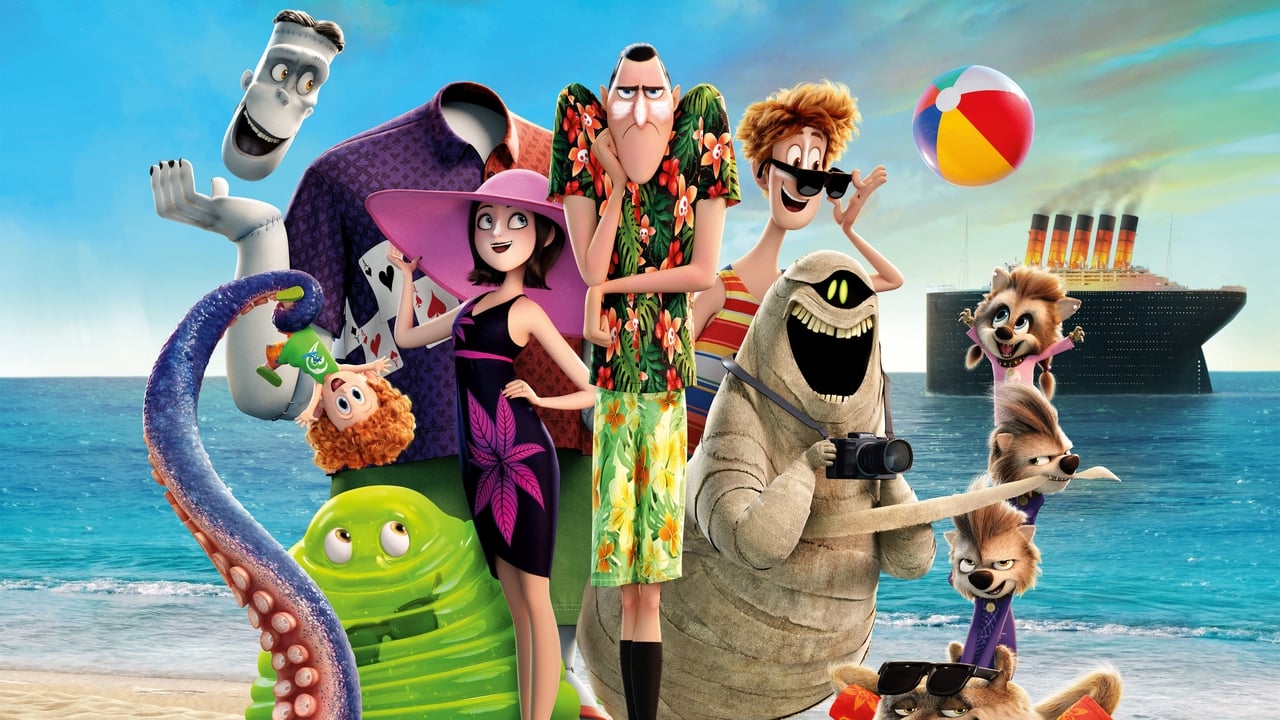
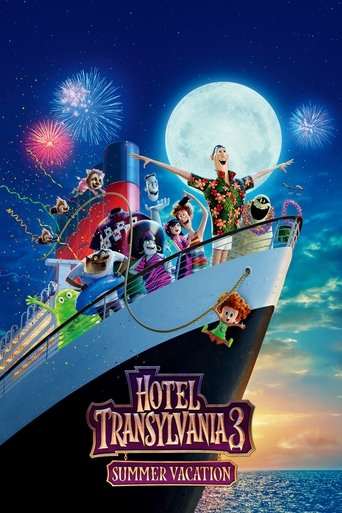
The film opens on a problem most parents recognize: Dracula (Adam Sandler) is burnt out. He's lonely, overworked, and swiping through a monster dating app with zero success. Seeing this, his daughter Mavis (Selena Gomez) books the entire family on a monster-exclusive cruise, hoping a vacation will pull him out of his funk. It works, but not in the way she intended. Drac immediately “zings”—the monster equivalent of love at first sight—with the ship’s peppy human captain, Ericka (Kathryn Hahn).
But there’s a complication, of course. Ericka is secretly the great-granddaughter of Abraham Van Helsing, Dracula's ancient nemesis, and she’s leading the entire monster party into an elaborate trap set in the lost city of Atlantis.
So the central tension becomes a triangle of crossed purposes. Dracula is lovestruck and oblivious, trying to woo a woman who is actively trying to kill him. Mavis is deeply suspicious of Ericka, sensing something is wrong but unable to convince her giddy father. And Ericka finds herself struggling with her family's legacy of hate as she gets to know the goofballs she's meant to destroy.
It’s a simple setup, stretched across a series of comedic set-pieces.
Direction & Cinematography
Genndy Tartakovsky’s direction is the entire reason to watch *Hotel Transylvania 3*. His signature style—a cartoony, hyper-expressive form of animation where characters move with the physics of a rubber band—is on full display. He treats the laws of physics as mere suggestions. A perfect example is the sequence where Dracula and a disguised Ericka play underwater volleyball; their bodies stretch and contort in ways that are totally illogical but feel visually right for the gag. The pacing is relentless, a new joke firing off every few seconds.
But that speed is both a strength and a weakness. There’s almost no room to breathe. Tartakovsky moves from one set-piece to the next with such haste that any attempt at an emotional moment feels rushed. He's a master of the visual gag, but the frantic energy sometimes steamrolls the character moments.
What stayed with me after the credits was just how much personality is packed into the movement itself. You could turn the sound off and still understand a character’s personality just from the way they walk or gesture. Personally, I think that’s the mark of a director who truly understands animation as a visual medium, not just as a vehicle for a script.
Cast & Performances
In *Hotel Transylvania 3*, Adam Sandler’s Dracula is less of a caricature than in the first two films. He still does the familiar goofy voice, but he finds this undercurrent of genuine loneliness that makes the character’s quest for a new “zing” feel surprisingly sympathetic. It’s not just about jokes; there's a weariness in his delivery early on that grounds the whole premise.
I'll admit I didn't expect much from Selena Gomez's Mavis this time around, as her arc felt complete in the earlier films. Here, she’s slotted into the role of the overprotective daughter, and her performance is appropriately more subdued, acting as the necessary anchor of concern while everyone else is going wild. She's the straight man, and she does it well, though the character itself feels a bit one-note here.
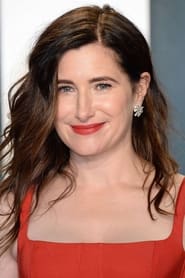
What surprised me most was Kathryn Hahn as Ericka. She's fantastic. She switches between bubbly cruise director, exasperated villain, and a person genuinely questioning her entire life’s purpose, sometimes all in the same scene. The energy she brings, especially in her rants about her hatred for monsters, is the comedic engine of the film’s second half.
Character Psychology
Dracula wants what he thinks he can't have again: a romantic connection, another “zing” to cure his profound loneliness. He's trapped by the memory of his deceased wife, Martha, believing that you only zing once in a lifetime. His desperate attempts to connect with Ericka are a clumsy, often funny, stab at moving on.
What he actually needs is to accept his new, evolving family structure and find contentment within it. He gets what he wants, but not quite in the way he expects, forcing him to reconcile his past with a potential future.
Themes & Emotional Depth
Beyond the surface-level plot of a family vacation gone wrong, the film is a pretty direct parable about inherited prejudice. Ericka’s entire identity is built on her great-grandfather’s legacy of hating monsters. She’s never actually known any; she just knows she's supposed to destroy them. Her journey is about dismantling a worldview that was given to her, not one she formed herself.
So it becomes a story about choosing your own identity over the one prescribed by your family. When Dracula tells her, “You’re a Van Helsing, but you’re also you,” it’s a simple line, but it’s the whole point. The film argues, in its own candy-colored and chaotic way, that we aren't doomed to repeat the hatreds of our ancestors.
Memorable Scenes & Dialogue
1. **Gremlin Air:** The opening flight to the cruise is a masterclass in chaotic visual comedy. The plane is a rickety death trap run by Gremlins who are actively dismantling it mid-flight. The gags are relentless: a Gremlin unscrewing a passenger's seat, another one blowtorching the wing. It establishes the film's anarchic tone perfectly.
2. **The DJ Battle Finale:** The climax is an absurd showdown between Van Helsing's destructive techno music and Johnny's feel-good pop, personified by a battle between a kraken and our heroes. Using the upbeat, cheesy "Macarena" as a weapon to defeat a monster of pure evil is ridiculous on paper, but Tartakovsky’s animation makes the whole sequence work as a joyous, silly spectacle. That moment didn't land for me on first watch, but its sheer weirdness has grown on me.
3. **Dracula's Dance:** Early on the cruise, Dracula tries to impress Ericka during a dance sequence. He moves with a fluid, supernatural grace that then devolves into frantic, insecure spasms. It’s a great piece of character animation, showing both his suave vampire persona and his deep awkwardness.
The Ending — Does It Deliver?
The finale, a DJ battle to control a giant kraken with positive versus negative music, is completely bonkers. It doesn't logically follow from much, but this isn't a franchise that cares about logic. I'd argue the ending is earned thematically, if not narratively. The core conflict is between hatred (Van Helsing's destructive music) and connection (Johnny's unifying pop songs), so turning that into a literal battle of the bands feels appropriate for the film's over-the-top tone.
What stayed with me after the credits wasn't the resolution of the plot, but the feeling of goofy optimism. It ends on such a silly, unpretentious note of unity that it’s hard to dislike, even if your brain is telling you it makes no sense.
What Works
The film's greatest asset is Genndy Tartakovsky's direction. The visual comedy, rooted in classic 2D animation principles of squash-and-stretch, feels fresh and energetic. Sequences like the gremlin-piloted airplane or Dracula's frantic dancing are highlights of pure cartooning. Kathryn Hahn’s voice work as Ericka provides a jolt of manic energy that elevates every scene she’s in, making the new character a welcome addition rather than a simple plot device.
Honest Criticism
The script is paper-thin and serves mostly as a flimsy clothesline for the visual gags. Most of the original supporting cast, from Wayne the werewolf to Frank the monster, are completely wasted, relegated to background props with maybe one or two lines each. It bothered me slightly that they were even there. The musical finale, while fun, leans on the "Macarena," a choice that felt dated even in 2018 and comes off as a bit lazy.
How It Compares
Compared to its direct competitor, *Despicable Me 3*, which also features a villain with family ties to the hero, *Hotel Transylvania 3* is far more visually inventive. Tartakovsky's animation style is simply more distinct than what Illumination typically produces. However, the *Despicable Me* franchise, at least in its first installment, had a stronger emotional core.
It also brings to mind *Cloudy with a Chance of Meatballs 2*, another Sony Pictures Animation sequel that prioritizes gag-a-minute pacing and colorful designs over story. Personally, I think *Hotel Transylvania 3* has better character-based comedy, whereas *Cloudy 2* leaned more on its creature-puns. This one feels less exhausting, though that's a low bar.
Legacy & Cultural Impact
*Hotel Transylvania 3* was a significant box office success, grossing over $528 million worldwide on an $80 million budget. It outperformed its predecessors and became Sony Pictures Animation's highest-grossing film at the time. While critical reception was generally mixed-to-positive, its financial performance confirmed the franchise as a reliable tentpole for Sony, leading directly to the fourth (and final) installment.
It didn't start a major conversation or influence the genre, but it solidified the commercial viability of director-driven, hyper-stylized animation in a field often dominated by the more uniform house styles of Disney and Illumination.
Behind the Scenes
- The film’s premise was born from director Genndy Tartakovsky's own unpleasant cruise vacation with his family, which he described as feeling trapped with strangers. 2. Kathryn Hahn reportedly secured the role of Ericka Van Helsing after an audition where she delivered her lines with a deliberately over-the-top, almost unhinged energy that the director loved. 3. The kraken that appears in the finale is voiced by Joe Jonas, who makes a cameo.
Who Should Watch It?
This film is an easy recommendation for families with children under 12. It's fast, colorful, and packed with enough slapstick to keep them entertained. Adults who appreciate classic, Tex Avery-style animation will find a lot to admire in the craft. Viewers seeking a story with the emotional weight of a Pixar film will be sorely disappointed and should look elsewhere.
Final Verdict
I wasn't expecting much, but *Hotel Transylvania 3* is a surprisingly enjoyable ride, almost entirely due to its visual creativity. The story is disposable, and many of the characters are sidelined, but the sheer energy and artistry of the animation make it hard to dismiss. The film gets a pass from me because Tartakovsky’s direction is just that good, turning a generic script into something with real personality. Come for the hyperactive, rubbery animation; it's the only reason you need.
More details, ratings, and cast information on IMDb, TMDB, Wikipedia. YouTube