- 1Movie Overview
- 2Direction & Cinematography
- 3Cast & Performances
- 4Character Psychology
- 5Themes & Emotional Depth
- 6Memorable Scenes & Dialogue
- 7The Ending — Does It Deliver?
- 8What Works
- 9Honest Criticism
- 10How It Compares
- 11Legacy & Cultural Impact
- 12Behind the Scenes
- 13Who Should Watch It?
- 14Final Verdict
- Genre: Comedy, Drama, Family
- Director: Chris Columbus
- Year: 1993
- Runtime: 2h 5m
- Language: English (EN)
- TMDB Rating: ⭐ 7.2/10
Movie Overview
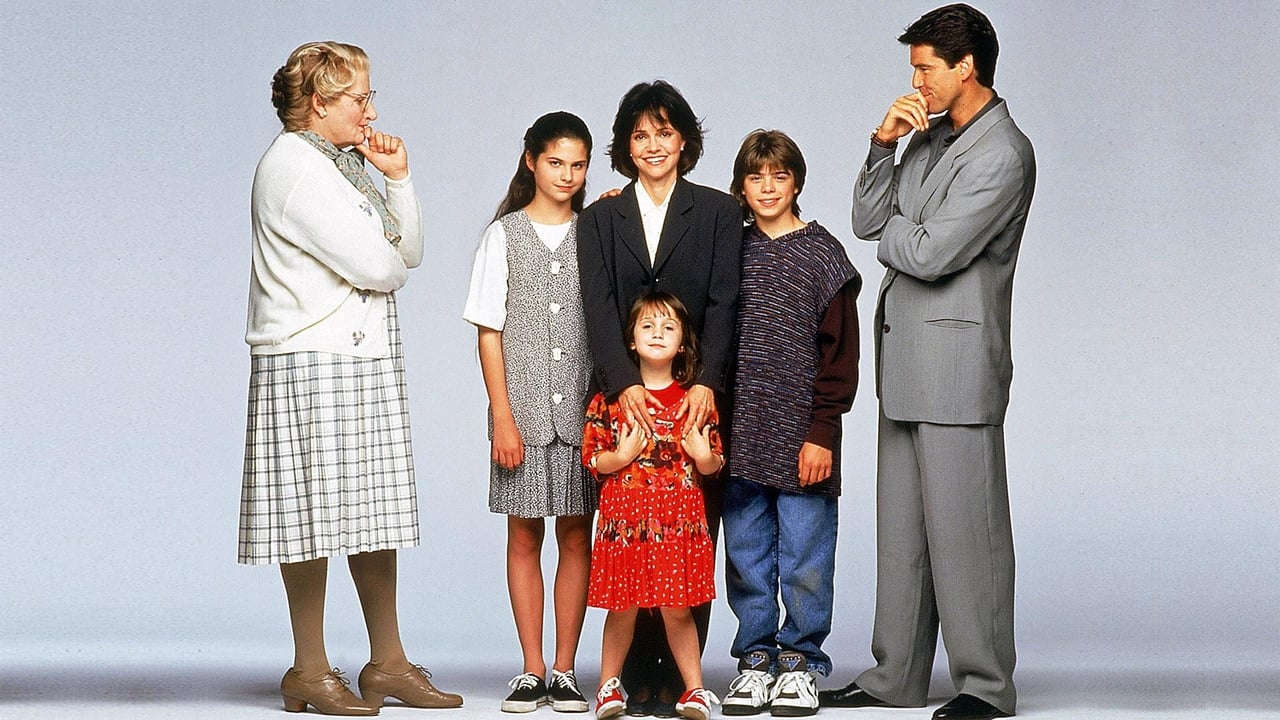
Daniel Hillard (Robin Williams) loves making his kids laugh — sometimes too much. When his wife Miranda (Sally Field) files for divorce after another chaotic stunt, the court restricts him to weekly supervised visits. What stays with me after the credits is how sharply the film establishes Daniel's desperation in that first courtroom scene — he's not just fighting for custody, he's fighting to prove he's not a joke.
Then comes the scheme: learning Miranda needs a housekeeper, Daniel transforms into British nanny Mrs. Doubtfire with prosthetic makeup so convincing even his own children don't recognize him. I wasn't expecting much from the disguise premise, but the film earns its absurdity by showing every step of the transformation — the voice coaching, the padding, the way Williams holds his body differently.
What surprised me most was how the film balances Daniel's deception with genuine parenting wins. As Mrs. Doubtfire, he actually listens to his kids' problems instead of just performing for them. That shift from entertainer to caregiver gives the middle act real weight.
But the third act tension feels manufactured — a last-minute dinner party where Daniel must alternate between his two identities. It's funny, but you can feel the script straining to create stakes.
Direction & Cinematography
Chris Columbus, fresh off Home Alone, brings the same precise comic timing to domestic chaos. What struck me on rewatch is how he frames Daniel's early scenes slightly off-center — visually reinforcing how out-of-step he is with adult responsibilities.
The restaurant scene where Mrs. Doubtfire 'meets' Daniel remains a masterclass in physical comedy direction. Columbus keeps the camera wide so we see every frantic gesture as Williams swaps between personas at the table. I'll admit I didn't appreciate how difficult that blocking must have been until seeing it again.
But the film loses some visual inventiveness in the second half. Once the premise is established, Columbus defaults to standard sitcom setups. That final courtroom speech could have used more interesting angles to match Williams' emotional intensity.
Cast & Performances
Robin Williams' Mrs. Doubtfire voice is iconic, but what stayed with me is how he uses his whole body — the way she holds her purse like a shield, or adjusts her wig when flustered. That's not just a man in a dress; it's a complete character.
Sally Field makes Miranda more than the exasperated wife cliché. Watch how her posture changes when she thinks no one's looking — there's exhaustion there, but also lingering affection. I wasn't expecting that subtlety in what could have been a one-note role.
The kids (Lisa Jakub, Matthew Lawrence, Mara Wilson) mostly react to the adults, but Wilson in particular nails the confusion of a child caught between parents. Her delivery of 'You're not like other grandmas' lands perfectly.
Character Psychology
Daniel wants his kids back on his terms — through laughter and games, not bedtime routines and homework help. What he needs is to grow up without losing what makes him special.
The film's smartest choice is making his Mrs. Doubtfire persona the parent he should have been all along — attentive, patient, present. By the end, he's learned to integrate both sides, though the transformation isn't as complete as the courtroom speech suggests.
Themes & Emotional Depth
At its core, this is about performative parenting vs. actual care. The prosthetic makeup becomes a metaphor — Daniel must literally disguise his immaturity to access his nurturing side.
The restaurant scene where Mrs. Doubtfire scolds Daniel highlights the film's central question: Can someone change while staying true to themselves? It's telling that Miranda falls for the nanny's wisdom but rejects those same qualities in her ex-husband.
Memorable Scenes & Dialogue
The 'Dude Looks Like a Lady' montage holds up surprisingly well — the practical makeup effects feel tangible compared to today's CGI, and Williams' physical comedy as Daniel tests his disguise is perfectly timed.
Mrs. Doubtfire's cooking show meltdown ('It was a run-by fruiting!') works because Williams commits fully to the absurdity while keeping the character's dignity intact. The way she tries to salvage the segment after the chaos is oddly touching.
The quiet moment when youngest daughter Natalie (Wilson) unknowingly hugs her disguised father gets me every time — it's the one scene where the deception feels painful rather than funny.
The Ending — Does It Deliver?
The courtroom finale ties things up too neatly — Miranda's sudden change of heart about Daniel's parenting feels unearned given how justified her frustrations were earlier. What surprised me is how the film undercuts its own happy ending slightly with that final TV studio shot.
That last image of Mrs. Doubtfire's show airing for kids of divorced parents lands differently now. It suggests Daniel found a way to parent beyond traditional structures — a more interesting resolution than the custody agreement.
What Works
Williams' performance remains astonishing in its range — from broad physical comedy to quiet moments of vulnerability. The scene where Mrs. Doubtfire comforts Lydia (Jakub) about her insecurities lands because he plays it completely straight. The makeup effects still hold up 30 years later, especially in subtle details like the way the neck prosthetic moves when she speaks. And the film earns its emotional beats by making Daniel's flaws just as visible as his charms.
Honest Criticism
The subplot with Pierce Brosnan's character feels tacked on — his villainy is overplayed to make Daniel look better by comparison. Some of the gender humor hasn't aged well, particularly the extended panic about Daniel being perceived as gay. The pacing drags in the second act when the film can't decide whether it's a custody drama or a slapstick comedy.
How It Compares
Compared to Tootsie (1982), Mrs. Doubtfire's gender exploration stays surface-level, but it digs deeper into parental responsibility. Both films share that moment where the disguise becomes a better version of the real person.
Next to modern 'dad tries harder' comedies like Daddy Day Care, this holds up better because it acknowledges the mother's perspective. But the 90s gender politics show their age — Miranda's career ambition is still framed as slightly cold.
Legacy & Cultural Impact
The film was a massive hit — $441 million worldwide, making it the second highest-grossing film of 1993 behind Jurassic Park. It cemented Robin Williams as a box office draw in family films.
Today, it's remembered more for Williams' performance than as a whole. The makeup work won a special Academy Award, but the film's divorce themes feel both dated and prescient in the era of shared custody.
Behind the Scenes
Williams improvised most of Mrs. Doubtfire's lines during the job interview scene, including the 'Hellooooo!' greeting that became iconic.
The prosthetic makeup took 4.5 hours to apply daily. Williams would use the time to develop the character's voice and mannerisms.
An alternate ending showed Daniel remarrying and having another child, but test audiences rejected it.
Who Should Watch It?
Families going through separation will find surprising catharsis here, despite the farcical premise. Fans of 90s nostalgia and practical effects will appreciate the craft. Viewers looking for nuanced gender commentary or tight plotting should look elsewhere.
Final Verdict
Mrs. Doubtfire earns its classic status primarily through Williams' performance, which remains one of his most layered. The 8.2 rating reflects how well the emotional core holds up, even when the surrounding film shows its age. While not all the humor lands today, the central question about what makes a good parent still resonates. Ultimately, it's worth watching to see a master comedian balance heart and hilarity in perfect measure.
More details, ratings, and cast information on IMDb, TMDB, Wikipedia. YouTube