- 1Movie Overview
- 2Direction & Cinematography
- 3Cast & Performances
- 4Character Psychology
- 5Themes & Emotional Depth
- 6Memorable Scenes & Dialogue
- 7The Ending — Does It Deliver?
- 8What Works
- 9Honest Criticism
- 10How It Compares
- 11Legacy & Cultural Impact
- 12Behind the Scenes
- 13Who Should Watch It?
- 14Final Verdict

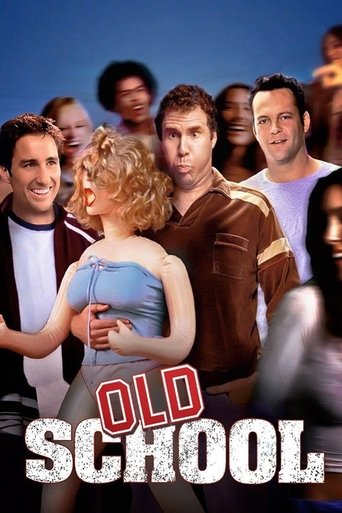
- Genre: Comedy
- Director: Todd Phillips
- Year: 2003
- Runtime: 1h 32m
- Language: English (EN)
- TMDB Rating: ⭐ 6.6/10
Movie Overview
The plot of Old School kicks off when Mitch Martin (Luke Wilson) comes home early to find his girlfriend engaged in a group activity that doesn't involve him. Suddenly single and homeless, he rents a house near his old college campus. His best friends—the newly married, already domesticated Frank (Will Ferrell) and the cynical family man Beanie (Vince Vaughn)—see this not as a crisis, but as an opportunity.
After throwing a legendary house party, Beanie gets the bright idea to turn their new hangout into an official fraternity to skirt zoning laws enforced by the bitter Dean Pritchard (Jeremy Piven). What follows is a series of escalating dares, pathetic recruitment drives, and desperate attempts to recapture a youth that has long since passed them by.
It's a simple premise: three guys in their thirties start a frat. But it's really about Mitch trying to find his footing after his life implodes, while his friends drag him back into the one thing he thought he'd outgrown. He's pulled between a new love interest, Nicole (Ellen Pompeo), and the chaotic world of keg stands and pledge week.
The central conflict isn't just with the dean; it's with themselves. They're fighting the inevitable slide into adult responsibility, and they're losing badly.
Direction & Cinematography
Todd Phillips’ direction in Old School is utilitarian, but in a way that serves the material perfectly. There's no fancy camerawork here. He knows his job is to point the camera at Will Ferrell and Vince Vaughn and let them cook. I'll admit I didn't expect to notice much on the directorial front, but Phillips's background in documentaries shows in the party scenes. The camera is often handheld, weaving through crowds, making you feel like you’re a slightly-too-old guest at the party yourself.
And then he'll contrast that with the flat, static shots of Mitch's life—in his boring office, in his sterile old apartment. The visual language tells you which world is more 'alive,' even if it's a deeply childish one. The pacing is relentless; Phillips doesn't give you much time to breathe between jokes, which helps the weaker gags go by before you have time to scrutinize them.
What surprised me most was how Phillips stages the big set pieces. The streaking scene isn't just Frank running naked; it's framed with a sense of suburban absurdity, with Frank's wife looking on from the car. It’s a choice that makes the moment funnier and a little bit sadder.
Cast & Performances
The performances in Old School are what hold the whole thing together. Luke Wilson is the film's necessary anchor as Mitch. He's the straight man, and his job is mostly to react. But watch his face when Beanie first suggests the fraternity idea; it's a perfect mix of exhaustion and faint curiosity. He grounds the film's absurd premise in something approaching reality.
Of course, this is Will Ferrell's movie. As Frank “The Tank” Ricard, he's a force of nature. It’s not just shouting and taking his clothes off. It's the desperate sincerity he brings to lines like "You're my boy, Blue!" at a funeral for a man he just met. On rewatch, I noticed how much of his performance is about a man terrified of his own quiet life; the mania is a defense mechanism.
And you can't forget Vince Vaughn as Beanie. He delivers his dialogue like a machine gun, spitting out terrible, life-ruining ideas with the confidence of a CEO. Personally, I think his performance is almost as important as Ferrell's. He's the devil on Mitch's shoulder, and the film would completely fall apart without his manic, persuasive energy.
Character Psychology
At his core, Mitch Martin just wants things to be stable. He wants the nice girlfriend, the respectable job, the quiet adult life. But what he actually needs is to stop being so passive and take control. The fraternity is the most backward way imaginable to achieve that, a regression that ironically forces him to finally grow up and make a choice for himself.
Frank and Beanie, on the other hand, are not on a journey of self-discovery. They are what they are: men terrified of becoming irrelevant and old.
Themes & Emotional Depth
Beyond the keg stands and toilet humor, the film is about the deep, abiding fear of getting old. Not just in body, but in spirit. These men are staring down the barrel of minivans, mortgages, and quiet nights in, and they recoil in terror. The fraternity isn't a fun lark; it's a desperate, last-ditch effort to stop time, fueled by cheap beer and nostalgia.
What stayed with me after the credits was the film's take on male friendship. It's messy, often stupid, and based on a shared history that no one else can understand. Beanie and Frank's attempts to 'help' Mitch are objectively terrible, but they come from a place of genuine, if deeply misguided, affection. It’s about the guys who knew you before you had to be a grown-up.
Memorable Scenes & Dialogue
First, there's the infamous streaking scene. Frank, having consumed an entire party's worth of beer, is told by his wife to have just one more for the road. What follows is a slow, determined jog through the town square, set to Kansas's "Dust in the Wind." The scene works because of Ferrell's dead-serious commitment and the perfect musical counterpoint. The tranquilizer dart to the neck is just the cherry on top.
Second is the debate. Frank, roped into a formal debate against James Carville, delivers a rambling, nonsensical answer about freedom that devolves into him talking about a childhood dream. The joke is his complete failure to engage with the topic, and Ferrell plays the misplaced confidence beautifully.
Finally, the KY Jelly wrestling scene. It's pure physical comedy, a moment of such juvenile absurdity that you can't help but laugh. It bothered me slightly on first viewing, but now I see it as the purest expression of the film's thesis: this is what happens when adult impulse control dies.
The Ending — Does It Deliver?
The climax involves a series of ridiculous 'academic and athletic' challenges designed by Dean Pritchard to get the fraternity shut down for good. It's completely over-the-top, involving everything from gymnastics to a spelling bee. No, it's not a particularly surprising ending; you know the underdogs are going to have to pull off a miracle.
But the ending feels earned within the film's own silly logic. It pays off character traits—Beanie's fast-talking, Mitch's newfound leadership, and Frank's… well, Frank's unique set of skills. The final moments leave you with a sense of goofy, unearned triumph, which is exactly what the film was aiming for all along.
What Works
Will Ferrell's performance as Frank the Tank is the film's chaotic, beating heart; it's a comedy masterclass in going way too far. The chemistry between Wilson, Ferrell, and Vaughn feels authentic, making their dumb quest almost believable. The script is also packed with quotable lines that have endured for a reason. Moments like the disastrous debate or the KY jelly wrestling are prime examples of absurd physical comedy done right, creating scenes that are impossible to forget.
Honest Criticism
The female characters are almost completely one-dimensional. Ellen Pompeo's Nicole exists only as a romantic goal for Mitch, with no real personality of her own. A lot of the humor, particularly some of the casual homophobic and misogynistic jokes, simply hasn't aged well and can feel jarring today. The central plot device with Dean Pritchard feels like a lazy narrative shortcut to create conflict when the real conflict is internal.
How It Compares
The most obvious comparison is *Animal House*. *Old School* is essentially a remake in spirit, but for a generation that was nostalgic for the 1970s instead of living through them. *Animal House* feels more dangerous and legitimately counter-cultural for its era. *Old School* is a much more polished, studio-friendly product, trading anarchy for well-packaged absurdity.
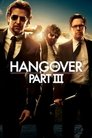
Compared to Todd Phillips's later hit, *The Hangover*, *Old School* feels looser and more character-focused. *The Hangover* is a plot machine, a mystery box of comedic escalations. *Old School* is just about hanging out with these three idiots, and personally, I think it has more heart because of it. It lacks the gross-out extremes of a Farrelly Brothers film, aiming for a slightly different brand of chaos.
Legacy & Cultural Impact
*Old School* was a significant hit, earning over $87 million on a modest $24 million budget. It didn't win major awards, but its impact was huge. It solidified the term "Frat Pack" to describe the group of actors like Ferrell, Vaughn, Wilson, and Ben Stiller who dominated 2000s comedy. More importantly, it was the film that proved Will Ferrell could be a leading man and a massive box office draw outside of *Saturday Night Live*.
Its success also set a template for R-rated comedies for the next decade, leading directly to hits like *Wedding Crashers* and *The Hangover*. It became a cultural touchstone, with lines like "You're my boy, Blue!" entering the popular lexicon.
Behind the Scenes
- Director Todd Phillips has a small cameo early in the film. He's the guy who opens the door to Mitch's apartment and says he's there to "hook up with a couple of students."
- According to the cast, the scene where Will Ferrell is shot with a tranquilizer dart was done with a real, though low-power, tranquilizer gun. Ferrell reportedly had to be convinced to do the stunt.
- An early draft of the script was apparently much darker, portraying the main characters as more genuinely pathetic losers. The studio encouraged Phillips and the writers to lighten the tone considerably.
Who Should Watch It?
If you grew up with 2000s comedies and have a high tolerance for juvenile humor, this is a nostalgic comfort watch. Anyone looking for a more thoughtful, progressive, or clever brand of comedy should probably give this one a pass.
Final Verdict
This film is a time capsule from an era of comedy that feels both recent and long gone. Its humor is broad, its characters are thin, and its politics are dated. And yet, it's undeniably effective at what it does. Its high rating is justified by the sheer force of Will Ferrell's star-making performance, which elevates the entire project. If you need a reminder of what a pure, uncut comedy superstar looks like at liftoff, this is it.
More details, ratings, and cast information on IMDb, TMDB, Wikipedia. YouTube