- 1Movie Overview
- 2Direction & Cinematography
- 3Cast & Performances
- 4Character Psychology
- 5Themes & Emotional Depth
- 6Memorable Scenes & Dialogue
- 7The Ending — Does It Deliver?
- 8What Works
- 9Honest Criticism
- 10How It Compares
- 11Legacy & Cultural Impact
- 12Behind the Scenes
- 13Who Should Watch It?
- 14Final Verdict
- Genre: Animation, Comedy, Family
- Director: David Silverman
- Year: 2007
- Runtime: 1h 27m
- Language: English (EN)
- TMDB Rating: ⭐ 7.0/10
Movie Overview
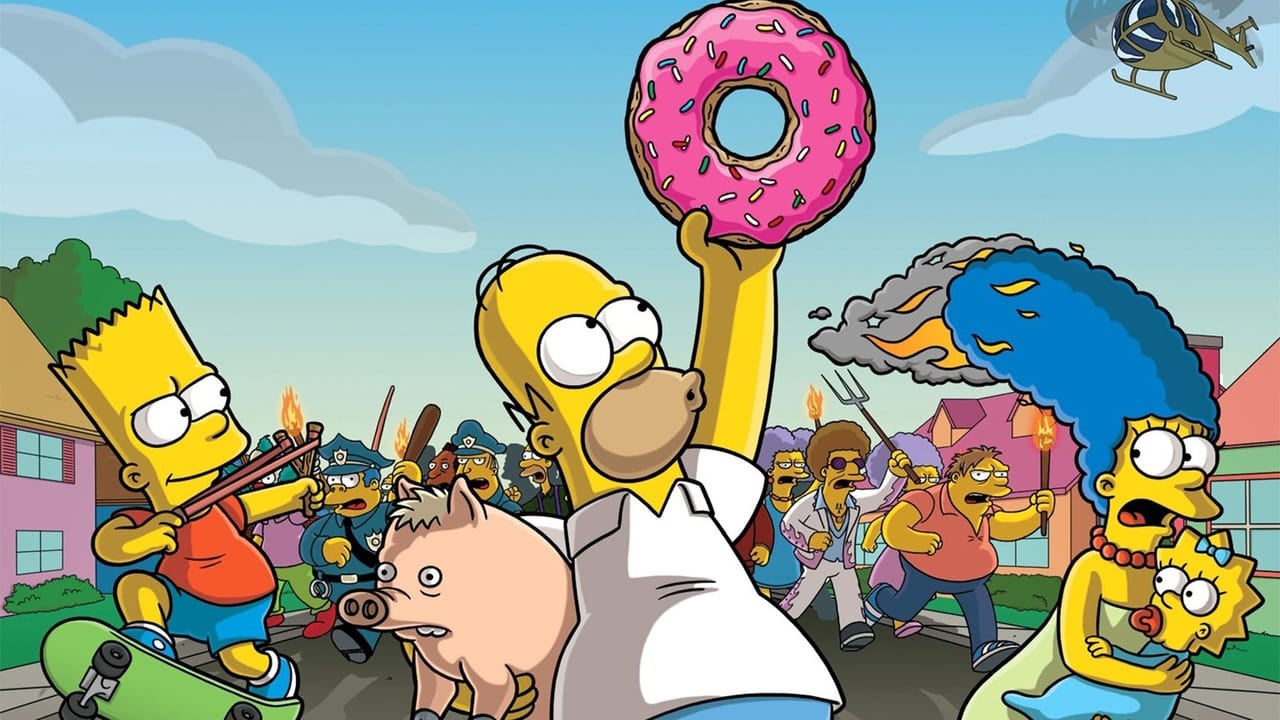
The plot of *The Simpsons Movie* kicks off when Homer, in a moment of peak selfishness involving a pig and a silo of its waste, pollutes Springfield's lake so badly that the Environmental Protection Agency takes notice. Led by the chipper but despotic Russ Cargill, the EPA traps the entire town under a giant glass dome. The townspeople, naturally, discover Homer is to blame and form a torch-wielding mob, forcing the Simpsons to flee.
Their escape leads them to Alaska, where Homer embraces a life free from responsibility, while Marge, Bart, and Lisa watch their hometown's plight on the news. The real conflict isn't escaping the dome; it's the fracture within the family. Bart, desperate for a father figure who cares, starts spending time with Ned Flanders, a choice that cuts Homer deeper than any pitchfork.
Soon, Marge is forced to make a choice between her husband's blissful ignorance and the home she left behind. It's a surprisingly effective emotional setup for a film that also features a pig in a superhero cape.
The final act sees the family forced to confront the mess they (mostly Homer) made, with the fate of everyone they've ever known hanging in the balance.
Direction & Cinematography
Director David Silverman faced the unenviable task of turning a 22-minute, sitcom-structured cartoon into an 87-minute film, and *The Simpsons Movie* largely succeeds. The pacing is relentless, cramming in more gags per minute than most feature comedies. Silverman understands that the key is escalation. A simple dare for Bart to skateboard naked to the Krusty Burger becomes a huge, widescreen set piece involving carefully placed foreground objects and a full police pursuit. It feels bigger than TV.
But the direction also knows when to be quiet. What surprised me most was how Silverman handles the film's emotional turning point: Marge's goodbye video to Homer. The camera just holds on a staticky television screen as we hear her voice finally break. It’s a simple, stark choice that lets the weight of two decades of character history land without any visual distraction.
Personally, I think the film's visual language is its most underrated aspect. The wide shots showing the scale of the dome, the detailed chaos of the mob scenes, and the fluid character animation are a significant step up from the series, giving the story the cinematic scope it needed to justify a theatrical run.
Cast & Performances
The main voice cast of *The Simpsons Movie* had been playing these characters for nearly 20 years, but they find new notes here. Dan Castellaneta’s Homer isn't just a lovable oaf; there's a real pathetic quality to him in Alaska as he denies the damage he's caused. The hurt in his voice when he realizes Bart prefers Flanders is palpable, selling the entire emotional journey of the second half.
I'll admit I didn't expect Julie Kavner's Marge to be the film's anchor, but she is. Her raspy whisper on the goodbye tape is the one moment the film gets completely serious, and it works because Kavner plays it with utter sincerity. Nancy Cartwright also gets a rare chance to show Bart's vulnerability. His line delivery when he's tying a rope with Flanders, looking for praise, has a sadness that the show rarely allows.
Even Hank Azaria, voicing a new character, finds something interesting. His Russ Cargill isn't a cackling villain. Azaria gives him a calm, cheerful, bureaucratic menace that's somehow funnier and more unnerving than simple evil would have been.
Character Psychology
Homer Simpson has always wanted one thing: consequence-free comfort. He wants the donut, the beer, and the adoring family without having to do any of the work. The film's entire purpose is to finally show him an inescapable consequence. He doesn't just annoy his neighbor; he destroys his town and, more importantly, alienates his son.
What he actually needs is to understand that his actions have a direct impact on the people he loves. The entire Alaskan interlude is Homer's attempt to build a new life where this isn't true, but Marge and Bart's misery make that impossible. He's not a self-aware character, but the movie pushes him as close as he's ever been.
Themes & Emotional Depth
Beyond the environmental satire, which is mostly a plot device, the film is about responsibility. It explores the tension between an individual's selfish desires (Homer's pig) and their duty to their community (the entire town of Springfield). Homer has to learn, in the most dramatic way possible, that his choices affect more than just himself. It’s a lesson the series touches on but rarely commits to with this much weight.
But more pointedly, it's about fathers and sons. The Bart/Flanders subplot is the emotional engine. What does a boy do when his own father is more interested in a pig than in him? Bart's search for a paternal figure who is present and caring is what finally forces Homer to look outside himself. What stayed with me after the credits was this simple, relatable family drama playing out against a blockbuster disaster-movie backdrop.
Memorable Scenes & Dialogue
1. **Spider-Pig.** It's a moment of pure, joyful absurdity. Homer holds his new pet pig, Plopper, to the ceiling and has him walk across it while singing a parody of the Spider-Man theme. There's no joke other than the sheer randomness of the act, and it perfectly captures Homer's easily-distracted mind. The scene is staged with zero fanfare, which makes it even funnier.
2. **Bart's Naked Skateboard Ride.** A classic dare that the film blows up to cinematic proportions. To avoid having to work, Bart skateboards nude across town to Krusty Burger. The sequence is a long, well-choreographed chase edited for maximum comic effect, using everything from a passing frisbee to a row of shrubs to obscure him. It's a great example of the film using its bigger canvas for a bigger gag.
3. **Marge's Goodbye Video.** This scene didn't land for me on first watch, but on rewatch, I noticed it's the lynchpin of the whole movie. Alone in their Alaskan cabin, Homer watches a tape Marge recorded over their wedding video. She calmly explains why she and the kids have to leave him. The animation is static—just a TV screen. It's all in Julie Kavner's voice, which cracks with exhausted sadness. It's the one moment the film isn't trying to be funny, and it grounds everything that follows.
The Ending — Does It Deliver?
The climax involves Homer on a motorcycle, riding up the side of the dome to drop a bomb through the hole at the top. It's preposterous, but it feels earned. The entire movie builds to this single act of selfless heroism from Springfield's most selfish man. I kept waiting for him to mess it up in a classic Homer way, but the film plays it surprisingly straight, generating some actual suspense.
What surprised me most was the small character beat at its peak, a moment of connection with Bart that pays off their fractured relationship. The final scenes are a reset button, as they must be for *The Simpsons*, but the feeling is different. There's a sense of relief and a quiet warmth, a family reforged by crisis. It's a satisfying, if predictable, resolution.
What Works
The film successfully translates the show's dense, gag-heavy humor to a feature length without feeling exhausting. The decision to anchor the massive plot in a genuinely affecting story about Homer and Bart's broken relationship gives the movie a surprising amount of heart. The animation is a clear highlight, with the mob scenes and the destruction of the dome showcasing a scale and detail impossible on television. What stayed with me after the credits was the feeling that they truly understood what makes the family dynamic work.
Honest Criticism
It bothered me slightly that the villain, Russ Cargill, feels more like a plot function than a character. He shows up, announces his insane plan, and acts as a generic antagonist for the third act. Albert Brooks is funny, but the character's motivation is paper-thin, essentially boiling down to 'power-mad bureaucrat.' The final confrontation with him feels tacked on after the much more important climax of Homer saving the town.
How It Compares
The most obvious comparison is *South Park: Bigger, Longer & Uncut*. Where *South Park* went for broke with R-rated satire and a full-blown musical structure, *The Simpsons Movie* is a much safer, PG-13 affair that feels more like a traditional disaster movie parody. Personally, I think *South Park* is a sharper, more daring film, but *The Simpsons Movie* has a stronger emotional core with the Homer-Bart story.
It also shares DNA with *Beavis and Butt-Head Do America*, another movie based on a beloved animated TV show. But while that film was a lean, focused road trip comedy, *The Simpsons* aims for a much grander scale, with a massive cast of supporting characters and world-ending stakes. It's less of a cult film and more of a genuine four-quadrant blockbuster.
Legacy & Cultural Impact
Released in 2007 after nearly two decades of development hell, *The Simpsons Movie* was a massive commercial success, earning over $536 million worldwide. The critical reception was largely one of pleasant surprise; most reviewers agreed that the writers had managed to pull off the difficult task of expanding the show's world without breaking it. It didn't win major awards outside of some nominations at the Annies and Golden Globes, but its real legacy was proving it could be done.
It set a new standard for adapting a long-running animated series to the big screen, a bar that films like *The Bob's Burgers Movie* would later have to clear. The main conversation wasn't about its artistic merit so much as the simple relief that they didn't ruin it.
Behind the Scenes
- The script reportedly went through over 160 drafts, with the core writing team of James L. Brooks, Matt Groening, Al Jean, and others spending years in a room together hashing it out.
- The antagonist, EPA head Russ Cargill, was a late addition. Albert Brooks, who voices him, improvised a lot of his dialogue, including the line where he gives the government five options and reveals they're all horrible.
- A subplot involving Marge having a prophetic vision in church was almost entirely cut. An early trailer shows a glimpse of it, with Marge speaking in tongues on the floor.
Who Should Watch It?
Anyone who grew up with the show, especially during its 90s peak, will find this a satisfying and often hilarious big-screen outing. It's a love letter to that era. However, viewers with no prior connection to the Simpsons family might find the emotional beats unearned and the sheer volume of characters overwhelming.
Final Verdict
I wasn't expecting much, but *The Simpsons Movie* is a legitimately good film that justifies its own existence. It manages the near-impossible tightrope walk of feeling both cinematic and true to its television roots. The rating is earned by its ability to deliver blockbuster-level spectacle while never losing sight of the small, dysfunctional family dynamics at its core. If you have any affection for these characters, it's an easy recommendation.
More details, ratings, and cast information on IMDb, TMDB, Wikipedia. YouTube