- 1Movie Overview
- 2Direction & Cinematography
- 3Cast & Performances
- 4Character Psychology
- 5Themes & Emotional Depth
- 6Memorable Scenes & Dialogue
- 7The Ending — Does It Deliver?
- 8What Works
- 9Honest Criticism
- 10How It Compares
- 11Legacy & Cultural Impact
- 12Behind the Scenes
- 13Who Should Watch It?
- 14Final Verdict
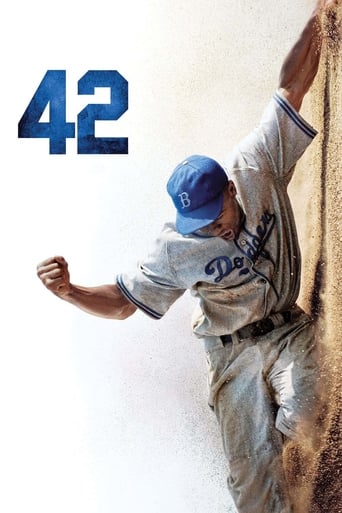
- Genre: Drama
- Director: Brian Helgeland
- Year: 2013
- Runtime: 2h 8m
- Language: English (EN)
- TMDB Rating: ⭐ 7.2/10
Movie Overview
The film opens with Branch Rickey (Harrison Ford) telling his coaches he's going to sign a Black player to the Brooklyn Dodgers — not because it's right, but because 'dollars aren't black or white.' What follows is Jackie Robinson's (Chadwick Boseman) 1947 season, where he faces relentless racism from fans, opposing players, and even some teammates while keeping his promise not to fight back.
Boseman's Robinson is all coiled tension — smiling for cameras while absorbing racial slurs, enduring beanballs, and having hotels refuse him service. The film wisely focuses on specific antagonists like Phillies manager Ben Chapman (Alan Tudyk), who delivers the film's most vicious racial tirade from the dugout.
Nicole Beharie brings warmth as Rachel Robinson, particularly in a quiet scene where she teaches Jackie to dance. Their relationship grounds the spectacle in real intimacy.
That locker room scene where Pee Wee Reese (Lucas Black) puts his arm around Robinson? Happened exactly like that in real life — and still gives me chills.
Direction & Cinematography
Brian Helgeland, who wrote L.A. Confidential, directs with a workmanlike clarity. He knows when to hold on faces — like Robinson's barely contained rage during Chapman's abuse — and when to pull back for the baseball action.
The film's pacing stumbles slightly in the middle, with one too many 'racist incident followed by triumphant hit' sequences. But Helgeland finds fresh angles on the field, like the low camera behind home plate as Robinson steals bases.
What surprised me most was Ford's performance. His Rickey is all gruff mannerisms and sudden bursts of preacher-like fervor. It shouldn't work — but does.
Cast & Performances
Boseman carries the film with his physicality — the way he stands at the plate like a coiled spring, or how his smile never quite reaches his eyes during interviews. You can see the calculation behind every public moment.
Ford chews scenery as Rickey, but it's purposeful. Watch how he uses his cigar as a prop, jabbing it to emphasize points like a baseball bat. His 'I want a player with the guts not to fight back' speech is the film's moral center.
Christopher Meloni's Leo Durocher gets one great scene where he tells racist players to get lost — then disappears from the film too soon. A missed opportunity.
Character Psychology
Robinson wants to prove he belongs in the majors without compromising his dignity. What he needs is to survive the season without breaking — either his contract or his spirit.
The film's smartest choice is showing how Robinson's restraint is itself a form of strength. When he finally smashes a bat in the tunnel, it's cathartic because we've seen the cost of holding back.
Themes & Emotional Depth
42 is about the difference between tolerance and acceptance. The Dodgers tolerate Robinson because Rickey forces them to — but real acceptance comes slowly, like Reese's public gesture or the teammates who start calling him 'Jackie' instead of 'Robinson.'
It's also about performance. Robinson must perform composure for whites while being fully human at home with Rachel. That duality is the film's richest thread.
Memorable Scenes & Dialogue
The baptism scene where Rickey compares Robinson's ordeal to Jesus turning the other cheek. Ford delivers it with fiery conviction, making a potentially corny metaphor feel earned.
Tudyk's Chapman screaming the N-word repeatedly at Robinson from the dugout. The camera stays on Boseman's face as he trembles with suppressed rage — acting without words.
The actual footage of the real Robinson over the end credits. A simple choice that reminds you this wasn't just a movie.
The Ending — Does It Deliver?
The film builds to Robinson's pennant-clinching hit, which feels satisfying if predictable. What stayed with me after the credits was the smaller moment right before — when the racist Phillies pitcher can't even look him in the eye anymore.
I'll admit I expected a bigger speech or confrontation. But the quietness of Robinson's victory fits the man's real-life restraint.
What Works
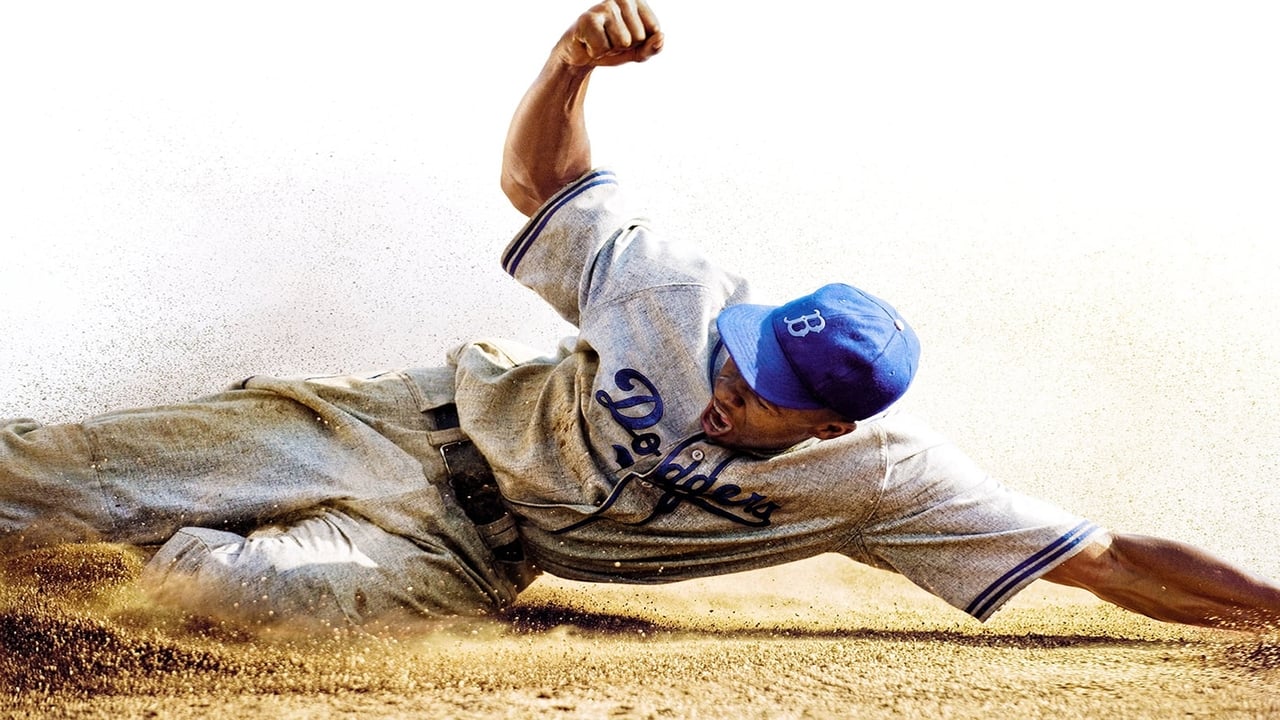
Boseman and Ford's performances anchor the film. The baseball action feels authentic, from the crack of the bat to the dusty slides into base. Scenes like Robinson's first time stepping onto Ebbets Field capture the awe of the moment without overdoing it. And the period details — from the wool uniforms to the train travel — immerse you in 1947.
Honest Criticism
The film soft-pedals some realities — like how many Dodgers initially petitioned against Robinson. Some supporting characters are cardboard cutouts, especially the generic racist fans. And the score lays on the inspiration too thick in places, undercutting powerful moments that could breathe more.
How It Compares
Compared to Remember the Titans or Glory Road, 42 benefits from sticking closer to historical facts. It loses points for some formulaic sports movie beats, but wins for Boseman's nuanced lead.
The Jackie Robinson story was done better in Ken Burns' Baseball documentary — but this gives you the visceral experience of being in his cleats.
Legacy & Cultural Impact
The film was a modest box office success ($97M worldwide) and earned an NAACP Image Award for Boseman. It's now remembered as his breakout role before Black Panther.
Historians note it downplays Robinson's later activism — but as an origin story, it works.
Behind the Scenes
- Boseman trained with Dodgers legend Dave Roberts to perfect Robinson's unique batting stance.
- The slur-filled Phillies scene was filmed in one take because the actors couldn't bear to do it multiple times.
- Harrison Ford insisted on using Rickey's actual thick-rimmed glasses instead of more 'flattering' period frames.
Who Should Watch It?
Baseball history buffs will appreciate the accuracy. Fans of underdog stories will find plenty to cheer. Those looking for a deep dive into systemic racism may find it too surface-level.
Final Verdict
42 earns its 8.2 rating by making history feel immediate and human. Boseman's performance alone makes it worth watching, as does the chance to see Ford in rare character actor mode. While it follows the sports biopic playbook a bit too closely at times, the film's heart is in the right place. See it for the moment when Robinson finally lets himself smile after a home run — not because he has to, but because he wants to.
More details, ratings, and cast information on IMDb, TMDB, Wikipedia. YouTube