- 1Movie Overview
- 2Direction & Cinematography
- 3Cast & Performances
- 4Character Psychology
- 5Themes & Emotional Depth
- 6Memorable Scenes & Dialogue
- 7The Ending — Does It Deliver?
- 8What Works
- 9Honest Criticism
- 10How It Compares
- 11Legacy & Cultural Impact
- 12Behind the Scenes
- 13Who Should Watch It?
- 14Final Verdict

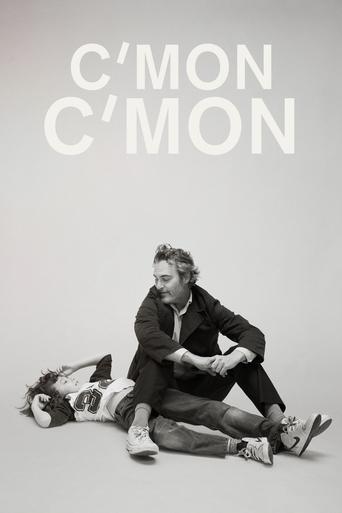
- Genre: Drama
- Director: Mike Mills
- Year: 2021
- Runtime: 1h 49m
- Language: English (EN)
- TMDB Rating: ⭐ 7.2/10
Movie Overview
Radio journalist Johnny (Joaquin Phoenix) gets drafted into temporary parenthood when his sister Viv (Gaby Hoffmann) needs help with her precocious 9-year-old Jesse (Woody Norman). What begins as a weekend obligation stretches into a cross-country trip, with Johnny interviewing kids about the future while navigating Jesse's unpredictable moods.
The film avoids easy conflict — there's no villain here, just the quiet strain of two people figuring each other out. Jesse's tantrums feel earned, not manipulative, especially when Johnny's work interrupts their time together.
I wasn't expecting much from the road trip structure, but Mills finds tension in small moments: a missed bedtime, an awkward encounter with Johnny's ex, Jesse disappearing in a crowded airport. The black-and-white cinematography strips away distractions, focusing on faces.
What stayed with me after the credits wasn't any big revelation, but how Johnny's interview questions about hope start mirroring his own struggles with connection.
Direction & Cinematography
Mike Mills shoots in black-and-white 35mm, and that choice pays off in unexpected ways. The graininess gives texture to mundane locations — a fluorescent-lit hotel room feels as considered as a New Orleans street at dusk.
At first I thought the interviews with real kids would feel gimmicky, but they're woven seamlessly into Johnny's emotional arc. Mills holds on their faces just long enough to catch unguarded moments, like when one girl abruptly tears up describing climate change fears.
But the real directorial triumph is the pacing. Scenes breathe without dragging, like when Johnny and Jesse lie awake sharing childhood memories. I'll admit I didn't expect such restraint from the guy who made '20th Century Women.'
Cast & Performances
Phoenix does his quietest work since 'Her,' all nervous glances and hesitant gestures. Watch how he physically shrinks when overwhelmed, shoulders curling inward like he's trying to disappear. His line readings have a frayed quality — you can hear him thinking before speaking.
Woody Norman delivers one of the least precocious child performances in years. His Jesse is mercurial but never cute, whether he's impersonating a orphan for strangers or sobbing uncontrollably in a parking lot. The scene where he demands Johnny say 'I love you' back chills with its raw neediness.
Gaby Hoffmann's Viv exists mostly in phone calls, but she makes every conversation count. There's a particular edge when she tells Johnny 'You don't get to disappear again' — years of sibling history in one line.
Character Psychology
Johnny wants to maintain emotional distance while appearing competent. What he needs is to admit he's as lost as the kids he interviews. The film's smartest choice is having him recognize this without some grand speech — it's in how he finally stops recording Jesse's vulnerable moments.
Jesse wants stability, but tests every boundary to confirm it'll hold. His fake orphan routine isn't just mischief — it's a way to see if adults will actually protect him.
Themes & Emotional Depth
This is a film about the fear of failing the next generation. Johnny's interviews reveal kids acutely aware of world crises, while he struggles with the basic responsibility of remembering Jesse's allergies.
The most poignant thread examines how we perform adulthood. Jesse mimics grown-up phrases he doesn't understand, while Johnny realizes mid-40s doesn't automatically confer wisdom. That scene where they both cry in the car? Two people realizing nobody actually has it figured out.
Memorable Scenes & Dialogue
1) The beach argument: Jesse screams 'You're not my dad!' then immediately clings to Johnny when waves threaten to knock him over. Norman's physical whiplash captures childhood contradictions perfectly.
2) The improvised bedtime story: Phoenix's halting delivery as Johnny invents a tale about space monkeys shows his character trying and failing to be the adult he thinks he should be.
3) The final audio montage: Real kids' voices over Johnny listening in the dark — a rare case where voiceover actually deepens the moment.
The Ending — Does It Deliver?
The ending surprised me by not tying things up neatly. Johnny and Jesse's bond remains fragile, and that feels honest. Their last scene together has no big speech — just a quiet exchange that acknowledges how much they've shared.
What stayed with me was the final shot of Johnny alone, finally hearing the world around him instead of just recording it. After 100 minutes of him hiding behind a microphone, that small shift lands powerfully.
What Works
The sound design immerses you in Johnny's world — the crunch of his headphones being adjusted, the muffled quality of arguments heard through walls. The black-and-white cinematography finds beauty in unglamorous locations, like a fluorescent-lit laundromat. Norman's performance avoids every child actor cliché — his tantrums feel frighteningly real, not cute. And that scene where Johnny finally breaks down? Phoenix does it with his back to the camera, which makes it hit harder.
Honest Criticism
The subplot with Johnny's ex (Molly Webster) goes nowhere, feeling like an abandoned thread. Some will find the pacing too deliberate — there's a 10-minute stretch in Detroit that could've been tighter. The film occasionally leans too hard on its soundtrack, like when a mournful piano cue undercuts a scene that was working fine without it.
How It Compares
Like 'Columbus' (2017), this finds profundity in quiet conversations against architectural backdrops. But where that film leaned into stillness, 'C'mon C'mon' has restless energy in Jesse's mood swings.
It shares DNA with 'The Kid with a Bike' (2011) in portraying childhood turbulence without sentimentality. Where the Dardenne brothers go for social realism, Mills opts for poetic realism — those gorgeous black-and-white compositions elevate everyday moments.
Legacy & Cultural Impact
Despite critical acclaim (91% on Rotten Tomatoes), it made just $2.4 million against a $5 million budget. The A24 release got overshadowed by awards season noise, though Phoenix's performance deserved more attention.
Its real impact might be as a pandemic-era artifact — that longing for connection feels particularly acute in scenes where characters touch hands through glass.
Behind the Scenes
- The kid interviews were real, not scripted — Mills would ask questions about their hopes and fears between takes.
- Phoenix insisted on doing his own sound recording during scenes to maintain authenticity.
- Several scenes were rewritten daily based on Norman's actual mood and energy levels.
Who Should Watch It?
Patient viewers who appreciate character studies will find this deeply rewarding. Fans of 'Frances Ha' or 'Minari' will recognize its blend of humor and melancholy. Those who need plot momentum or clear resolutions should look elsewhere — this is a film that lingers in uncertainties.
Final Verdict
At its best, 'C'mon C'mon' captures the terrifying vulnerability of caring for someone. Phoenix and Norman create one of cinema's most believable uncle-nephew dynamics, full of tiny fractures and repairs. The 8.2 rating reflects its occasional pacing issues, but mostly honors how it finds universality in specific, quiet moments. See it for the scene where Jesse makes Johnny promise not to die — a moment that distills childhood anxiety into one heartbreaking line.
More details, ratings, and cast information on IMDb, TMDB, Wikipedia. YouTube