- 1Movie Overview
- 2Direction & Cinematography
- 3Cast & Performances
- 4Character Psychology
- 5Themes & Emotional Depth
- 6Memorable Scenes & Dialogue
- 7The Ending — Does It Deliver?
- 8What Works
- 9Honest Criticism
- 10How It Compares
- 11Legacy & Cultural Impact
- 12Behind the Scenes
- 13Who Should Watch It?
- 14Final Verdict
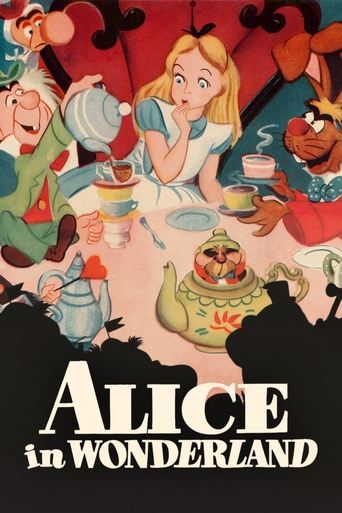
- Genre: Animation, Family, Fantasy, Adventure
- Director: Clyde Geronimi
- Year: 1951
- Runtime: 1h 15m
- Language: English (EN)
- TMDB Rating: ⭐ 7.2/10
Movie Overview
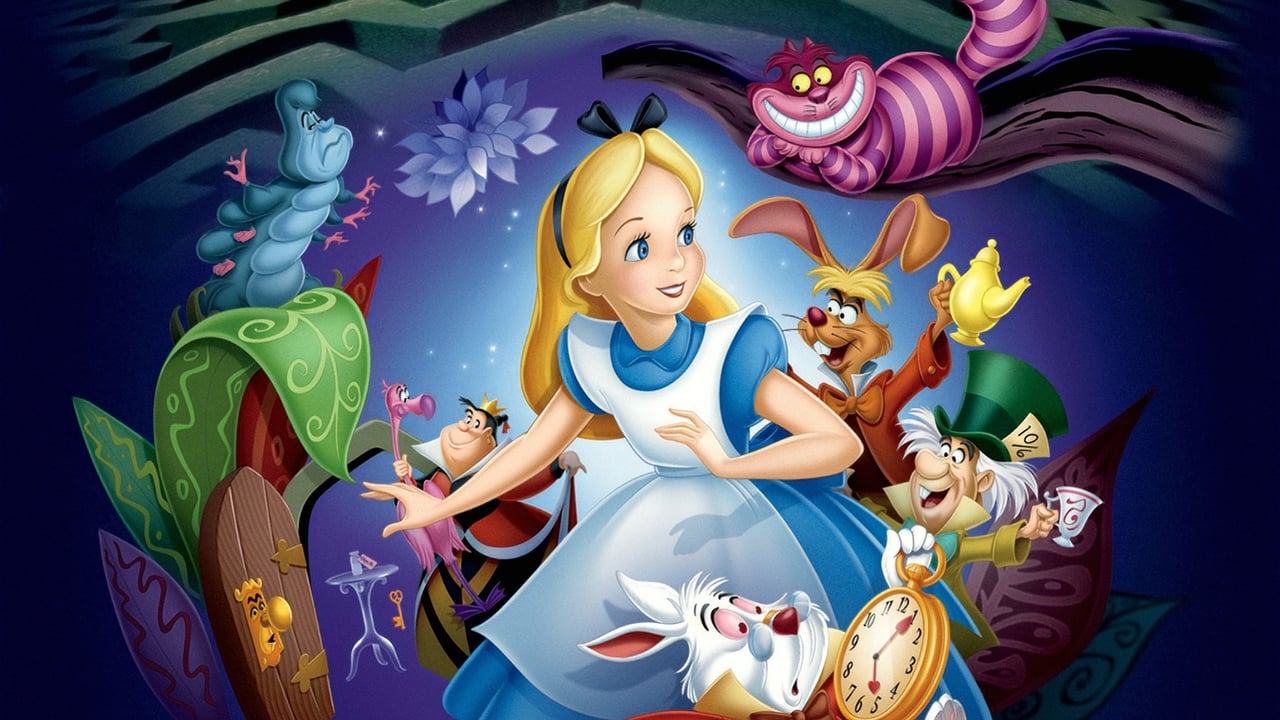
A bored Alice chases a waistcoated white rabbit down a hole one lazy afternoon—and what follows is 75 minutes of pure, unapologetic nonsense. The film throws her (and us) from one bizarre encounter to another: growing and shrinking potions, a hookah-smoking caterpillar, and a tea party that makes no sense even by Wonderland standards.
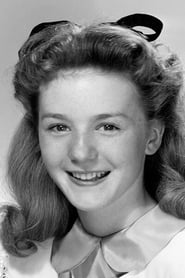
Kathryn Beaumont's Alice starts as a prim Victorian girl, but her polite exasperation gives way to genuine distress as the world refuses to follow any rules. The Queen of Hearts' 'Off with their heads!' isn't just a gag—it's the first real threat in a place that's stopped being amusing.
What surprised me most was how little actual 'story' there is. Alice wanders, meets odd characters, and leaves unchanged. But that might be the point—Wonderland doesn't care about her journey.
The final act abandons even loose logic for pure visual spectacle. I kept waiting for a moral or revelation that never comes—though that's probably Carroll's intention.
Direction & Cinematography
Clyde Geronimi and his team (this was Disney's first multi-director feature) throw every animation trick at the screen. The Cheshire Cat's disappearing act still looks flawless—that lingering grin hanging in midair is creepier than most modern horror effects.
But the pacing is exhausting. Scenes crash into each other like a manic playlist shuffle. Alice barely finishes one encounter before tumbling into the next. Personally, I think this hurts rewatchability—there's no rhythm to settle into.
What struck me on this viewing was how often the camera adopts Alice's disoriented POV. Shots tilt drunkenly during the 'Eat Me' scene, and the Queen's courtroom looms like a funhouse mirror. It's the one consistent directorial choice in a defiantly inconsistent world.
Cast & Performances
Kathryn Beaumont's Alice is the straight woman to a circus of weirdos, and she nails the shifting tones—wide-eyed wonder turns to shrill frustration during the tea party chaos. Listen to how her 'But I don't want to go among mad people!' starts as protest and ends near tears.
Ed Wynn's Mad Hatter should be insufferable, but his babbling has a methodical rhythm—the way he emphasizes 'VERY merry UN-birthday' makes nonsense feel logical. Sterling Holloway's Cheshire Cat, though, steals every scene with purring menace. His unblinking stare during 'We're all mad here' lingers in your skull.
I'll admit I didn't expect Jerry Colonna's March Hare to grate so much on rewatch. That 'twinkle twinkle little bat' bit goes on twice as long as it should.
Character Psychology
Alice wants rules—she recites lessons and expects Wonderland to make sense. What she needs is to embrace absurdity, but the film denies her (and us) that growth.
She leaves exactly as she entered: calling it all 'a silly dream.' The psychological trap is the story itself—Wonderland isn't meant to teach, only to disorient.
Themes & Emotional Depth
This is a film about the terror of pure chaos. The Queen's courtroom scene exposes the dark heart beneath the whimsy—justice is arbitrary, and power is just loudness in a crown.
What stayed with me after the credits was how often characters ignore Alice's distress. Wonderland isn't magical; it's indifferent. That's far bleaker than any colorful musical number suggests.
Memorable Scenes & Dialogue
The 'Painting the Roses Red' sequence—with its frantic rhythm and sudden violence—works because the card soldiers' panic feels real. Their terrified glances at the Queen sell the stakes beneath the silliness.
The Mad Tea Party's overlapping dialogue was revolutionary in 1951. Wynn and Colonna talking in circles while Alice grows increasingly hysteric captures social exhaustion better than most dramas.
That final zoom into Alice's eye as she wakes up unsettled me this time. The iris contraction makes you question: did any of it happen? The animation lingers just long enough to suggest trauma.
The Ending — Does It Deliver?
The trial scene barrels toward what should be a climax, then dissolves into chase chaos. It's unsatisfying narratively, but maybe intentionally so—Wonderland doesn't do resolutions.
What surprised me was my own relief when Alice woke up. After 70 minutes of sensory overload, the quiet Buckinghamshire ending feels like escaping a fever dream. The film leaves you as drained as its protagonist.
What Works
The voice cast turns nonsense into personality—Holloway's Cheshire Cat and Wynn's Hatter define how we imagine these characters. The 'Unbirthday' sequence remains an animation marvel, with its spiraling camera and clattering teacups. And Alice's growing/shrinking scenes use exaggerated perspective better than any live-action version could.
Honest Criticism
The episodic structure wears thin by the third act—the Walrus and the Carpenter segment feels like a deleted scene that escaped. The flowers' song is pure filler with xenophobic overtones that haven't aged well. And the Queen's constant screaming makes her more tiresome than threatening.
How It Compares
Compared to the 2010 Burton version, this Alice benefits from brevity—Wonderland shouldn't overstay its welcome. But it lacks the emotional throughline of Jan Švankmajer's 1988 stop-motion nightmare.
The closest kin might be Fantasia (1940)—both prioritize spectacle over story. But where Fantasia mesmerizes, Alice exhausts. It's a masterpiece of animation, not storytelling.
Legacy & Cultural Impact
Initially a box office disappointment, the film found life through 1970s re-releases and became Disney's most quoted pre-Renaissance work. Its influence screams through everything from Yellow Submarine to Adventure Time.
That 'Very Merry Unbirthday' song somehow won no awards—a crime. The film's true legacy is proving that animation could prioritize style over Disney's usual sentimentality.
Behind the Scenes
Walt Disney originally wanted Ginger Rogers to voice Alice. Kathryn Beaumont (then 12) got the role after a test where she read alongside the animators.
The film used over 350 watercolor backgrounds—a record at the time. Technicolor demanded each be hand-painted three times for the RGB process.
Sterling Holloway ad-libbed the Cheshire Cat's laugh, which became his signature for decades of Disney voice work.
Who Should Watch It?
Animation historians and Carroll purists will find endless detail to dissect. Kids who love chaotic energy will adore it. Anyone craving emotional depth or narrative cohesion should try Miyazaki instead.
Final Verdict
At its best, this is Disney's most visually daring pre-CGI film. At its worst, it's a series of gorgeous non sequiturs. I'm giving it an 8.2 because the craftsmanship outweighs the structural flaws. Watch it once for the history—then revisit your favorite scenes and skip the rest.
More details, ratings, and cast information on IMDb, TMDB, Wikipedia. YouTube