- 1Movie Overview
- 2Direction & Cinematography
- 3Cast & Performances
- 4Character Psychology
- 5Themes & Emotional Depth
- 6Memorable Scenes & Dialogue
- 7The Ending — Does It Deliver?
- 8What Works
- 9Honest Criticism
- 10How It Compares
- 11Legacy & Cultural Impact
- 12Behind the Scenes
- 13Who Should Watch It?
- 14Final Verdict
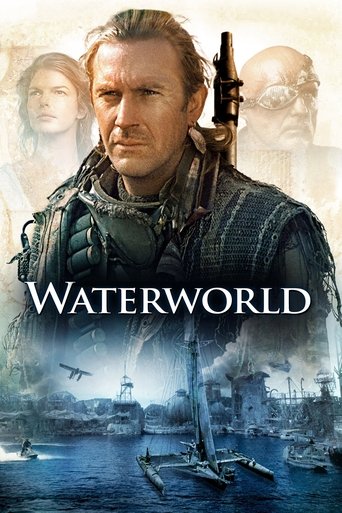
- Genre: Adventure, Action, Science Fiction
- Director: Kevin Reynolds
- Year: 1995
- Runtime: 2h 15m
- Language: English (EN)
- TMDB Rating: ⭐ 6.2/10
Movie Overview
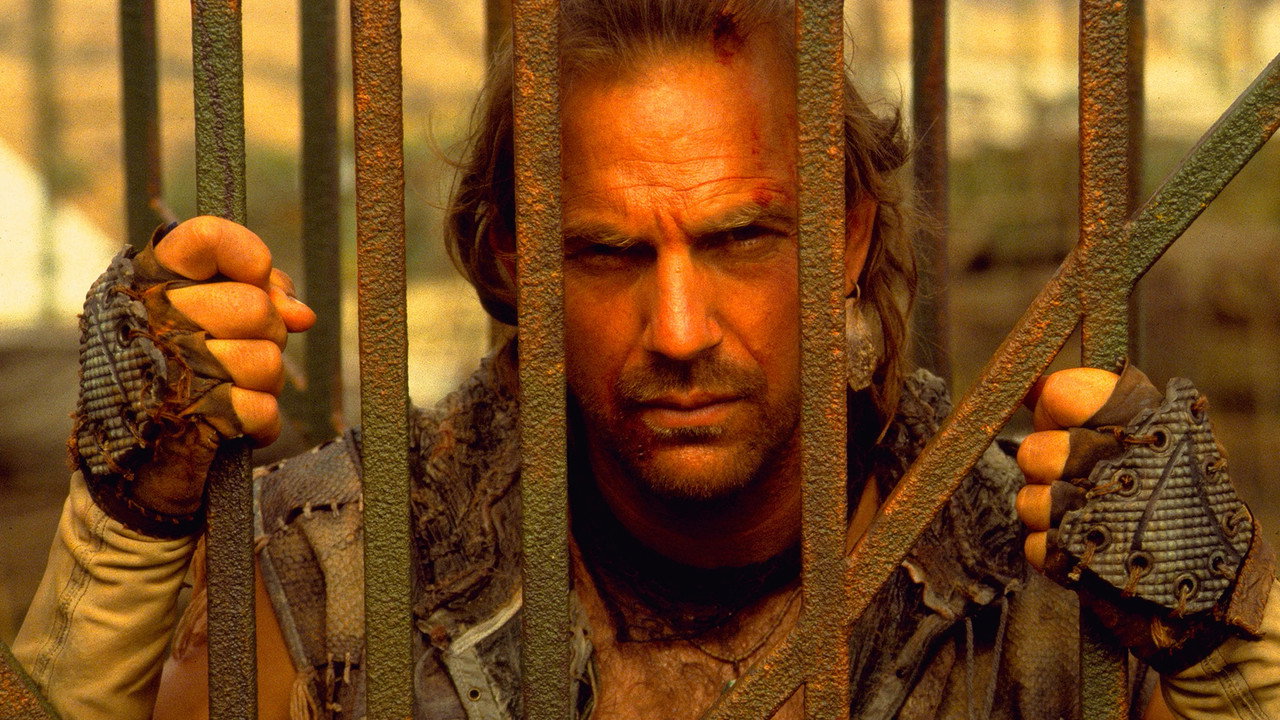
Waterworld opens not with a bang, but with the quiet, unsettling sound of Kevin Costner’s character, the Mariner, recycling his own urine. This is the future: the ice caps have melted, covering the Earth in a single, endless ocean. Humanity survives on ramshackle floating atolls, dreaming of a mythical 'Dryland'. The Mariner is a loner, a mutant with gills and webbed feet, who trades dirt—a priceless commodity—and wants nothing to do with anyone.
His isolation is shattered when a desperate community, led by Helen (Jeanne Tripplehorn), is attacked by a gang of aqua-jet-ski pirates called the Smokers. They're led by the Deacon (Dennis Hopper), a chain-smoking, one-eyed tyrant who believes a little girl named Enola (Tina Majorino) holds the key to finding Dryland. The Mariner reluctantly escapes with Helen and Enola aboard his tricked-out trimaran, becoming their unwilling protector.
So begins a chase across the ocean. The Mariner, who just wants to be left alone, finds himself stuck with two people who need him. He's a harsh survivalist, they're clinging to hope, and the Smokers are always just over the horizon.
It's a simple story, really: a broken family searching for a home, pursued by cartoonish villains.
Direction & Cinematography
In Waterworld, Kevin Reynolds was tasked with one of the most logistically nightmarish shoots in history, and you feel that ambition in every frame. The sense of scale is immense. The shot where the camera pulls back from the Mariner’s tiny trimaran to reveal the massive, rusted hulk of the Deacon’s tanker is a perfect example of how the direction communicates power and threat without a word.
But the pacing is where Reynolds' control falters. The first act, establishing the atoll and the Mariner's isolation, is fairly efficient. But once the chase begins, the film settles into a repetitive cycle of chase-escape-bicker that swells and recedes without much forward momentum. Personally, I think the film is at its best when it's just letting us live on the boat, showing the small details of survival, like how the Mariner tends his single, pathetic lime tree. It’s in those quiet moments that the world feels most real.
What surprised me most was how much of the action feels genuinely dangerous, because it was. You can see the stunt performers working on moving boats and rickety structures, a far cry from today's CGI-heavy set pieces. It gives the action a weight and clumsiness that feels appropriate for the setting, even if the editing sometimes struggles to keep the geography clear.
Cast & Performances
Kevin Costner's performance in Waterworld is almost entirely physical. As the Mariner, he’s more animal than man for the first half of the film, and Costner plays him as terse, anti-social, and deeply uncomfortable with human contact. It's all in the way he moves on his boat, his reflexes honed by years of solitude. When he's forced to interact with Helen and Enola, his stiffness and clipped line deliveries feel earned. I'll admit I didn't expect him to commit so fully to the character's unlikability early on.
On the complete opposite end of the spectrum is Dennis Hopper as the Deacon. He's not playing a character; he's throwing a party and we're all invited. Every line is a sermon, every gesture is huge. When he yells at his long-suffering second-in-command, "If you can't breathe, you can't cheat!" it’s so absurdly over-the-top that you can't help but enjoy it. That moment didn't land for me on first viewing years ago—it felt silly—but now it seems like Hopper is the only one who understood exactly what kind of movie he was in.
In the middle, you have Jeanne Tripplehorn's Helen. She does her best to be the film's moral and emotional anchor, but the script gives her very little to do beyond reacting to the Mariner's cruelty or the Deacon's villainy. She’s mostly there to ask questions and represent a hope that the Mariner has long since abandoned. It's a thankless role, and unfortunately, she gets a bit lost between the two opposing forces of Costner's stoicism and Hopper's mania.
Character Psychology
The Mariner wants one thing: to be left alone. His entire existence, his boat, his mutations, are all geared toward self-sufficient survival on his own terms. He sees other people not as companions, but as liabilities who will use up his resources and inevitably betray him.
What he actually needs, of course, is connection. He needs to relearn how to be human, a process forced upon him by Helen and, more importantly, Enola. He doesn't change because of some grand epiphany; he changes through a series of small, grudging acts of kindness that slowly break down his defenses.
Themes & Emotional Depth
Beneath the jet-ski chases and explosions, the film is a classic Western dressed up in sci-fi rags. You have the lone, morally gray wanderer (the Mariner), the homesteaders needing protection (Helen and Enola), the savage raiding party (the Smokers), and the vast, unforgiving frontier (the ocean). It’s about the tension between rugged individualism and the necessity of community for society to rebuild itself from ruin.
What stayed with me after the credits, though, is the film's surprisingly bleak take on hope. Dryland isn't a paradise; it’s a simple piece of earth. And the Mariner, the ultimate survivor of the water world, doesn’t belong there. He can’t stay. There’s a sadness to the idea that the very adaptations that allowed him to survive have also made it impossible for him to enjoy the paradise everyone was searching for.
Memorable Scenes & Dialogue
First, the initial attack on the atoll is a masterclass in blockbuster chaos. The Smokers swarm in on jet skis and a rusty trawler, firing wildly. It's not clean or efficient; it's messy and loud, perfectly establishing the pirates as a force of nature and giving us one of the film's best action sequences before the main plot has even fully kicked in.
Second is the quiet, complicated scene where the Mariner teaches Enola to swim by simply throwing her into the ocean. It's a brutal, sink-or-swim moment that shows how incapable he is of normal human empathy. And yet, when she starts to go under, he dives in instantly to save her. It’s the first real crack in his hardened exterior, showing an instinct to protect that he himself doesn't seem to understand yet.
Finally, any of the Deacon's sermons to his grimy followers. Hopper’s speech about Dryland being a lie told by 'the rich' to keep the poor in line, all while he’s hoarding the best resources for himself, is a moment of pure, campy brilliance. It's ridiculous, but it's also a perfect little piece of character-based hypocrisy.
The Ending — Does It Deliver?
The final assault on the Smokers' tanker is exactly the kind of explosive finale the movie promises. It’s loud, long, and involves bungee jumps, jet ski jousting, and a massive oil fire. I wasn't expecting much, but the sheer practical scale of it is admirable. It's less an emotional culmination and more of a contractual obligation to blow everything up, which, for a 90s blockbuster, is fair enough.
But the film's true ending, after the action settles, is much quieter and more interesting. The Mariner's final choice is not a surprise, but it carries a genuine note of melancholy. He's saved everyone and found the promised land, but he can't share in it. The final shot, looking back at Dryland from his trimaran, leaves you with a feeling of loneliness, not triumph. It’s a surprisingly downbeat end to such a bombastic movie.
What Works
The world-building, purely from a design perspective, is fantastic. The detail on the Mariner’s trimaran, the grimy Smokers' tanker, and the floating atoll all feel tangible and lived-in. Dennis Hopper knows exactly what movie he's in, delivering a wonderfully unhinged performance that injects much-needed energy whenever he's on screen. The practical stunt work holds up surprisingly well, providing a sense of real danger that modern CGI-fests lack. The core premise is just cool, and the film commits to it visually.
Honest Criticism
The script is a mess. The dialogue is frequently clunky, and the plot meanders for long stretches in the second act. It bothered me slightly that the relationship between the Mariner and Helen never feels truly earned; it just sort of happens because the plot requires it. At 135 minutes, the film is easily 20 minutes too long, with several repetitive chase scenes that could have been trimmed or cut entirely to tighten the pace.
How It Compares
The most obvious comparison is Mad Max 2: The Road Warrior, and it’s a comparison that does Waterworld no favors. Both feature a cynical loner in a post-apocalyptic wasteland who reluctantly helps a small community fight off flamboyant marauders. But where The Road Warrior is a lean, 90-minute exercise in kinetic, primal filmmaking, Waterworld is bloated and often bogged down by its own ambition and messy script. It has the bigger budget, but not the better story.
It also feels like a less-successful companion piece to Costner’s other big post-apocalyptic swing, The Postman. Both were massive, star-driven follies that were mocked on release, but personally, I think Waterworld is the more entertaining and visually inventive of the two. It at least has the excuse of its wild premise and Dennis Hopper's performance.
Legacy & Cultural Impact
Waterworld is famous for all the wrong reasons. At the time of its release, it was the most expensive film ever made, with a budget that ballooned from an already high $100 million to a rumored $175 million due to a disastrous on-water production. It was plagued by storms, sinking sets, and on-set conflicts between Costner and director Kevin Reynolds. It became Hollywood's cautionary tale, the symbol of blockbuster excess run amok.
The press dubbed it 'Fishtar' and 'Kevin's Gate' before it even opened, and while it wasn't the cataclysmic bomb everyone predicted (it did eventually make a profit thanks to strong international and home video sales), its reputation as a failure has unfairly stuck to it for decades.
Behind the Scenes
A significant source of the on-set friction was creative differences between Kevin Costner and Kevin Reynolds. The conflict grew so severe that Reynolds walked off the project during post-production. Costner then oversaw the final cut of the film himself, which was the theatrical version released to cinemas.
Joss Whedon was brought in during production for a rewrite. He later described the job as 'seven weeks of hell,' tasked with incorporating new ideas from the star and studio with little notice. He has said none of his contributions meaningfully improved the film.
The massive circular atoll set, which weighed 1,000 tons, was not moored to the ocean floor. It had to be constantly rotated by boats to ensure the camera angles were correct in relation to the sun, a major logistical headache.
Who Should Watch It?
If you have a soft spot for ambitious, over-the-top 90s action movies and appreciate practical effects and massive set pieces, you'll probably have a good time with this. Anyone looking for a tight plot, sharp dialogue, or believable character development should probably sail on by.
Final Verdict
Waterworld is a fascinating and entertaining relic of a bygone blockbuster era. It's a mess, to be sure—a clumsy, overpriced, and often silly one—but it's also ambitious and made with a level of tangible craft that you can't help but respect. I'm giving it a 6.8 because its visual ambition and spectacular failures are more interesting than many tidier, safer films. If you can appreciate a movie for its magnificent, waterlogged ambition rather than its narrative perfection, give it a watch.
More details, ratings, and cast information on IMDb, TMDB, Wikipedia. YouTube