- 1Movie Overview
- 2Direction & Cinematography
- 3Cast & Performances
- 4Character Psychology
- 5Themes & Emotional Depth
- 6Memorable Scenes & Dialogue
- 7The Ending — Does It Deliver?
- 8What Works
- 9Honest Criticism
- 10How It Compares
- 11Legacy & Cultural Impact
- 12Behind the Scenes
- 13Who Should Watch It?
- 14Final Verdict
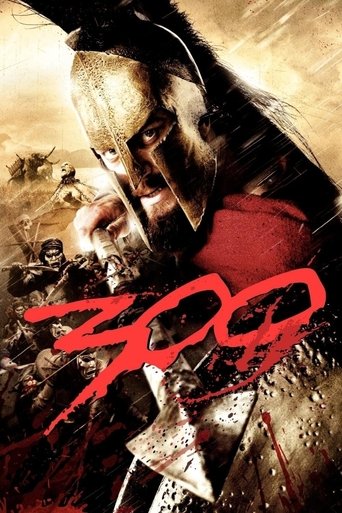
- Genre: Action, Adventure, War
- Director: Zack Snyder
- Year: 2007
- Runtime: 1h 57m
- Language: English (EN)
- TMDB Rating: ⭐ 7.2/10
Movie Overview
The film opens with a Spartan boy being thrown into the wilderness to survive or die — this is how kings are made. Years later, King Leonidas (Gerard Butler) faces an impossible choice when Persian messengers demand Sparta's submission. He kicks them into a well, because Spartans don't negotiate. What follows is less a war than a slaughterhouse ballet: 300 Spartans against Xerxes' endless hordes at Thermopylae's narrow pass.
Leonidas' wife Gorgo (Lena Headey) fights her own battle back home, trying to rally the Spartan council while fending off political snakes. The parallel stories never quite sync up, but Headey makes you feel every second of her struggle. Meanwhile, the Thermopylae battle unfolds like a series of violent tableaus — arrows blotting out the sun, warriors falling in slow motion, blood hanging in the air like red mist.
What surprised me most was how little tactics matter. The Spartans' famous phalanx formation gets about 30 seconds of explanation before Snyder dives back into the carnage. This isn't a war movie so much as a testosterone-fueled dream of one.
That final shot of arrows raining down stays with you.
Direction & Cinematography
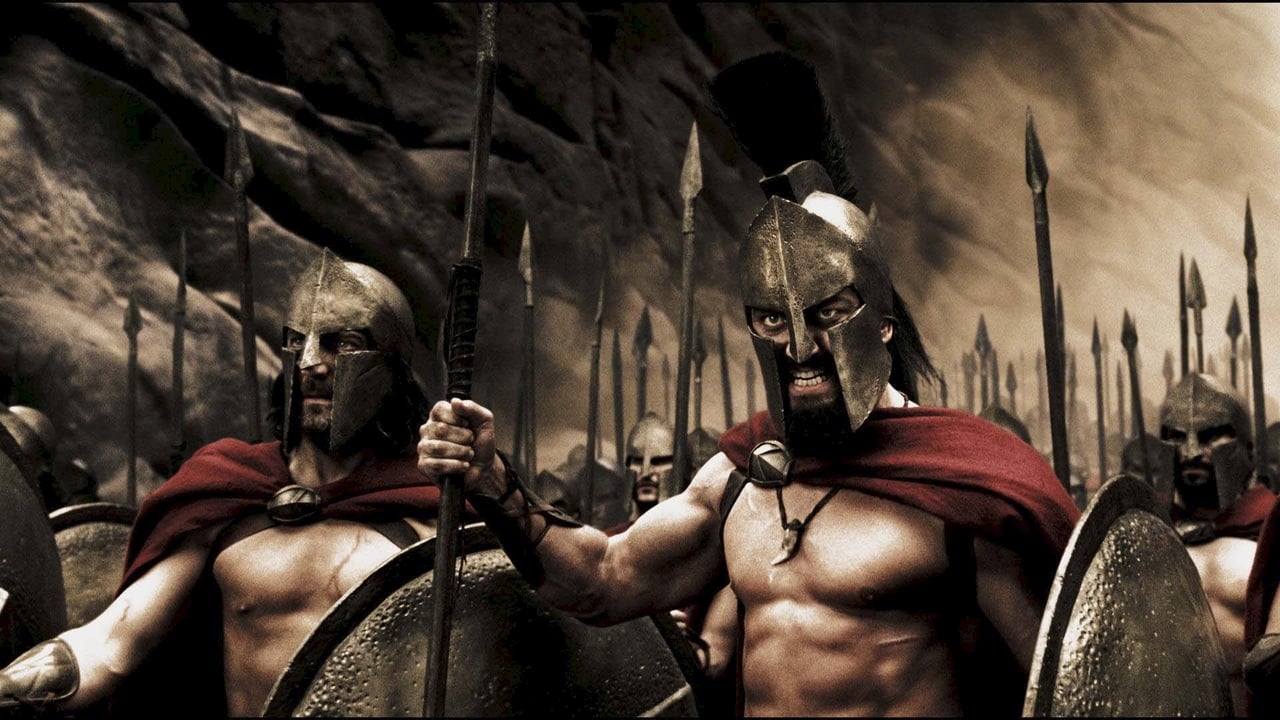
Zack Snyder's signature style — speed ramps, high contrast, and impossible physics — finds its purest expression here. The entire film looks like a Frank Miller comic panel come to life, complete with exaggerated shadows and skies that look painted. Personally, I think the slow-motion gets excessive by the third battle sequence, but when it works — like Leonidas' first spear throw cutting through three enemies in one fluid motion — it's thrilling.
What struck me on rewatch was how little real geography exists. The battlefield feels like a stage, the Persian army like CGI wallpaper. This isn't accidental; Snyder wants us inside the Spartan myth, not the historical reality. The problem is it makes every fight feel weightless after a while.
But the film knows exactly what it is. That shot of Leonidas standing alone against the arrow storm, shield raised, might be ridiculous — but it's ridiculously effective.
Cast & Performances
Gerard Butler's Leonidas is all growl and pectorals, shouting every line like he's addressing a stadium. It should be too much, but somehow works — this is a king who leads by sheer force of personality. Watch how he barely reacts when an axe whizzes past his head in the first battle; the man is carved from granite.
Lena Headey does more with silence than Butler does with roars. Her scene confronting Theron (Dominic West) in the council chamber is the film's tensest moment — no swords, just words and a dagger hidden in her sleeve. I'll admit I didn't expect such nuance from what's essentially a war propaganda film.
David Wenham's Dilios, the one-eyed storyteller, feels like he's in a different movie entirely. His narration lays the mythmaking on too thick, especially when the visuals already scream 'legend'.
Character Psychology
Leonidas wants to die gloriously. That's his entire motivation from frame one. He's not trying to win — he's trying to lose in the most inspiring way possible. The film knows this, framing his sacrifice as a PR move for future generations.
What he needs, but never gets, is to question whether any cause is worth this slaughter. The closest we get is his brief hesitation when Ephialtes begs to join the fight — but even then, Spartan code wins over mercy.
Themes & Emotional Depth
This is a film about the stories we tell ourselves to justify violence. Every Persian is a monster, every Spartan a god — even though historically, both cultures practiced slavery and ritualized war. Snyder leans into this unreliability by having Dilios narrate the tale to Spartan troops, turning history into rallying cry.
The most revealing moment comes when Leonidas calls the Athenians 'boy-lovers' as an insult. The film wants us to cheer this, ignoring that Spartan culture institutionalized pederasty. The enemy is always worse, the film insists, even when the evidence says otherwise.
Memorable Scenes & Dialogue
The 'This is Sparta!' kick isn't just iconic — it's perfectly staged. The messenger stands in shadow, Leonidas in light, and the well's darkness swallows the victim instantly. Snyder holds just long enough on Butler's face to show this isn't rage, but cold calculation.
Xerxes' introduction works because of scale — he towers over Leonidas, gold dripping from his pierced body, voice echoing unnaturally. Rodrigo Santoro plays him like a bored god slumming it with mortals.
The shield bash sequence, where Spartans literally push enemies off a cliff, is where the film's physics fully abandon reality. Bodies fly like ragdolls, and it's glorious nonsense.
The Ending — Does It Deliver?
The ending is inevitable from minute one — we know how Thermopylae ends. What surprised me was how little emotional weight the final stand carries. After so much stylized violence, Leonidas' death feels like checking a box.
What stayed with me after the credits was actually Gorgo's final line: 'My love, my king.' It's the only moment that feels grounded in real loss, not mythmaking.
What Works
The visual style remains striking 15 years later — the golden hues of Persia against Sparta's steely blues create instant iconography. Butler's physical commitment sells Leonidas as a force of nature. The battle choreography, while unrealistic, has a brutal rhythm that keeps the energy high. That moment when arrows blot out the sun is still a perfect marriage of effects and storytelling.
Honest Criticism
The political subplot in Sparta grinds the momentum to a halt every time it cuts back. Dominic West's Theron is so cartoonishly evil he might as well twirl a mustache. The rhino and elephant monsters in Xerxes' army cross from stylized into silly — they belong in a different film.
How It Compares
Compared to Gladiator, 300 lacks emotional depth — Maximus' grief gives weight to his battles, while Leonidas fights for abstract honor. But Snyder's film beats Ridley Scott's in pure visual audacity. Next to Troy, another ancient war epic, 300's stylization works better than Wolfgang Petersen's awkward mix of realism and Hollywood schmaltz.
Legacy & Cultural Impact
300 grossed $456 million worldwide on a $65 million budget, proving R-rated action could dominate. It spawned a mediocre sequel, countless imitators, and cemented Snyder's reputation as a visual stylist. The film won zero major awards but influenced a generation of video game aesthetics and action cinematography.
Behind the Scenes
Gerard Butler tore his hamstring during the famous kick scene, hence the cutaway. The entire film was shot on a Montreal soundstage with bluescreen — no location filming. Frank Miller's original comic was inspired by the 1962 film The 300 Spartans, which Snyder had never seen before making this.
Who Should Watch It?
Action fans who prioritize style over substance will love this. History buffs seeking accuracy should avoid it like the plague. If you think Braveheart needed more slow-motion blood sprays, this is your movie.
Final Verdict
300 earns its 8.2 rating through sheer audacity, not depth. It's less a film than a 117-minute heavy metal album cover. Watch it for Butler's roar, Snyder's visuals, and battles so over-the-top they circle back to brilliance. Just don't expect to learn anything about actual Spartans.
More details, ratings, and cast information on IMDb, TMDB, Wikipedia. YouTube