- 1Movie Overview
- 2Direction & Cinematography
- 3Cast & Performances
- 4Character Psychology
- 5Themes & Emotional Depth
- 6Memorable Scenes & Dialogue
- 7The Ending — Does It Deliver?
- 8What Works
- 9Honest Criticism
- 10How It Compares
- 11Legacy & Cultural Impact
- 12Behind the Scenes
- 13Who Should Watch It?
- 14Final Verdict
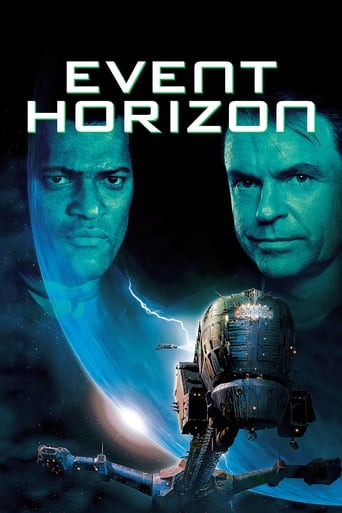
- Genre: Horror, Science Fiction, Mystery
- Director: Paul W. S. Anderson
- Year: 1997
- Runtime: 1h 36m
- Language: English (EN)
- TMDB Rating: ⭐ 6.6/10
Movie Overview
Event Horizon begins with a deceptively simple rescue mission. In 2047, the crew of the *Lewis and Clark*, led by the no-nonsense Captain Miller (Laurence Fishburne), is dispatched to Neptune to investigate the reappearance of the *Event Horizon*, a prototype starship that vanished seven years earlier. They're joined by the ship's haunted-looking designer, Dr. William Weir (Sam Neill), who explains its secret: a gravity drive that can fold spacetime. But what Weir doesn't say is where, exactly, the ship went.
Once aboard the derelict vessel, they find evidence of a massacre. The ship is cold, silent, and looks more like a floating cathedral of torture than a research vessel. Soon, the rescue crew begins to suffer from vivid hallucinations that prey on their deepest regrets and fears—a lost crewmate, a sick child, a past tragedy. Miller struggles to maintain order as his crew unravels, while Weir becomes increasingly obsessed with the ship's dark energy.
They discover a chilling final log entry, a chaotic transmission of screams and a single Latin phrase: "Libera te tutemet ex inferis." Save yourself from hell.
The crew quickly realizes the ship didn't just malfunction. It went somewhere, opened a door it couldn't close, and it brought something back. Now it's alive, and it wants them.
Direction & Cinematography
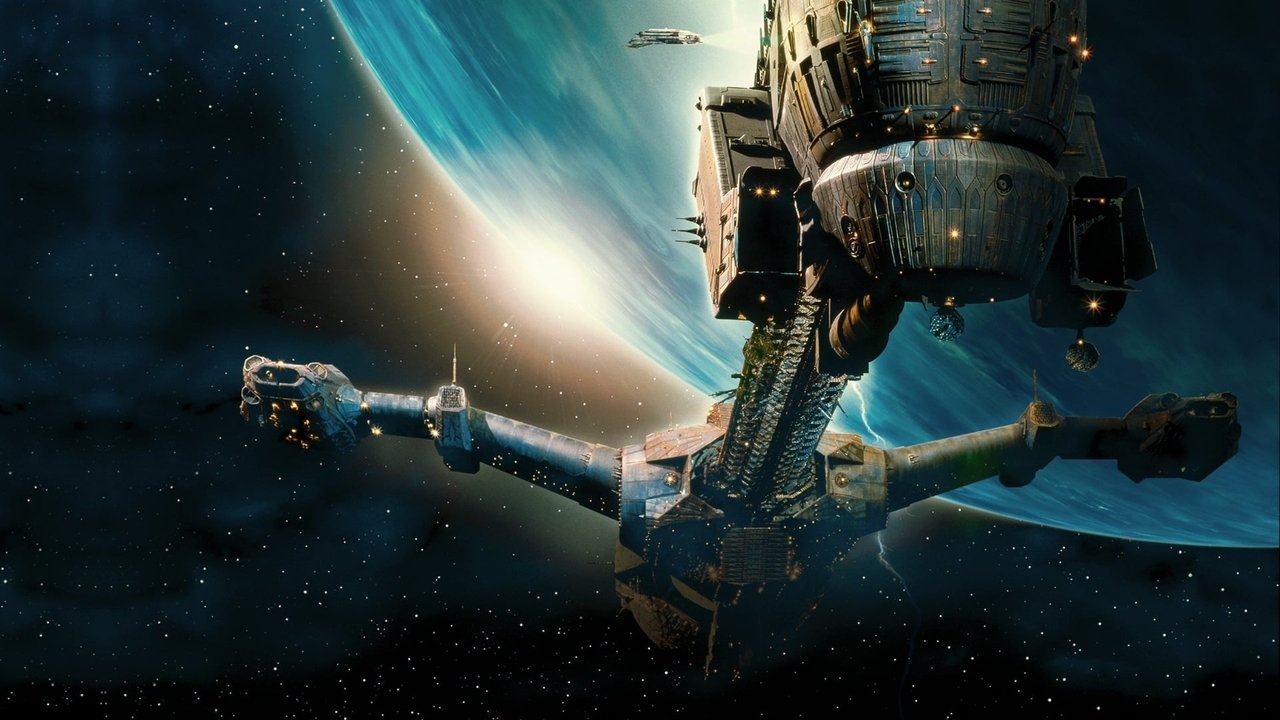
Paul W. S. Anderson's direction in Event Horizon is probably the best work of his career. Personally, I think his choices here are far more interesting than in his later, more commercially successful films. He drenches the frame in shadows, using the ship's Gothic, cruciform architecture to create a constant sense of religious dread. The long, empty corridors aren't just hallways; they're like the gullet of some dead leviathan.
What surprised me most, especially after his *Mortal Kombat*, was his use of restraint in the first half. He lets the ship's oppressive atmosphere do the work. The famous gravity drive room, with its spinning gyroscopes and spiked interior, is staged like a sacrificial altar. Anderson gets how to build tension by showing you something awful is *about* to happen, holding on the faces of the crew as they listen to that garbled audio log for just a beat too long.
But then he opens the floodgates. The second half is a barrage of quick-cut, almost subliminal flashes of gore and torture—the infamous "hell footage." It’s designed to shock and disorient, and it does. The pacing becomes relentless, maybe even a little exhausting. It's not subtle, but it's incredibly effective at conveying the sense of a G-force descent into total chaos.
Cast & Performances
The performances in Event Horizon are what ground its more outlandish concepts. Laurence Fishburne plays Captain Miller as the film's anchor of sanity. He has this deep, weary authority, and you see the weight of command in his eyes as he watches his crew, and his mission, fall apart. His professionalism is a brittle shield against the supernatural horror, and Fishburne makes you believe in his struggle to hold onto it.
Of course, the film belongs to Sam Neill. As Dr. Weir, he pulls off a difficult transformation from a grieving, arrogant scientist into a full-blown apostle of evil. I'll admit I didn't expect him to commit so fully to the role's demonic turn. When he returns after his encounter with the drive, the light is gone from his eyes. His calm, almost gleeful delivery of the line, "Where we're going, we won't need eyes to see," is just chilling. It’s a performance that gets bigger and bigger without ever feeling campy.
I kept waiting for the supporting cast to get more to do, and it never really came. Kathleen Quinlan as Peters and Joely Richardson as Starck are both solid, projecting a believable terror. But their characters are defined almost entirely by their personal traumas for the ship to exploit. Richard T. Jones's Cooper offers some much-needed levity, but his one-liners sometimes feel like they belong in a different movie. That's a minor complaint, though.
Character Psychology
Dr. Weir wants scientific glory; he wants the world to recognize the genius of his gravity drive. But what he truly needs is an escape from the guilt he feels over his wife's suicide, a memory that haunts him even before he steps on the ship. The *Event Horizon* offers him a perverse form of absolution by promising a reunion with her in a dimension beyond pain and suffering. He doesn't grow; he is consumed.
Captain Miller, by contrast, is a man defined by order and responsibility. He wants to save his crew and go home. The ship forces him to confront a universe of pure chaos, a place where rules don't apply and sacrifice is the only currency. He's the only one who truly understands what the ship is and what must be done.
Themes & Emotional Depth
At its heart, this is a film about guilt. The *Event Horizon* is less a haunted house and more a theological amplifier. It doesn't create evil; it finds the darkness, the regret, the secret shame that every person carries with them and gives it form. Peters' vision of her son with his legs covered in sores isn't just a scary image; it's a manifestation of her fear as a mother.
It’s also an exploration of a very specific kind of hell. Not fire and brimstone, but a dimension of pure sensory chaos, of pain and pleasure so intertwined they become meaningless. What stayed with me after the credits was the idea that hell isn't a destination you travel to after death. It's a place you can accidentally open a door to, and it's been waiting for you all along.
Memorable Scenes & Dialogue
First, the blood-orgy log entry. The crew gathers to listen to the deciphered audio from the original crew. We hear the captain screaming in Latin, "Libera te tutemet ex inferis," while Anderson slams us with split-second cuts of naked, mutilated bodies and pure carnal chaos. The combination of the audio and the fragmented, forbidden visuals perfectly communicates the horror without showing you everything.
Second is a quiet moment that turns horrific: Dr. Weir's vision of his wife. He sees her, eyeless, beckoning him from across a corridor. The way she moves and the calm, sorrowful tone she uses to invite him to join her is far more unsettling than any jump scare. It's psychological terror, hitting at the character's deepest wound.
Finally, there's Justin's re-emergence from the airlock. After being exposed to the void, he's catatonic on a med-bay table. The slow build of him starting to convulse, the countdown timer on the screen, and his final, terrifying warning—"The dark inside me… from the other place"—is pure, distilled dread. It’s a classic body horror scene done perfectly.
The Ending — Does It Deliver?
The final 20 minutes are a full-on assault. Miller's decision to sacrifice himself to destroy the ship feels earned; he's a captain who goes down with his ship, quite literally. The confrontation with the fully possessed Weir, who has mutilated himself into a cenobite-like figure, is the graphic payoff the entire film has been building towards.
But the very last shot, with the rescue pod door closing and revealing Weir's face for a split second, has always divided people. Personally, I think it slightly cheapens the sacrifice. It's an effective jump scare, for sure, and leaves you with a deep sense of unease. It confirms that the horror isn't over and that the survivors are forever tainted. It works, but it feels a bit more like a conventional horror movie ending than the rest of the film deserved.
What Works
The production design is the undisputed star. The *Event Horizon* is a magnificent, terrifying creation, a perfect blend of Gothic and industrial aesthetics that feels genuinely evil. Sam Neill gives a fearless, career-best performance, charting Weir's descent from arrogance to demonic glee. The central concept—a spaceship that literally went to Hell—is an all-timer, and the film commits to it with a ferocity you have to respect. The sound design, especially the garbled log, is superb.
Honest Criticism
The film's relentless third act sacrifices psychological dread for a series of chase sequences and jump scares, which feels less interesting than the slow-burn terror of the first hour. It bothered me slightly that most of the supporting crew are thinly sketched archetypes who exist solely to be terrorized and killed off. Their individual stories feel secondary to the spectacle, making their deaths shocking but not particularly tragic.
How It Compares
*Event Horizon* is often called '*Alien* meets *Hellraiser*,' and that's not wrong. It has the 'blue-collar crew in a haunted spaceship' setup of Ridley Scott's 1979 film, but it completely abandons *Alien*'s slow-burn suspense for the sadomasochistic, interdimensional horror of Clive Barker's work. It's nowhere near as smart or well-crafted as *Alien*, but it's a lot more aggressive in its desire to disturb you.
It also shares a core idea with Tarkovsky's *Solaris*, where a cosmic entity manifests people's past traumas. But where *Solaris* uses this for a sad, philosophical meditation on memory and love, *Event Horizon* uses it as a springboard for pure, nasty horror. It's the B-movie, heavy metal version of the same concept.
Legacy & Cultural Impact
Upon its release in 1997, *Event Horizon* was a critical and commercial disaster. It was rushed into production to fill a slot vacated by *Titanic*, and Paramount hated the finished product, gutting it of its most extreme footage. But it found a second life on DVD and cable, where it built a fierce cult following. Fans have obsessed for decades over the rumored, much gorier 'director's cut,' footage that Anderson confirms existed but is now believed to be permanently lost.
Today, it’s regarded as a high point of 90s studio horror and a genuinely effective piece of cosmic dread. Its influence can be seen in everything from the *Dead Space* video game series to more recent sci-fi horror films that blend technology with supernatural evil.
Behind the Scenes
The production design team was explicitly told to model the interior of the *Event Horizon* on the Notre Dame Cathedral, giving it the vaulted ceilings and cruciform layout that contribute so much to its atmosphere. The gravity drive itself was inspired by a medieval torture device.
Sam Neill ad-libbed the Latin he shouts during his final scene. Anderson liked it so much he kept it in, and the phrase "Libera te…" became central to the film's mythology.
Due to a punishingly short post-production schedule, the initial cut was over two hours long and substantially more graphic. Test screenings went so poorly, with some audience members reportedly fainting, that Paramount demanded massive cuts. Anderson and his editor were unable to salvage the excised footage, which was not properly stored.
Who Should Watch It?
If you love 90s horror and appreciate a film that goes for broke with its premise, this is for you. Fans of *Hellraiser*, John Carpenter's *The Thing*, and the *Dead Space* games will be right at home. If you're looking for subtle, atmospheric dread or hard science fiction, you should probably steer clear; this is a loud, bloody, and glorious mess.
Final Verdict
A film that was butchered by its studio and dismissed by critics has, against all odds, become a legitimate cult classic. It's a brutal, unsubtle, and deeply nihilistic piece of cosmic horror that succeeds through sheer force of will. The rating reflects its status as a top-tier execution of a B-movie concept. It's worth your time for Sam Neill's terrifying performance and the unforgettable ship design alone.
More details, ratings, and cast information on IMDb, TMDB, Wikipedia. YouTube