- 1Movie Overview
- 2Direction & Cinematography
- 3Cast & Performances
- 4Character Psychology
- 5Themes & Emotional Depth
- 6Memorable Scenes & Dialogue
- 7The Ending — Does It Deliver?
- 8What Works
- 9Honest Criticism
- 10How It Compares
- 11Legacy & Cultural Impact
- 12Behind the Scenes
- 13Who Should Watch It?
- 14Final Verdict
- Genre: Action, Adventure, Science Fiction
- Director: Andrew Stanton
- Year: 2012
- Runtime: 2h 12m
- Language: English (EN)
- TMDB Rating: ⭐ 6.4/10
Movie Overview
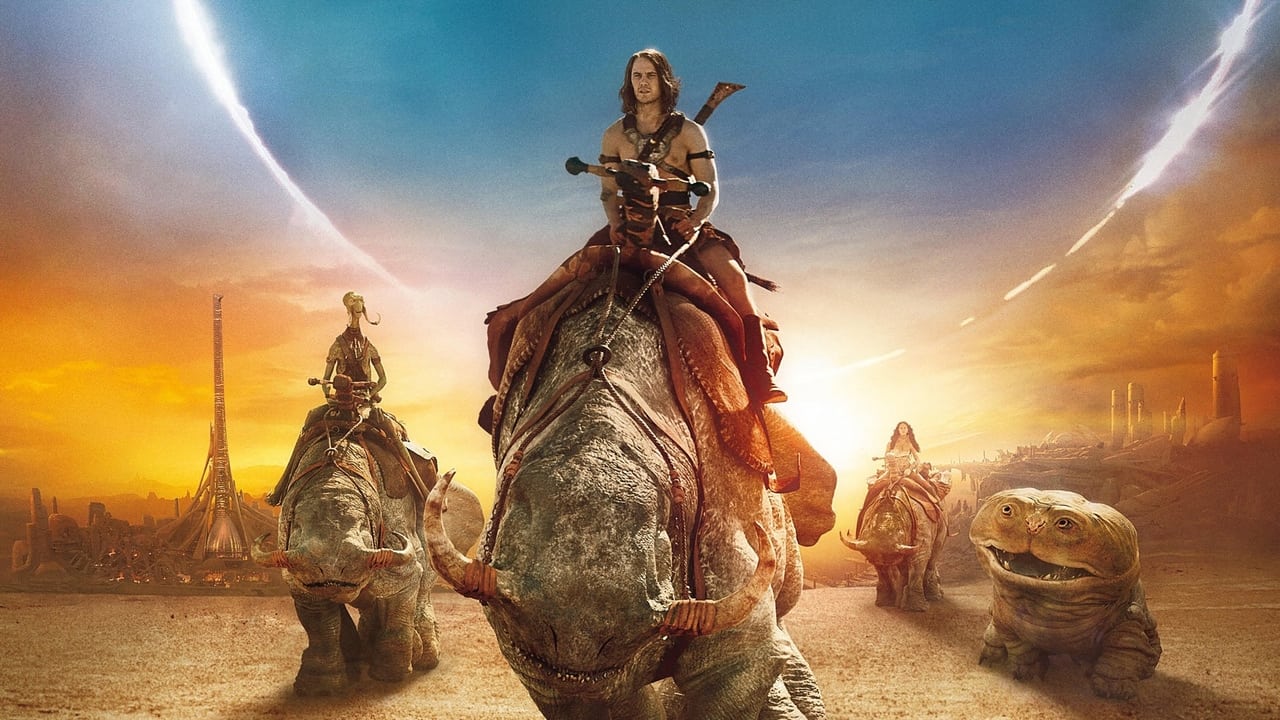
John Carter opens with a Civil War veteran (Taylor Kitsch) stumbling into a cave and waking up on Mars—or as its inhabitants call it, Barsoom. The air is thin, the gravity is weak, and Carter soon finds himself caught between warring factions of red-skinned humanoids and four-armed green Tharks. What stayed with me after the credits was how unapologetically old-school the setup feels—this is a story about a stranger in a strange land, not a modern antihero.
I'll admit I didn't expect much from the romance between Carter and Dejah Thoris (Lynn Collins), but their dynamic works better than it should. Dejah isn't just a damsel; she's a scientist fighting to save her people from Mark Strong's shape-shifting villain. The middle section drags with too much political exposition about Zodanga and Helium—I kept waiting for the film to just let Carter leap over buildings again.
That final battle scene, though—where Carter finally embraces his role as a leader—makes up for a lot. The moment when he rallies the Tharks by fighting their champion bare-handed is pure pulp joy, even if it takes too long to get there.
Direction & Cinematography
Andrew Stanton brings his Pixar-honed visual storytelling to live action, and it shows in the clarity of Barsoom's alien landscapes. The wide shots of Carter's first low-gravity leaps make you feel the disorientation right along with him. Personally, I think the film looks better than most modern CGI-heavy blockbusters—the Tharks have weight to them, and the airships cast real shadows.
But Stanton struggles with pacing. The flashback structure adds nothing except runtime, and there's a jarring tonal shift whenever Willem Dafoe's Tars Tarkas switches from warrior mode to comic relief. What surprised me most was how small some key moments feel—Carter's first kill on Mars happens in a cramped alley when it should have been an open desert.
On rewatch, I noticed how often Stanton shoots Carter from low angles during battle scenes. It's a simple trick, but it sells the idea that everyone on Barsoom sees him as larger than life.
Cast & Performances
Taylor Kitsch plays Carter as a man who's tired before his journey even begins—his best moments are the quiet ones where he reacts to Martian absurdity with deadpan exhaustion. That scene where he casually flips a Thark over his shoulder? Perfect physical comedy from an actor better known for brooding.
Lynn Collins gives Dejah Thoris real steel beneath the gold body paint. Watch how she delivers scientific explanations with the same intensity as battle commands—this isn't a character who separates brains from bravery. It bothered me slightly that the script sometimes undermines her, like when she needs rescuing after establishing herself as a capable fighter.
Mark Strong sleepwalks through his villain role, but the voice cast shines—Samantha Morton's Sola and Willem Dafoe's Tars Tarkas add warmth to what could've been cartoonish characters. Dafoe in particular makes you believe in a 9-foot-tall green alien's fatherly instincts.
Character Psychology
Carter starts the film running from guilt over his family's death, but what he really needs is to care about something bigger than himself again. Mars gives him that chance—not through destiny, but through the relationships he builds with Dejah and the Tharks.
Dejah wants to save her people through science, but she needs to learn that some fights can't be won with logic alone. Her arc works because Collins shows us the moment she decides to trust Carter's reckless courage.
Themes & Emotional Depth
At its core, this is about choosing to fight for others when it'd be easier to walk away. The best scene for this is Carter's speech to the Tharks—he doesn't appeal to their honor, he just asks them to imagine their children growing up under Zodanga's rule.
There's also a sly commentary on colonialism buried in Carter's arc. He arrives assuming he's superior to the 'primitive' Martians, only to realize their conflicts are more complex than his Earthly wars.
Memorable Scenes & Dialogue
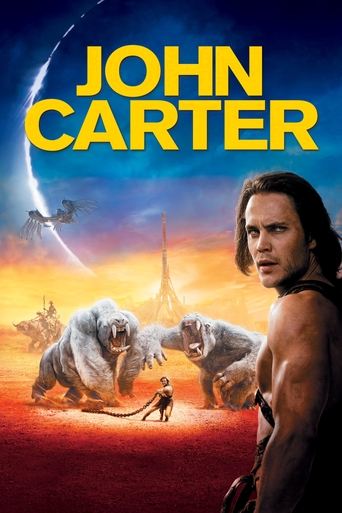
1) Carter's first gravity-defying jump—the camera stays at ground level as he pinwheels through the air, selling both the wonder and comedy of the moment. 2) The arena battle where Carter improvises weapons from chains, showing Kitsch's physicality. 3) Dejah teaching Carter Barsoomian—Collins' playful delivery of 'You are ugly… but you are beautiful' lands because she barely suppresses a smile.
The Ending — Does It Deliver?
The final battle pays off Carter's relationships with both the Tharks and Dejah, but it comes after so much meandering that the impact is dulled. I wasn't expecting much from the Thern reveal, but it feels tacked on rather than properly foreshadowed.
That last shot of Carter returning to Mars works better than it should—Kitsch's grin tells you everything about where his character ends up emotionally, even if the journey there was bumpy.
What Works
The action choreography makes Carter's super-strength feel real—you can track every punch and leap. The practical sets for Zodanga give the CGI-heavy world needed texture. Lynn Collins and Taylor Kitsch have underrated chemistry; their kiss in the ruined temple works because both actors sell the exhaustion behind it. And the score by Michael Giacchino is one of his most inventive, mixing western motifs with alien instrumentation.
Honest Criticism
The Thern subplot feels grafted from a different movie and wastes Dominic West's talents. CGI creatures like the white apes look weightless compared to the Tharks. The Earth-bound framing device adds 15 unnecessary minutes—we don't need to see Carter's nephew reading a diary when the Mars story is compelling enough on its own.
How It Compares
John Carter wants to be Star Wars meets Indiana Jones, but it lacks Lucas' breakneck pacing and Spielberg's character economy. The Mars sequences recall David Lynch's Dune in their mix of grandeur and awkwardness—though Stanton's visuals are far more coherent. Where it wins is in practical creature work; the Tharks feel more tangible than most modern CGI aliens.
Legacy & Cultural Impact
A notorious box office bomb that cost Disney $200 million, John Carter has gained defenders over the years for its earnest approach. You can see its DNA in later films like Dune (2021)—though Villeneuve learned from Stanton's mistakes about exposition. The film's failure reportedly scared studios away from space opera for years, which is a shame—we could use more films this willing to be unabashedly weird.
Behind the Scenes
- The film's title was changed last-minute from 'John Carter of Mars' after test audiences thought it sounded 'too niche'. 2) Taylor Kitsch did 95% of his own stunts, including the wire work for the low-gravity jumps. 3) The Tharks' motion capture suits had stilts to simulate their 9-foot height.
Who Should Watch It?
Pulp adventure fans who miss pre-Marvel blockbusters will find plenty to love. Those who prefer tight pacing and subtle storytelling should steer clear—this is a film where a character literally says 'You had me at hello'.
Final Verdict
John Carter is better than its reputation but not quite the genre classic it could have been. The 6.4 IMDb rating feels right—this is a 3-star movie with 5-star moments. Watch it for Lynn Collins' commanding performance and some genuinely inventive action sequences. Just be ready to fast-forward through the political scheming.
More details, ratings, and cast information on IMDb, TMDB, Wikipedia. YouTube