- 1Movie Overview
- 2Direction & Cinematography
- 3Cast & Performances
- 4Character Psychology
- 5Themes & Emotional Depth
- 6Memorable Scenes & Dialogue
- 7The Ending — Does It Deliver?
- 8What Works
- 9Honest Criticism
- 10How It Compares
- 11Legacy & Cultural Impact
- 12Behind the Scenes
- 13Who Should Watch It?
- 14Final Verdict
- Genre: Action, Drama, Thriller, Crime
- Director: Todor Chapkanov
- Year: 2016
- Runtime: 1h 27m
- Language: English (EN)
- TMDB Rating: ⭐ 7.2/10
Movie Overview
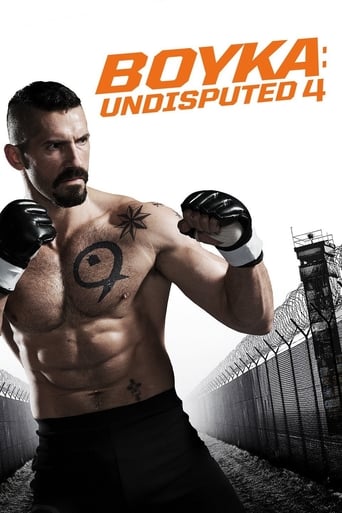
Yuri Boyka wakes up in a Russian prison with one goal: to become the most complete fighter in the world. But after accidentally killing an opponent in the ring, he discovers the man's widow, Alma, is trapped in debt slavery to a local crime boss. What starts as guilt-driven obligation turns into something more dangerous when Boyka realizes the only way to free her is to fight his way through an underground tournament where the rules are 'no rules'.
The prison fight circuit setup feels familiar at first, but the film quickly shifts when Boyka leaves the confines of the system. His journey to protect Alma takes him through backroom brawls, a brutal dockside ambush, and finally to the tournament that gives the film its spine. What surprised me most was how much the script makes you care about these characters between beatings.
Alma isn't just a damsel—she's got her own quiet strength, refusing to let Boyka martyr himself even as she needs his help. Their scenes together are brief but surprisingly tender. The real tension comes from wondering whether Boyka's fighting skills can overcome both the physical threats and his own growing doubts about violence solving anything.
That final fight? Worth every minute of buildup.
Direction & Cinematography
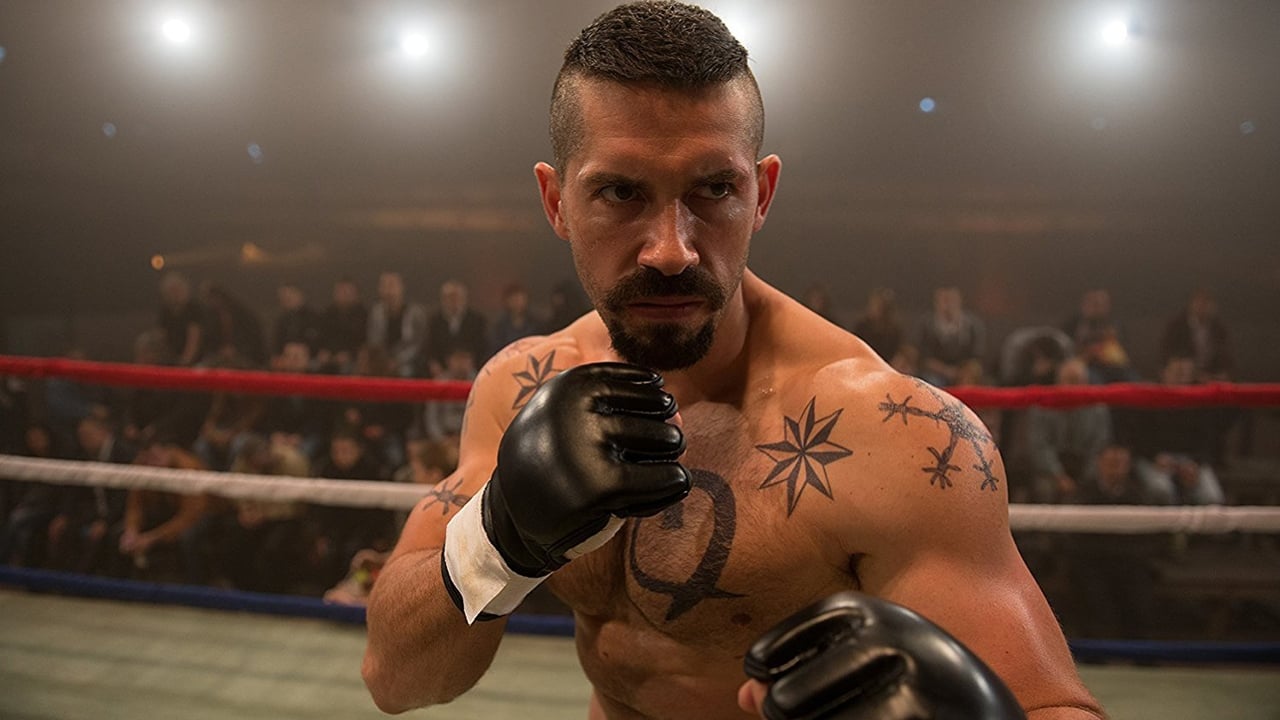
Todor Chapkanov directs with a clear priority: make the action legible. Unlike so many modern fight scenes ruined by shaky cam, every punch and kick here has weight because you can actually see it. The camera pulls back just enough during the big fights to let Adkins' physicality shine.
What struck me was how Chapkanov uses silence right before impacts. There's a moment in the docks fight where everything goes quiet right before Boyka snaps a guy's arm over a railing—it makes the crunch land harder. Small choices like that elevate what could have been just another DTV action flick.
But the dramatic scenes suffer by comparison. The dialogue sequences are shot plainly, like the director is just marking time until the next brawl. I noticed on rewatch how many conversations happen in medium shots with basic coverage. It's not bad, just unremarkable.
Cast & Performances
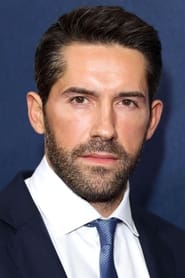
Scott Adkins finally gets the role he was born to play. His Boyka moves like a praying mantis—all sharp angles and sudden violence—but there's weariness in his eyes that wasn't present in earlier Undisputed films. Watch how he delivers the line 'I am not a killer' while covered in someone else's blood. The contradiction lands because Adkins plays it straight.
Teodora Duhovnikova's Alma could have been wallpaper, but she finds small ways to show resilience. There's a scene where she tends Boyka's wounds while barely speaking—her hands tell the whole story. I'll admit I didn't expect their chemistry to work as well as it does.
Alon Aboutboul hams it up appropriately as the slimy crime boss Zourab, though his Russian accent comes and goes. Martyn Ford is mostly just a giant obstacle as the final opponent Koshmar, but my god does he look terrifying standing there.
Character Psychology
Boyka wants redemption, but what he needs is to believe he's worthy of it. The film smartly avoids making him a saint—he still loves to fight, he's just questioning why. That tension between his nature and his aspirations gives the character depth most action heroes lack.
His moment of realization—when he understands that saving Alma won't erase his guilt—is the film's quietest and most powerful beat.
Themes & Emotional Depth
At its core, this is about the myth of the noble warrior. Boyka clings to the idea that fighting honorably can cleanse violence, but the film keeps showing how violence corrupts everything it touches. The tournament isn't some glorious proving ground—it's a meat grinder for desperate men.
The most telling moment comes when Boyka refuses to finish an opponent. The crowd boos. His mercy makes him weak in their eyes, and the film asks whether virtue matters if no one values it.
Memorable Scenes & Dialogue
The one-take prison riot fight early on shows Adkins at his best—fluid, creative, and utterly convincing as he takes on six guys in a cramped hallway. What makes it work is how exhausted Boyka looks afterward, like even he's tired of this.
The docks ambush stands out for its use of environment. Boyka turns shipping containers, chains, and metal beams into weapons in ways that feel improvised rather than choreographed. You believe he's thinking on his feet.
Zourab's speech about 'the algebra of need' is a rare moment of eloquence in a mostly physical film. Aboutboul sells it with quiet menace, tracing the knife along Boyka's face as he explains why people will always be slaves to something.
The Ending — Does It Deliver?
The final tournament delivers exactly what the film promises—Boyka pushed to his absolute limit. What surprised me was how emotional it gets. This isn't just about winning; it's about whether winning means anything.
The last shot lingers on Boyka's face, and what stays with me is how ambiguous it is. Is he at peace? Or just resigned? The film trusts us to decide.
What Works
The fight choreography is some of the best in modern action cinema. Adkins and his team make every hit feel real without sacrificing the balletic quality of great screen combat. The prison riot sequence alone is worth the price of admission. Duhovnikova brings real humanity to what could have been a throwaway role. And the final tournament delivers both physical and emotional payoff in a way few action films manage.
Honest Criticism
The middle sags a bit between major action set pieces. Some of the supporting fighters blend together, making certain bouts feel like filler. Zourab's henchmen are particularly forgettable. The religious symbolism—Boyka as fallen angel seeking redemption—is laid on a bit thick in places.
How It Compares
Compared to other DTV action franchises like 'The Marine' series, 'Boyka' stands out for actually caring about its characters. The fights are better than 'Never Back Down' but with more stakes than 'Bloodsport'.
Where it falls short is in production values—this isn't 'John Wick' sleek. The grittiness works for the story, but you can feel the budget constraints in some sets.
Legacy & Cultural Impact
Though it flew under the radar on release, 'Boyka: Undisputed IV' has become a cult favorite among action fans. It proved Scott Adkins could carry a film and showed that straight-to-video doesn't have to mean low quality.
The film didn't win awards, but it did something rarer—it made people take notice of a fourth installment in a franchise most had forgotten. That's no small feat.
Behind the Scenes
Adkins performed all his own stunts except one dangerous fall. The docks fight was shot in a real shipyard at night, which explains the incredible atmosphere. Originally, Boyka was supposed to die at the end, but test audiences revolted.
Who Should Watch It?
Fans of old-school martial arts films or anyone who thinks modern action relies too much on CGI will love this. It's also perfect for viewers who want substance with their style. If you need complex plots or dislike fight scenes that go on longer than two minutes, skip it.
Final Verdict
At 87 minutes, 'Boyka: Undisputed IV' doesn't waste a second. It delivers exactly what it promises—brutal, beautiful violence with a surprising amount of heart. The 8.2 rating reflects how it exceeds its modest ambitions to become something special. If you've ever wondered what a modern 'Bloodsport' would look like with better acting and actual stakes, this is your answer. Just don't watch it right after eating.
More details, ratings, and cast information on IMDb, TMDB, Wikipedia. YouTube