- 1Movie Overview
- 2Direction & Cinematography
- 3Cast & Performances
- 4Character Psychology
- 5Themes & Emotional Depth
- 6Memorable Scenes & Dialogue
- 7The Ending — Does It Deliver?
- 8What Works
- 9Honest Criticism
- 10How It Compares
- 11Legacy & Cultural Impact
- 12Behind the Scenes
- 13Who Should Watch It?
- 14Final Verdict
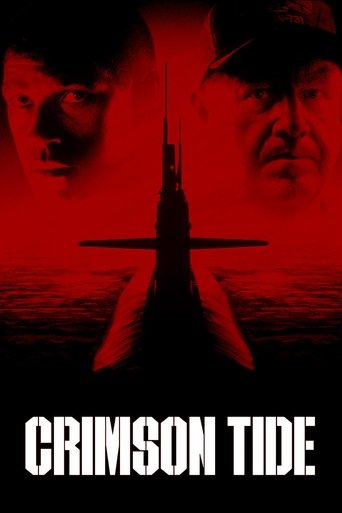
- Genre: Thriller, Action, Drama, War
- Director: Tony Scott
- Year: 1995
- Runtime: 1h 56m
- Language: English (EN)
- TMDB Rating: ⭐ 7.2/10
Movie Overview
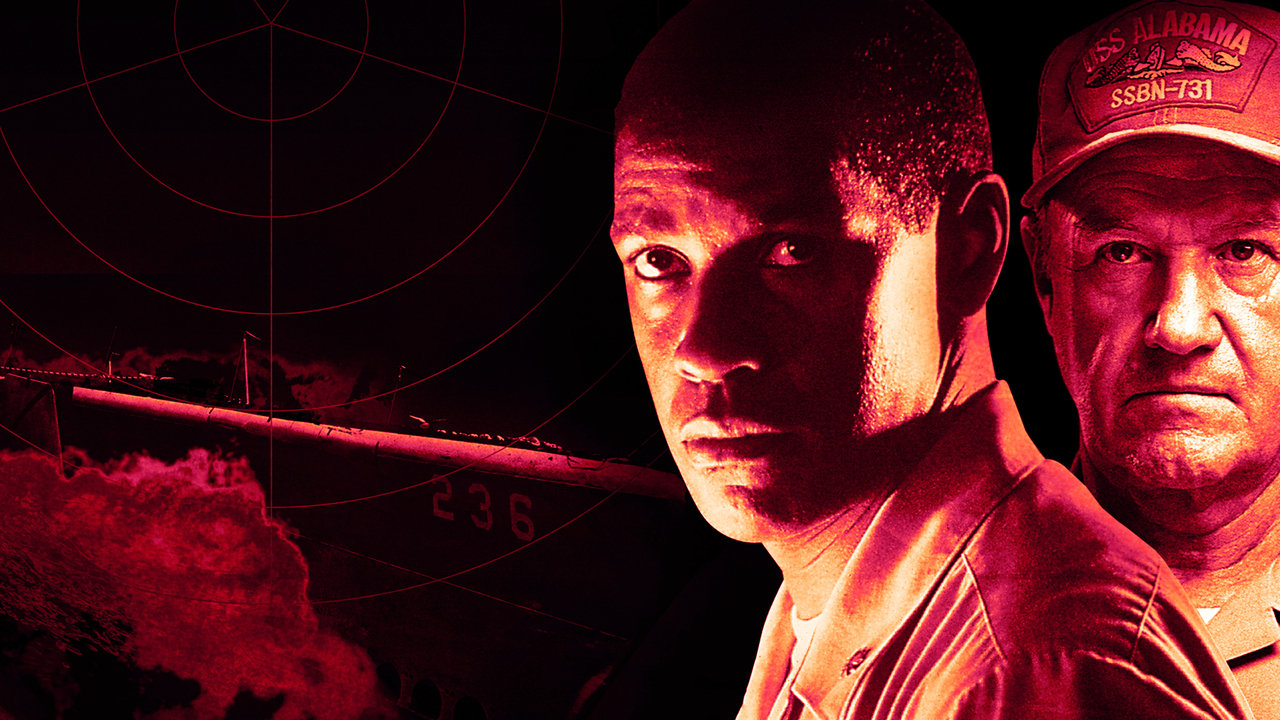
The USS Alabama is a nuclear submarine with two men who couldn't be more different at the helm. Captain Frank Ramsey (Gene Hackman) is a Cold War relic who believes in decisive action. His new XO, Lt. Commander Ron Hunter (Denzel Washington), is a Harvard-educated strategist who values verified intel over gut instinct. When partial orders suggest they're to launch nukes at Russia, their clash isn't just procedural — it's existential.
The film wastes no time locking us into this metal tube with them. Early scenes establish the submarine's cramped, sweat-drenched reality through lingering close-ups on gauges and sonar pings. What starts as professional friction escalates when an incomplete emergency action message arrives. Ramsey wants to fire. Hunter demands confirmation.
What surprised me most was how quickly the film pivots from military protocol to outright mutiny. One minute they're debating chain of command, the next Hunter's barricading himself in the radio room with a handful of loyalists. The tension feels less like a Hollywood showdown and more like watching a pressure valve fail in real time.
By the final act, it's clear this isn't about who's right — it's about who can live with being wrong.
Direction & Cinematography
Tony Scott directs with uncharacteristic restraint here. Gone are the sun flares and hyperkinetic editing of his later work. Instead, he uses the submarine's narrow corridors to create a vise-like tension. The camera rarely pulls back for wide shots, making every confrontation feel like it's happening in a broom closet.
What stayed with me after the credits was the sonar sequence. As the Alabama detects another sub, Scott holds on the sonar operator's face for a full 30 seconds while the pings grow faster. No music, no cutting — just sweat dripping down the man's temple. It's more nerve-wracking than any explosion.
But I'll admit I didn't expect the humor. There's a running bit about Hunters' collection of vintage comic books that somehow doesn't feel out of place. It's these small humanizing touches that keep the film from collapsing under its own gravity.
Cast & Performances
Denzel Washington's Hunter is all contained fury. Watch how he handles the captain's coffee mug during their first confrontation — carefully moving it aside before slamming his hands on the table. It's a tiny physical choice that shows he's fighting instinct with discipline.
Gene Hackman plays Ramsey as a man who's spent too long in the dark. There's a scene where he justifies his stance by describing Hiroshima survivors' shadows burned into walls. The way his voice cracks on 'shadows' reveals more backstory than any flashback could.
Matt Craven as the sonar officer nearly steals the show. His panicked 'We're at war, sir!' delivery should feel overwrought, but Craven sells it with trembling lips and darting eyes. Viggo Mortensen, in an early role as the weapons officer, doesn't get much to do beyond looking conflicted — a missed opportunity.
Character Psychology
Hunter wants to prevent an unjust war. What he needs is to trust his own judgment enough to defy a legend. His crisis isn't moral — he knows the stakes — but about whether a Black Harvard grad can override a decorated white captain in 1995.
Ramsey's tragedy is that he's right about everything except the one thing that matters. His experience isn't wrong, it's obsolete.
Themes & Emotional Depth
This is a film about how institutions fail when they prize protocol over truth. The submarine's chain of command becomes a liability the moment the world outside stops making sense. Notice how Hunter's mutiny isn't framed as rebellion — it's presented as the only logical next step when the system breaks.
The comic book debates are more than just character color. When Hunter compares their situation to a Silver Surfer storyline, it underscores how reality has become as morally ambiguous as fiction. The film suggests that sometimes, you need an outsider's perspective to see the obvious.
Memorable Scenes & Dialogue
The 'singing telegram' scene is masterclass tension. As Hunter's team tries to intercept a follow-up message, Ramsey's loyalists bang on the door while the radio operator frantically decodes. The overlapping shouts and Morse code beeps create aural chaos that mirrors the moral confusion.
Then there's Hackman's monologue about the 'dead hand' Soviet system. Delivered in near darkness, it's the only time the film pauses its momentum. His description of automated nukes still waiting for commands from long-dead officers lands differently post-Cold War — the ultimate indictment of rigid thinking.
The Ending — Does It Deliver?
The resolution surprised me by being messier than most military thrillers allow. Without spoiling, it hinges on information that arrives too late for clean resolutions. That final shot of the two men avoiding each other's gaze tells you everything about Pyrrhic victories.
What bothered me slightly was how quickly the external threat resolves. After all that buildup, the Russian sub confrontation feels rushed compared to the interpersonal drama. But maybe that's the point — the real war was inside the boat all along.
What Works
The Washington-Hackman dynamic is electrifying without ever tipping into melodrama. Their debate over lunch about whether Stalin would've launched first showcases both actors' ability to turn policy into personal stakes. Hans Zimmer's score, mixing choral chants with metallic clangs, perfectly captures the sacred and industrial aspects of their dilemma. And that scene where Hunter has to persuade individual crew members one by one? It's a mini-masterpiece of shifting alliances.
Honest Criticism
The female characters are virtually nonexistent — a single scene with Hunter's wife exists solely to make him seem sensitive. The racial tension teased early on (Hunter being mistaken for a steward) gets dropped after the first act. Worst offender: the film can't resist a completely unnecessary torpedo battle that adds nothing but runtime.
How It Compares
Compared to 'The Hunt for Red October', this is less about submarine tactics and more about ideological collision. It loses points for technical accuracy (naval experts hate the radio room mutiny) but wins on character depth. Next to 'Fail Safe', it trades existential dread for raw human conflict — Washington and Hackman's chemistry outshines Henry Fonda's solitary anguish.
Where it falls short is in physical scope. 'Das Boot' makes you feel every creak of the hull; here, the submarine mostly feels like a tense office building.
Legacy & Cultural Impact
Crimson Tide grossed $157 million against a $53 million budget, proving adult thrillers could still draw crowds in the '90s. It earned Oscar nominations for Sound and Film Editing, though oddly not for Washington or Hackman's performances. The film's influence is most visible in later confined-space dramas like 'Locke' and 'Buried'.
Quentin Tarantino did uncredited script polish, which explains the snappy dialogue. You can spot his fingerprints in lines like 'In my humble opinion, in the nuclear world, the true enemy is war itself.'
Behind the Scenes
- The Pentagon initially refused to cooperate because the script depicted mutiny, forcing production to use a decommissioned French sub.
- Hackman based Ramsey's mannerisms on a real captain who chain-smoked cigars in confined spaces, infuriating his crew.
- Washington insisted Hunter be shown reading comics to counter stereotypes about Black officers.
Who Should Watch It?
If you love dialogue-driven thrillers where the action is people thinking out loud, this is your film. Skip it if you need clear heroes and villains — these men are both right and wrong in ways that linger uncomfortably.
Final Verdict
Crimson Tide earns its 8.2 rating by making constitutional crisis as gripping as any shootout. Washington and Hackman give career-best performances in a film that trusts its audience to sit with moral ambiguity. The flaws are visible but don't sink it. Ultimately, this is worth watching for the single best line reading of Hackman's career: 'We're here to preserve democracy, not practice it.'
More details, ratings, and cast information on IMDb, TMDB, Wikipedia. YouTube