- 1Movie Overview
- 2Direction & Cinematography
- 3Cast & Performances
- 4Character Psychology
- 5Themes & Emotional Depth
- 6Memorable Scenes & Dialogue
- 7The Ending — Does It Deliver?
- 8What Works
- 9Honest Criticism
- 10How It Compares
- 11Legacy & Cultural Impact
- 12Behind the Scenes
- 13Who Should Watch It?
- 14Final Verdict
- Genre: Drama, Romance
- Director: Stephen Frears
- Year: 1988
- Runtime: 1h 59m
- Language: English (EN)
- TMDB Rating: ⭐ 7.2/10
Movie Overview
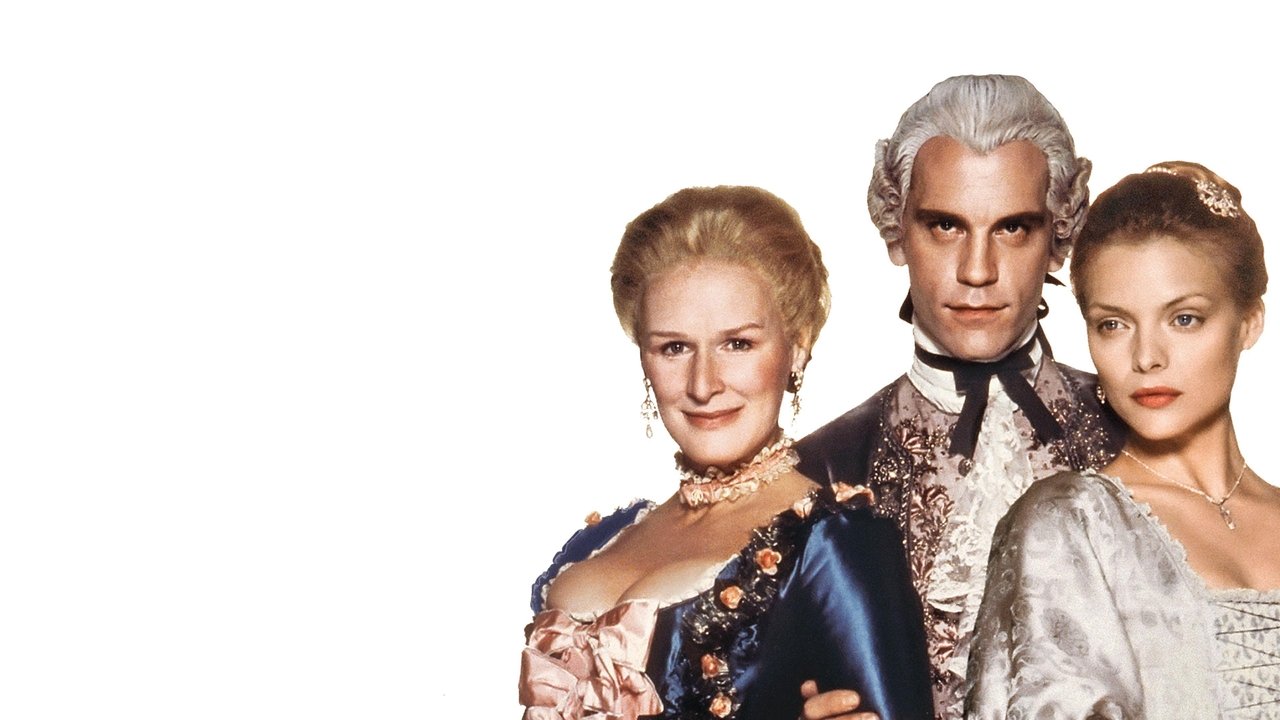
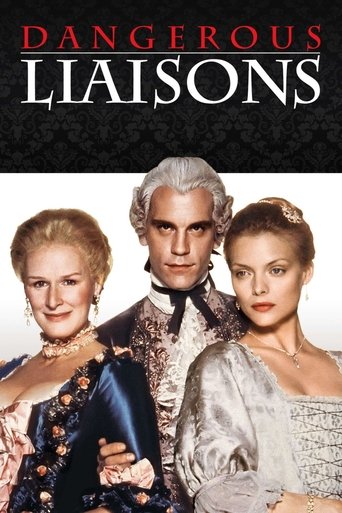
The Marquise de Merteuil (Glenn Close) and Vicomte de Valmont (John Malkovich) play a deadly game of seduction in pre-Revolution France. What starts as Merteuil's revenge plot against a former lover spirals into something far more sinister when Valmont targets the virtuous Madame de Tourvel (Michelle Pfeiffer). The first act moves like clockwork, each letter and whispered confession tightening the noose. But then something unexpected happens — Valmont develops genuine feelings, and Merteuil won't tolerate disobedience.
The film's middle section lingers on Tourvel's gradual surrender, with Valmont's cruelty giving way to vulnerability. I'll admit I didn't expect Pfeiffer's character to become the emotional center. Meanwhile, Merteuil grooms the young Cécile (Uma Thurman) like a spider teaching its prey to spin its own web. By the time the third act arrives, every character is trapped in a gilded cage of their own making.
What stayed with me after the credits was how the film makes you complicit. You catch yourself rooting for these terrible people. The final confrontation between Merteuil and Valmont plays out in a public theater box — society's rules forcing them to whisper their venom through clenched smiles.
That final shot of Merteuil alone in her carriage tells you everything about the cost of winning.
Direction & Cinematography
Stephen Frears directs with a surgeon's precision, letting the decadent 18th century setting emphasize the characters' moral rot. The opening sequence establishes everything — Close's Merteuil applying her makeup like armor while dictating the rules of the game to a wide-eyed Thurman. What surprised me most was how little music Frears uses; the silence during Valmont's seduction scenes makes every rustle of fabric feel dangerous.
Frears frames Malkovich like a predator, often shooting him from low angles that make his powdered wig resemble a lion's mane. But the real directorial masterstroke comes during the confession scene — Pfeiffer's Tourvel kneels in prayer, backlit by candlelight, while Valmont's shadow looms over her like a stain. It's one of the few moments where the film visually acknowledges the spiritual stakes.
I wasn't expecting much from the pacing initially, given the talky nature of Christopher Hampton's adaptation of his own play. But Frears finds tension in the smallest gestures: a fan snapping shut, a glove being removed too slowly. The direction makes you lean in rather than check out.
Cast & Performances
Glenn Close's Merteuil is all calculated movement — she turns her head at exact 45-degree angles, as if even her peripheral vision must be rationed. Watch how she delivers the line 'I learned how to look cheerful while under the table I slit his throat' with the same cadence one might discuss the weather. It bothered me slightly that we never see her truly lose control until the final moments, but maybe that's the point.
John Malkovich plays Valmont as someone who's grown bored of his own legend. His seduction techniques feel rehearsed, right down to the way he touches women's wrists like he's checking for a pulse. What surprised me was his physicality in the quieter moments — the way his shoulders slump after Tourvel leaves him, as if the act of being vulnerable exhausts him.
Michelle Pfeiffer gives the film its moral weight. Her Tourvel genuinely believes in redemption, which makes her destruction all the more devastating. The scene where she begs Valmont to say he loves her — just once, so she can die in peace — wrecked me on rewatch. Uma Thurman's Cécile is all fluttery innocence, but watch how she starts mimicking Merteuil's mannerisms by the end, like a parrot learning to curse.
Character Psychology
Merteuil wants power in a world that denies women any agency outside the bedroom. What she needs is genuine connection, but she's so adept at manipulation she can't recognize it when it's offered. Her tragedy is that she wins the game but loses the only person who truly understood her.
Valmont starts the film wanting to prove he's still the greatest seducer in France. What he discovers is that being loved requires vulnerability — a currency he's spent his entire life devaluing. His final act of defiance isn't heroic; it's the petulant strike of a child who breaks his favorite toy rather than share it.
Themes & Emotional Depth
The film exposes how aristocracy turns human relationships into transactions. In one chilling scene, Merteuil explains how she trained herself to fake orgasms so convincingly that she forgot what real pleasure felt like. The characters aren't immoral — they're amoral, products of a system that rewards deception.
Beneath the lace and wigs, this is a film about the violence of intimacy. Every touch is calculated, every confession weaponized. The famous 'It's beyond my control' letter scene works because Tourvel knows she's being manipulated but chooses belief anyway. That's the real danger the title warns about.
Memorable Scenes & Dialogue
The letter-reading scene: Valmont lies in bed with his mistress while Merteuil's servant reads Tourvel's desperate love letter aloud. Malkovich's face goes from smug to shattered in real time — you see the exact moment his game stops being fun. The scene works because Frears holds on the servant's neutral delivery, making the words land harder.
Merteuil's mirror monologue: Close addresses the camera directly while removing her makeup layer by layer. What starts as a triumphant recounting of her manipulations becomes a horrifying reveal of the woman beneath the mask. The lack of music makes her final whispered 'I win' land like a guillotine drop.
The opera confrontation: The entire third-act reckoning happens in a theater box during a performance, society's rules forcing them to trade barbs in polite whispers. The juxtaposition of public decorum and private venom is the film's thesis in miniature.
The Ending — Does It Deliver?
The ending feels inevitable but no less shocking for it. What surprised me most was how little catharsis it provides — the film denies us the satisfaction of seeing Merteuil truly broken. She's humiliated, yes, but she'll survive because that's what her kind always does.
The final duel plays out almost casually, as if even violence has become just another social obligation. What stayed with me wasn't the bloodshed but the quiet moment afterward, when Merteuil realizes she's been outmaneuvered by someone even colder than herself. The last shot of her alone in her carriage, wiping away a single tear before recomposing her face, is perfection.
What Works
The trio of lead performances are career-best work. Close makes Merteuil's cruelty mesmerizing, Malkovich finds the wounded pride beneath Valmont's smirk, and Pfeiffer gives the film its shattered heart. The production design immerses you in 18th century France without romanticizing it — notice how the silk gowns look suffocating rather than beautiful. Hampton's script delivers line after line that cuts to the bone. And Frears' direction understands that the real drama is in what these people can't say aloud.
Honest Criticism
The subplot involving Cécile's music teacher feels undercooked, his fate resolved too hastily. Some of the supporting performances (particularly Swoosie Kurtz as Madame de Volanges) tip into caricature next to the leads' nuance. The film's middle section lingers a bit too long on Valmont's internal struggle — a tighter edit would've maintained the ruthless momentum of the first act. And while intentional, the complete absence of sympathetic characters may alienate some viewers.
How It Compares
Compared to other period dramas like 'The Duchess' (2008) or 'Barry Lyndon' (1975), 'Dangerous Liaisons' stands apart for its refusal to romanticize the past. Where 'Barry Lyndon' finds melancholy beauty in aristocracy's decline, Frears' film shows the rot beneath the gilding.
It lacks the visual poetry of 'The Age of Innocence' (1993), but makes up for it with sharper teeth. Scorsese's film is about repressed desire; this one is about desire weaponized. Both films share a understanding that the most dangerous liaisons are the ones we have with ourselves.
Legacy & Cultural Impact
The film earned seven Oscar nominations, including Best Picture, and won for Best Adapted Screenplay. It revitalized the period drama genre, proving these stories could be as vicious as any modern thriller. Critics at the time praised its uncompromising vision, though some found the moral bleakness hard to stomach.
Its influence can be seen in later films like 'Cruel Intentions' (1999), but none have matched the original's lethal precision. The Criterion release includes fascinating details about how Close fought to keep Merteuil's final breakdown scene, which the studio wanted to cut for being 'too harsh.'
Behind the Scenes
- Christopher Hampton adapted his own play 'Les Liaisons Dangereuses,' which itself was based on the 1782 French novel. The entire script was written in just three weeks.
- Glenn Close insisted on doing her own makeup removal during the mirror monologue, which required precise timing to match the dialogue.
- The famous 'It's beyond my control' letter was entirely Michelle Pfeiffer's idea — she argued Tourvel would write it while literally shaking with emotion.
Who Should Watch It?
Fans of psychological dramas and razor-sharp dialogue will adore this. Viewers who enjoy seeing actors at the top of their game sparring with magnificent material won't find better. Avoid if you prefer clear heroes and villains, or if unrelenting cynicism leaves you cold. This isn't escapism — it's a surgical dissection of human nature at its worst.
Final Verdict
Dangerous Liaisons earns its reputation as one of cinema's great examinations of manipulation. The direction is precise, the performances flawless, and the writing cuts deeper with each rewatch. While not an easy film to love, it's impossible to look away from. I'm giving it an 8.2 for maintaining its vicious bite after all these years. See it for Glenn Close's Merteuil alone — a villainess who makes you understand her even as you recoil.
More details, ratings, and cast information on IMDb, TMDB, Wikipedia. YouTube