- 1Movie Overview
- 2Direction & Cinematography
- 3Cast & Performances
- 4Character Psychology
- 5Themes & Emotional Depth
- 6Memorable Scenes & Dialogue
- 7The Ending — Does It Deliver?
- 8What Works
- 9Honest Criticism
- 10How It Compares
- 11Legacy & Cultural Impact
- 12Behind the Scenes
- 13Who Should Watch It?
- 14Final Verdict

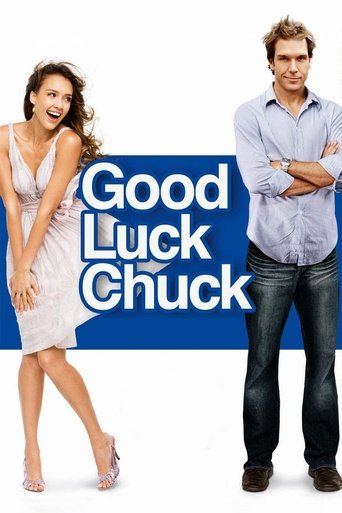
- Genre: Comedy, Romance
- Director: Mark Helfrich
- Year: 2007
- Runtime: 1h 41m
- Language: English (EN)
- TMDB Rating: ⭐ 5.9/10
Movie Overview
Good Luck Chuck opens with dentist Charlie Logan, played by Dane Cook, who has a peculiar curse: every woman he dates finds true love with the man who comes after him. This bizarre setup leads to a chaotic life where women flock to him in hopes of finding their own happily ever after, but it also leaves Charlie feeling increasingly isolated. When he meets the enchanting Cam (Jessica Alba), Charlie must confront the implications of his curse head-on. Most films would stop at this premise, but the narrative complicates itself as Charlie's feelings for Cam deepen. He struggles with the irony of being a good luck charm while feeling like he cannot pursue true happiness himself.
As Charlie navigates his romantic mishaps, a turning point arises when he learns that his ex-girlfriends are indeed marrying immediately after breaking up with him. The dynamic shifts when Charlie realizes that if he doesn’t break the curse, he could lose Cam to another man, driving the emotional stakes higher without resorting to melodrama. A pivotal moment occurs when Charlie tries to play it cool, only to find himself spiraling deeper into panic and jealousy.
What surprised me most was the film's willingness to explore Charlie's internal conflict; at times it feels like the lighthearted comedy is masking a more profound commentary on relationships and belief in fate. Yet, the film also grapples with its own pacing issues, especially in the second act, where it leans heavily into slapstick humor to keep audiences engaged. The mid-point tends to lose focus, attempting to juggle too many subplots, including a distracting storyline involving Charlie's best friend.
By the concluding act, the narrative attempts to resolve Charlie's curse with a whirlwind of romantic gestures that feel both forced and predictable. The final moments leave you wondering if Charlie's journey was truly about self-discovery or simply about trying to catch up to his own luck, making the ending both a resolution and a muddled conclusion to a mixed bag of comedic attempts.
Direction & Cinematography
Directed by Mark Helfrich, Good Luck Chuck aims for a light-hearted tone but at points struggles to balance its humor with emotional depth. One moment that struck me was the frantic montage of Charlie's increasingly absurd dates, where Helfrich employs quick cuts and exaggerated expressions to create a farcical atmosphere. However, this approach dampens the emotional stakes, as it detracts from moments that could have more deeply explored Charlie's vulnerabilities.
The pacing varies significantly throughout the film, with the first act establishing the curse effectively, while the second act meanders through multiple comedic setups that don't always land. I noticed how the film's tone shifted, sometimes veering into darker territory with Charlie's insecurities, only to revert back to light comedy without fully committing to either direction. This tonal inconsistency made it difficult to engage thoroughly with Charlie's journey.
There are clever visual gags sprinkled throughout, including the awkward physical comedy between Charlie and his many romantic entanglements, but many scenes feel drawn out or convoluted. Helfrich's direction sometimes sidesteps genuine emotion for the sake of humor, leaving the audience feeling disconnected from the characters' true struggles. Overall, the direction leaves something to be desired, as it fails to anchor the story in a cohesive emotional arc.
Cast & Performances
Dane Cook’s portrayal of Charlie is filled with his signature energetic delivery, but it often feels repetitive. I kept waiting for a moment of genuine transformation in Charlie, and it never fully arrived. Cook's comedic timing shines in scenes where he attempts to mask his insecurities with humor, yet his physical reactions, like his exaggerated eye rolls, sometimes border on over-the-top.
Jessica Alba is charming as Cam, but her character often feels underwritten. There’s a scene where she shows frustration with Charlie's antics, and her delivery of the line, 'You're just a notch on my belt,' carries weight that hints at her character's complexity. Unfortunately, she gets sidelined in the film’s attempts to focus on Charlie’s journey, leaving her character feeling like an accessory rather than a true partner.
Dan Fogler, playing Charlie's friend, has a few standout moments, especially when he tries to decipher the absurdity of Charlie’s situation. However, I found the subplot surrounding his romantic escapades to be a distraction, diluting the film’s focus. Fogler's exuberance is entertaining but serves more as comic relief than a meaningful contribution to the narrative.
Character Psychology
Charlie wants love like everyone else, but his self-sabotaging tendencies keep him stuck in a cycle of fleeting relationships. He appears to only seek validation through the affection of women, not realizing that true connection requires vulnerability. Throughout the film, his journey reveals an unwillingness to confront his deeper insecurities, which ultimately limits his ability to grow.
What bothered me slightly was Charlie's lack of self-awareness. He doesn't seem to change in any significant way, leaving him trapped in a narrative that plays out predictably. There’s little exploration of what it truly means to break the curse; instead, he remains fixed on the idea of finding love without understanding what that really involves.
Themes & Emotional Depth
At its core, Good Luck Chuck deals with the idea of fate versus agency. Charlie's curse symbolizes the fear of losing control in romantic relationships, where his ex-girlfriends find their true loves while he remains stagnant. This thematic exploration is evident when Charlie realizes that his actions impact not just his happiness but those around him.
Additionally, the film touches on the pressures of societal expectations in romance. Charlie's journey becomes a commentary on how men often feel they must conform to a ‘macho’ image when navigating love, leading to both humorous and cringe-worthy situations. The relationship he builds with Cam serves as a counterpoint to this, illustrating the struggle to maintain authenticity in a world focused on superficial connections.
Memorable Scenes & Dialogue
One memorable moment occurs when Charlie finally agrees to a date with Cam, and the anticipation builds as he prepares for their evening. The scene highlights a mix of excitement and fear, showcasing both characters' vulnerabilities — the close-ups on their expressions underline their uncertainty.
Another standout scene is the awkward dinner party where Charlie meets Cam's parents. The way he fumbles through conversation, trying to impress them while revealing too much about his romantic history, creates a perfect blend of comedy and tension. The awkward pauses and strained laughter elevate it beyond simple slapstick.
Lastly, I can't forget the moment Charlie frantically tries to convince Cam of his feelings, culminating in a chaotic yet heartfelt attempt to express his commitment. At this point, Helfrich’s direction aligns with the emotional stakes, making Charlie's desperation palpable, even if the rest of the film doesn't always maintain that level of sincerity.
The Ending — Does It Deliver?
The climax maneuvers through predictability, as Charlie finally confronts the curse in a big gesture that feels somewhat earned but lacks genuine tension. For a film that flirts with deeper themes, I was surprised by how quickly it wrapped up loose ends without allowing for real emotional reflection. The ending feels like a checklist of romantic comedy tropes, which left me feeling unsatisfied after such a complex buildup.
What stayed with me after the credits was the sense that the film had the potential to delve deeper into Charlie’s internal struggle but chose instead to take a safe route. The last shot of Charlie and Cam together felt like a resolution that didn’t fully explore the risks involved in their relationship, leaving me a bit hollow.
What Works
Good Luck Chuck manages to capture some genuinely funny moments, especially during the awkward scenarios Charlie finds himself in. The dinner scene with Cam's parents stands out, where the combination of tension and humor creates a memorable interaction. Jessica Alba's charm is also a highlight, bringing warmth to her character amid the chaos. Additionally, the physical comedy from Dane Cook, particularly during dates gone wrong, adds a layer of levity that keeps things entertaining, despite the film's flaws.
Honest Criticism
The subplot involving Charlie's best friend feels unnecessary and detracts from the main storyline. While intended to provide comic relief, it often comes off as a distraction that pulls focus away from Charlie's emotional struggles. This subplot interferes with the pacing too, causing the film to lose momentum at critical moments when deeper exploration of Charlie’s character would have been more impactful. It felt like filler rather than a meaningful addition to the narrative.
How It Compares
Good Luck Chuck shares ground with films like 50 First Dates and Just Friends, where chaotic romantic entanglements drive the plot. However, it stumbles in comparison to 50 First Dates, which manages a balance of humor and emotional depth that Chuck fails to achieve. While both films use comedic scenarios to explore relationships, Chuck lacks the character development that makes Adam Sandler's performance in 50 First Dates resonate.
In contrast, Just Friends leans into the absurdity of romantic misadventures, but it keeps its characters grounded in real emotions. Chuck, on the other hand, often treats its themes lightly, which might appeal to viewers seeking surface-level comedy but leaves others wanting a more substantial connection.
Legacy & Cultural Impact
Released in 2007, Good Luck Chuck received mixed reviews and currently holds a 5.9/10 on IMDb. It struggled to make a significant mark at the box office, grossing only about $24 million against a $25 million budget. The film didn't garner any major accolades, but it certainly contributed to the era's trend of quirky romantic comedies that prioritized humor over emotional authenticity.
In hindsight, Good Luck Chuck’s exploration of relationship dynamics — albeit clumsily — has become a conversation piece in discussions on rom-com tropes, especially as audiences seek deeper connections in romantic narratives today.
Behind the Scenes
Dane Cook, who starred in the film, co-wrote it and was originally set to play Charlie in a different film before this project took shape. Jessica Alba took the role of Cam after several actresses were considered, including Kate Hudson and Kirsten Dunst. Interestingly, some scenes were improvised by the cast, particularly during the dinner party moment that highlights Charlie’s disastrous attempts at charm.
Who Should Watch It?
This film might resonate with viewers who enjoy straightforward romantic comedies filled with slapstick humor and a dash of charm. Fans of Dane Cook's comedic style will likely appreciate the absurdity of the situations. However, those looking for depth or nuanced performances should probably skip it, as it leans heavily into typical rom-com clichés and lacks substantial character development.
Final Verdict
Good Luck Chuck entertains with its comedic moments but fails to deliver a cohesive emotional experience. While it offers some laughs and charming performances, the scattered plot and tonal inconsistencies ultimately hold it back. If you’re in the mood for a light romantic comedy, there are better choices out there. Stick around for some laughs, but don't expect anything profound.
More details, ratings, and cast information on IMDb, TMDB, Wikipedia. YouTube