- 1Movie Overview
- 2Direction & Cinematography
- 3Cast & Performances
- 4Character Psychology
- 5Themes & Emotional Depth
- 6Memorable Scenes & Dialogue
- 7The Ending — Does It Deliver?
- 8What Works
- 9Honest Criticism
- 10How It Compares
- 11Legacy & Cultural Impact
- 12Behind the Scenes
- 13Who Should Watch It?
- 14Final Verdict

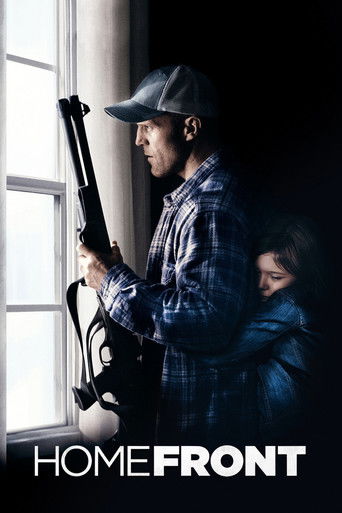
- Genre: Action, Thriller
- Director: Gary Fleder
- Year: 2013
- Runtime: 1h 40m
- Language: English (EN)
- TMDB Rating: ⭐ 6.9/10
Movie Overview
Homefront (2013) opens not with a bang, but with a schoolyard shove. Phil Broker (Jason Statham), a former DEA agent trying to leave his violent past behind, has moved to a sleepy Louisiana town with his young daughter, Maddy. When Maddy defends herself from a bully, Broker is inadvertently dragged into a feud with the boy's meth-addicted mother, Cassie (Kate Bosworth). This is small-town trouble, easily handled.
But Cassie’s brother happens to be the local meth kingpin, Morgan “Gator” Bodine (James Franco), a man whose ambition far outweighs his sense of proportion. What starts as a petty dispute quickly spirals. After a break-in, Gator discovers Broker's old case files, realizing the quiet woodworker is actually a deep-cover federal agent responsible for taking down a major biker gang.
Suddenly, Broker isn’t just an outsider; he’s a threat. And a potential payday.
Gator makes a call, inviting the very people Broker put away to come to his doorstep for revenge. Broker's carefully constructed new life begins to crumble, forcing him to become the man he tried to bury in order to protect the only person he has left.
Direction & Cinematography
Gary Fleder isn't a director known for a distinct visual signature, and Homefront doesn't change that. His approach is functional, muscular, and recalls the directness of 90s action-thrillers. He doesn't get in the way of his star. What he does well is establish a sense of place. You can almost feel the Louisiana humidity coming off the screen, the buzzing insects and the rot of the bayou. It’s a sticky, oppressive setting for the violence that ensues.
There’s one shot where Broker is refueling his truck at a remote gas station. Fleder holds on him in a wide shot as two of Gator's thugs pull up. The staging is clean and clear; you see the threat coming, and the space Broker has to work with. It heightens the anticipation for the fight, which is itself shot with a welcome clarity, ditching the chaotic shaky-cam that plagued action films of this era.
And yet, the pacing sometimes feels a little too relaxed. I kept waiting for the threat to fully explode, and it takes its time getting there. Personally, I think this serves the story—it shows Broker trying to de-escalate at every turn—but it does make the middle section feel a bit sluggish before the final act kicks into gear.
Cast & Performances
In Homefront, Jason Statham plays a father first and a killing machine second, which is a crucial distinction. We’ve seen him be tough, but what’s interesting here are the moments he tries *not* to be. When he confronts Cassie at her home early on, his threat is delivered with a tired resignation, not machismo. He just wants this problem to go away, and the weariness in his face sells the entire premise.
I’ll admit I didn’t expect James Franco’s Gator Bodine to be much more than a cartoon villain, but he’s genuinely unsettling. Franco plays him as a twitchy, opportunistic bottom-feeder who’s always thinking, always calculating. When he finds Broker's files, there’s a greedy glint in his eye, not fear. It’s a smart choice that makes Gator feel more dangerous because he's a man with nothing to lose and everything to gain.
What surprised me most, however, was Kate Bosworth as Cassie. She’s gaunt, strung-out, and ferocious in her early scenes, a cornered animal defending her cub. It's a physically committed performance that gives the inciting incident a believable, desperate energy. She has less to do as the film progresses, but her initial scenes are key to making the story’s escalation feel earned.
Character Psychology
On the surface, Phil Broker wants a quiet life. He wants to fix up his house, ride horses with his daughter Maddy, and be left alone. It's the classic retired-gunfighter fantasy.
But what he really needs is to accept that he can't compartmentalize who he is. His past isn't just a memory; it's a skill set and a magnet for trouble. The film forces him to reconcile his capacity for extreme violence with his identity as a loving father. He doesn't change so much as he is forced to integrate the two sides of himself to survive.
Themes & Emotional Depth
At its core, this is a film about the impossibility of escaping your own nature. Broker isn't just fleeing a job; he's fleeing himself, and the central conflict shows that you can’t. The quiet life is a myth for a man like him. His background isn’t just a backstory; it’s an active part of his character that the world won't let him forget.
It’s also about the classic 'outsider vs. community' conflict. Broker is a foreign object in this small Louisiana town, a place with its own twisted ecosystem overseen by Gator. The film is very clear that this fragile peace is maintained through intimidation and corruption. Broker's arrival disrupts that balance, and the town's immune system, led by Gator, tries to expel him.
Memorable Scenes & Dialogue
1. The Gas Station Beatdown. Two of Gator's guys try to intimidate Broker while he's filling his tank. The fight that follows isn't flashy. It's brutally efficient. The way Statham uses the environment—the slick ground, the gas nozzle—to systematically disable them is pure Statham-esque problem-solving. It's well-staged and establishes his competence perfectly.
2. Gator Finds the Files. The moment the plot truly ignites is when Franco's character, snooping around Broker's basement, stumbles upon his old DEA files. The slow zoom on Franco’s face as he puts the pieces together is terrific. He doesn't look scared; he looks like he just found a winning lottery ticket. It’s the film's most important turning point.
3. "Whatever you're thinking, rethink it." Broker's early visit to Cassie's house to warn her off is a great character scene. He isn't yelling. He's low, calm, and utterly convincing. It's a glimpse of the professional operator beneath the flannel-shirted dad.
The Ending — Does It Deliver?
The final assault on Broker's isolated home is exactly what the film promises from the start. It doesn't really try to surprise you, but it delivers a satisfying and well-constructed siege. Broker's preparations—the porch lights, the layout of the house—all pay off practically. You feel like he’s fighting on his own turf, using his wits as much as his fists.
What stayed with me after the credits was the quiet exhaustion of the final scene. It doesn't end on a triumphant note of victory, but on a fragile sense of peace restored, for now. The ending is earned because the entire film is about Broker fighting for that one small moment of normalcy with his daughter. It leaves you feeling that the fight was worth it, but that the next one might be just around the corner.
What Works
The film's greatest strength is its simplicity. The stakes are clear and personal: a father protecting his daughter. Jason Statham gives one of his better performances, grounding the violence with a believable sense of paternal duty. And James Franco is a genuinely effective villain—slimy, unpredictable, and just smart enough to be a real threat. The action scenes are concise, brutal, and easy to follow, a welcome relief from the chaotic editing of the era.
Honest Criticism
The plot's reliance on a few too many convenient turns is a weakness. Gator's jump from local crank dealer to someone who can summon a major biker gang feels like a forced escalation for the third act. It bothered me slightly that the local sheriff character is almost completely passive and ineffective, which feels more like a plot device than a believable character. A smarter, more involved lawman would have added a welcome complication.
How It Compares
Homefront fits snugly into the 'dad action' subgenre. It's less grim and morally complex than David Cronenberg's *A History of Violence*, which explores similar themes of a past catching up with a family man. At the same time, it’s far more grounded than the hyper-stylized world of *John Wick*. The action here is messy and direct, not a ballet.
Personally, I think its closest spiritual cousin is a 90s thriller like *Breakdown* with Kurt Russell, or even a modern-day *Road House*. It’s a simple, well-told story about an outsider cleaning up a corrupt town, and it's better than many of the straight-to-streaming knockoffs that followed it. It's a B-movie with A-list aspirations that mostly stick the landing.
Legacy & Cultural Impact
Written by Sylvester Stallone, *Homefront* was a project he originally developed for himself as a potential Rambo film before passing it to Statham. The movie had a modest run at the box office, grossing around $51 million worldwide on a $22 million budget, so it wasn't a runaway hit. Critical reception was decidedly mixed, with many dismissing it as a standard action vehicle.
However, its legacy was cemented on streaming platforms years later. It found a large audience on Netflix, becoming a word-of-mouth hit for viewers looking for a solid, self-contained thriller. It didn't spawn a franchise, but it represents a high point for this specific type of mid-budget Statham movie.
Behind the Scenes
- Sylvester Stallone wrote the screenplay based on Chuck Logan's novel. He had initially intended to star in it himself, as a sequel to 2008's *Rambo*, but decided he was too old for the part and hand-picked Statham instead.
- Kate Bosworth has spoken about the intense physical preparation for her role as a meth addict. She worked with a nutritionist to safely lose a significant amount of weight to achieve the character's gaunt, ravaged appearance.
- The film was almost entirely shot on location in small towns around Louisiana, like Gretna and Lockport. Director Gary Fleder insisted on this to give the film a thick, authentic atmosphere, which is one of its stronger elements.
Who Should Watch It?
If you miss the straightforward, mid-budget action thrillers of the 1990s, this is for you. Fans of Jason Statham will find this to be one of his most solid and character-focused outings. Viewers seeking a radical reinvention of the action genre or a deeply layered plot should probably skip it.
Final Verdict
Homefront is a meat-and-potatoes action movie made with more care and better performances than you'd expect. It knows exactly what it is and delivers on its premise without any unnecessary fat. The rating is for its sturdy construction and for being a high-water mark in the modern B-action movie canon. This is a perfect Friday night film if you’re in the mood for clean-cut action with surprisingly decent acting.
More details, ratings, and cast information on IMDb, TMDB, Wikipedia. YouTube