- Genre: Drama, Romance
- Director: Dan Fogelman
- Year: 2018
- Runtime: 1h 58m
- Language: English (EN)
- TMDB Rating: ⭐ 7.2/10
Movie Overview
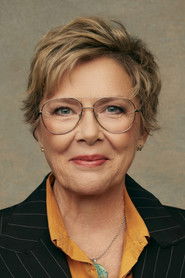
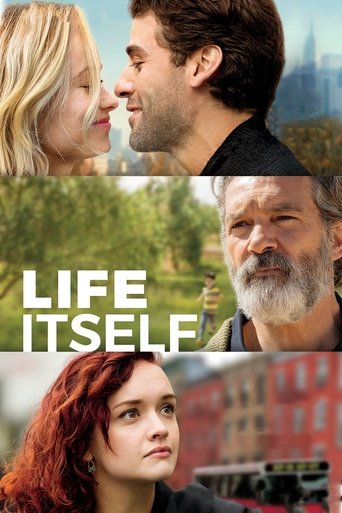
The film opens with a therapist (Annette Bening) listening to a fractured narrative from Will (Oscar Isaac), a New York writer whose life has unraveled. Through his unreliable recollections, we see his whirlwind romance with Abby (Olivia Wilde), from college meet-cute to marriage to parenthood, before tragedy strikes. The story then shifts abruptly to Spain, following a vineyard owner (Antonio Banderas) and his connection to Will’s legacy. What stayed with me after the credits was how these disparate threads ultimately knot together, though not always gracefully.
Direction & Cinematography
Dan Fogelman, creator of This Is Us, brings his signature nonlinear storytelling to the big screen. I wasn’t expecting much from the early scenes’ glossy Manhattan aesthetic, but the Spanish sequences have a warmer, earthier texture that better serves the material. The film’s boldest choice is a mid-movie perspective shift. It will either intrigue or frustrate viewers. I think it pays off, though the transition could’ve been smoother. On rewatch, I noticed how often characters occupy opposite sides of the frame, visually emphasizing their emotional distance.
Cast & Performances
Oscar Isaac’s Will oscillates between charming and insufferable, which suits the character perfectly. Watch how he nervously taps his wedding ring during therapy sessions. Olivia Wilde brings radiant energy to Abby, though her character disappears too soon. Antonio Banderas steals his scenes with quiet gravitas, especially when tending his vines. Samuel L. Jackson’s brief but memorable turn as himself surprised me most. It’s a meta moment that somehow works.
Character Psychology
Will wants to believe life follows a narrative structure he can control; that’s why he became a writer. What he needs is to accept chaos. The vineyard sequences suggest he may have posthumously influenced this lesson. Abby seems more self-aware. She recognizes life’s fragility in a beautiful monologue about her favorite song, and that scene stayed with me long after the plot moved on.
Themes & Emotional Depth
At its core, this is about how we construct meaning from randomness. The film’s structure mirrors that idea by presenting coincidences as fate and tragedies as turning points. A late scene where two characters finally meet could feel contrived, but the earnest performances sell it. I’ll admit I didn’t expect to buy into the sentimentality as much as I did.
Memorable Scenes & Dialogue
1) Abby’s drunken karaoke performance of ‘I Will Always Love You.’ Wilde commits fully to the messy, joyful moment. 2) The olive harvest sequence in Spain. The golden light and physical labor create a wordless catharsis. 3) Will’s therapy breakdown, where Isaac’s voice cracks on the line ‘I’m the unreliable narrator of my own life.’
The Ending — Does It Deliver?
The ending ties everything together almost too neatly; I kept waiting for another twist that never came. That said, the final montage landed emotionally despite my reservations. What surprised me most was how much I cared about characters introduced halfway through. The last shot leaves you with a sense of circularity, for better or worse.
What Works
The first act’s romance feels lived-in thanks to Isaac and Wilde’s natural chemistry. Banderas brings unexpected depth to his late-entry character. Several individual scenes, like Abby’s karaoke night, achieve genuine emotional impact. The score, also by Fogelman, effectively underscores key moments without overwhelming them.
Honest Criticism
The abrupt narrative shift in the middle will lose some viewers. Certain dialogue leans too hard into philosophical pronouncements, such as ‘The world breaks everyone.’ A subplot involving Will’s parents feels underdeveloped and melodramatic compared to the main threads.
How It Compares
Fans of Fogel