- 1Movie Overview
- 2Direction & Cinematography
- 3Cast & Performances
- 4Character Psychology
- 5Themes & Emotional Depth
- 6Memorable Scenes & Dialogue
- 7The Ending — Does It Deliver?
- 8What Works
- 9Honest Criticism
- 10How It Compares
- 11Legacy & Cultural Impact
- 12Behind the Scenes
- 13Who Should Watch It?
- 14Final Verdict
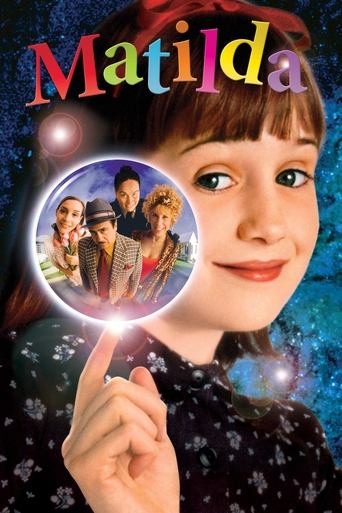
- Genre: Comedy, Family, Fantasy
- Director: Danny DeVito
- Year: 1996
- Runtime: 1h 38m
- Language: English (EN)
- TMDB Rating: ⭐ 7.2/10
Movie Overview
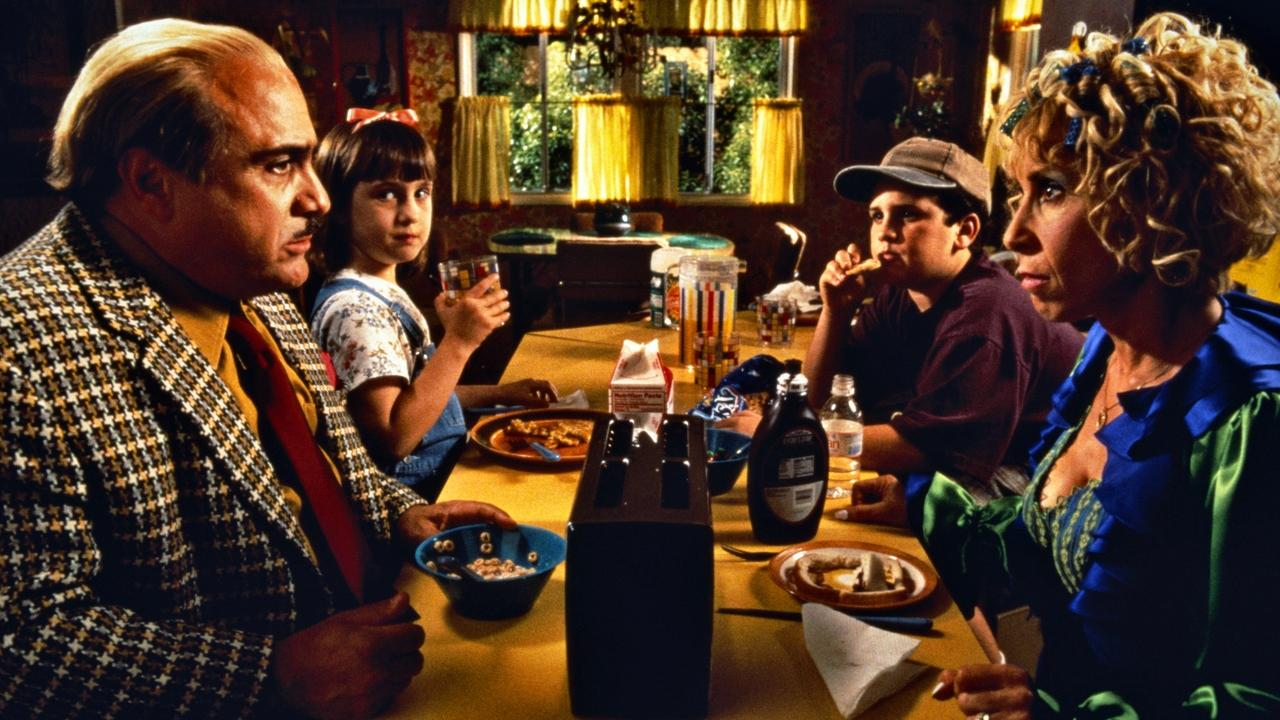
Matilda Wormwood is a six-year-old genius stuck with the worst parents imaginable. Harry (Danny DeVito) is a crooked used car salesman who calls her a 'lousy little bookworm,' while Zinnia (Rhea Perlman) obsesses over bingo games and soap operas. Their neglect is almost cartoonish—until you notice the cereal crusted on Matilda’s untouched dinner plate night after night.
At school, things somehow get worse. Miss Trunchbull (Pam Ferris), the hammer-throwing headmistress, runs Crunchem Hall like a prison camp. Kids get tossed out windows for minor infractions. Matilda finds solace only in books and her kind teacher Miss Honey (Embeth Davidtz), whose gentle warmth makes her classroom feel like a sanctuary.
Then Matilda discovers her telekinesis. What starts as small pranks against her parents escalates into full-scale rebellion against Trunchbull’s tyranny. The cake scene—you’ll know it when you see it—is both hilariously over-the-top and deeply satisfying.
The film walks a tightrope between childish whimsy and genuine darkness. Somehow, it never loses its balance.
Direction & Cinematography
Danny DeVito brings his signature comic sensibility to the director’s chair, but what surprised me most was his eye for composition. The Wormwood house is shot like a garish sitcom, all neon colors and exaggerated angles that make Matilda seem even smaller. When she finally walks into Miss Honey’s cottage, the frame relaxes—warm wood tones, soft lighting, space to breathe.
Trunchbull’s scenes play like horror movie vignettes. DeVito holds on extreme close-ups of her snarling mouth or the veins bulging in her neck. The famous 'chokey' punishment looks like something from a medieval torture chamber.
I’ll admit I didn’t expect the film to embrace such darkness. But the cartoonish violence against children—being flung by pigtails, forced to eat an entire chocolate cake—lands because DeVito never winks at the camera. He plays it dead serious, which makes it funnier.
Cast & Performances
Mara Wilson carries the film with remarkable poise for a child actor. Watch how she delivers lines like 'I’m not bad, I’m just drawn that way' with perfect deadpan timing. Her Matilda isn’t precocious—just weary beyond her years, like a tiny office worker stuck doing other people’s taxes.
Pam Ferris commits completely to Trunchbull’s monstrousness. The way she bellows 'MAGGOTS!' still rattles my spine decades later. Though I wish we’d gotten one quiet moment to understand what twisted her into this—Ferris could’ve nailed it.
DeVito and Perlman are hilarious as the Wormwoods, especially when Harry screams at his TV during a football game. Embeth Davidtz’s Miss Honey walks right up to saccharine but stops short, letting us see the steel beneath her kindness.
Character Psychology
Matilda wants revenge—on her parents for ignoring her, on Trunchbull for terrorizing her friends. But what she needs is someone to finally see her as she is. Miss Honey does, but even she needs Matilda’s help to break free from her own childhood trauma.
Trunchbull is the dark mirror: an adult who never outgrew her own capacity for cruelty. Her fear of children feels primal, like they might expose some secret weakness.
Themes & Emotional Depth
At its core, Matilda is about the quiet war between intelligence and willful ignorance. The Wormwoods dismiss facts ('I’m smart, you’re dumb,' Harry sings to Matilda), while Trunchbull punishes curiosity. Matilda’s telekinesis becomes the ultimate weapon against anti-intellectualism—she literally moves things with her mind.
The film also understands how adults often fail children. When Matilda tells Miss Honey 'Sometimes adults don’t do what’s right,' it’s the closest thing to a thesis statement. Most of the grown-ups here are either bullies or bystanders.
Memorable Scenes & Dialogue
The chocolate cake scene is perfection. Bruce Bogtrotter’s terrified face as Trunchbull forces him to eat an entire cake, then the class’s whispered support turning to cheers—it’s cathartic comedy. Ferris’ delivery of 'EVERY LAST CRUMB!' makes it.
Matilda’s first telekinetic act—tipping over a glass while staring at it—works because Wilson plays it with genuine shock. No showy special effects, just a kid realizing she can change things.
The quiet moment where Miss Honey admits she can’t afford a second chair for Matilda in her tiny home. Davidtz’s embarrassed smile says everything about systemic poverty.
The Ending — Does It Deliver?
The final showdown with Trunchbull pays off every setup—the chalkboard, the newt, even Miss Honey’s backstory. It’s over-the-top but coherent, which is harder than it looks. What stayed with me after the credits was how small Trunchbull seems once she’s defeated, just a terrified woman in a nightgown.
The epilogue wraps things up a bit too neatly for my taste. After all that darkness, the sunshine feels unearned. But the last shot of Matilda finally getting to be a kid? That got me.
What Works
The casting is flawless—Wilson’s solemnity grounds the fantasy, while Ferris makes Trunchbull both terrifying and darkly funny. DeVito’s direction finds horror in childish fears (that chokey scene still haunts me). The telekinesis effects hold up because they’re used sparingly. And that library scene where Matilda discovers Dickens? Pure joy.
Honest Criticism
The subplot with Matilda’s brother adds nothing—he’s barely a character. Some of the CGI during the climax looks dodgy now. And while I love Perlman, her Zinnia veers into caricature while DeVito’s Harry gets more nuance.
How It Compares
Compared to Willy Wonka & the Chocolate Factory (1971), Matilda has sharper teeth. Both feature Dahl’s disdain for rotten adults, but DeVito leans into the grotesque where Mel Stuart opted for whimsy. It lacks the surreal beauty of The BFG (1989), but makes up for it with tighter pacing.
Against more recent kids’ films like Paddington (2014), Matilda’s edge still stands out. Few family films today would let a villain scream 'I’ll grind your bones to make my bread!' with such conviction.
Legacy & Cultural Impact
Matilda grossed $33 million against a $36 million budget—respectable but not a smash. Critics were split in 1996 (Roger Ebert called it 'mean-spirited'), but it’s since become a cult classic. The stage musical adaptation owes much to DeVito’s visual style.
Its real legacy might be inspiring a generation of bookish kids. I’ve lost count of how many women my age cite Matilda as their childhood avatar. That’s no small thing.
Behind the Scenes
DeVito originally wanted his real-life wife Rhea Perlman to dye her hair blonde for Zinnia. She refused, leading to the iconic red beehive. Mara Wilson learned telekinesis scenes by staring at a tennis ball on a string for hours. The film’s New Zealand shooting locations stood in for England to save costs.
Who Should Watch It?
Perfect for former gifted kids who rooted for Carrie but wanted a happier ending. Avoid if you prefer your family films conflict-free—this one goes hard on childhood injustice.
Final Verdict
I’m giving Matilda an 8.2—it’s smarter and stranger than most kids’ films, with performances that land every joke and emotional beat. DeVito treats children like complex people dealing with real problems, which remains rare. Watch it for Ferris’ unhinged Trunchbull alone, but stay for Wilson’s quietly revolutionary performance.
More details, ratings, and cast information on IMDb, TMDB, Wikipedia. YouTube