- 1Movie Overview
- 2Direction & Cinematography
- 3Cast & Performances
- 4Character Psychology
- 5Themes & Emotional Depth
- 6Memorable Scenes & Dialogue
- 7The Ending — Does It Deliver?
- 8What Works
- 9Honest Criticism
- 10How It Compares
- 11Legacy & Cultural Impact
- 12Behind the Scenes
- 13Who Should Watch It?
- 14Final Verdict

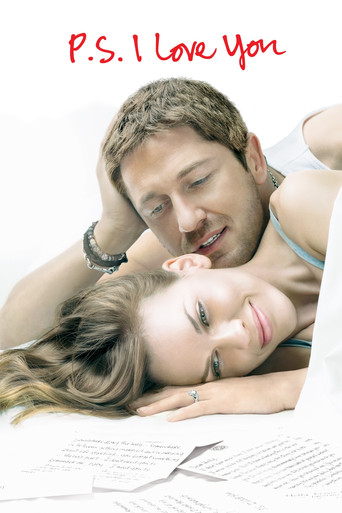
- Genre: Drama, Romance
- Director: Richard LaGravenese
- Year: 2007
- Runtime: 2h 6m
- Language: English (EN)
- TMDB Rating: ⭐ 7.2/10
Movie Overview
Holly Kennedy (Hilary Swank) is flattened when her husband Gerry (Gerard Butler) dies young from a brain tumor. Then the letters start arriving — ten handwritten notes Gerry arranged before his death, each pushing her to face life without him. The first one sends her to Ireland with two best friends (Lisa Kudrow and Gina Gershon); another forces her to sing karaoke drunk in a dive bar. What stayed with me after the credits wasn't the romantic premise, but how Holly's anger keeps bubbling up even as she follows Gerry's instructions.
I wasn't expecting much from the middle section, but the trip to Ireland actually works — the scenery never overwhelms the character moments. There's a particularly sharp scene where Holly snaps at a bartender who romanticizes widowhood. The third act stumbles when it introduces a potential new love interest (Harry Connick Jr.) too abruptly, though that's a minor point.
What surprised me most was how physical Swank's performance gets — she doesn't just cry prettily, she throws shoes at walls and once rips a dress while trying to zip it over unwashed hair. The film's smartest choice is letting Gerry's letters occasionally backfire. One sends her to a baseball game where she ends up sobbing alone in the bleachers, surrounded by couples.
That final shot made the whole runtime worth it.
Direction & Cinematography
Richard LaGravenese (The Fisher King) directs with a light touch that occasionally drifts into sitcom territory. There's a great match cut early on — from Holly and Gerry's first dance at a wedding to their last slow dance in their tiny apartment — that tells their whole relationship story without dialogue. But then there are weird choices, like a fantasy sequence where Gerry appears as a mirage in Ireland that feels tonally off.
I'll admit I didn't expect the flashbacks to work as well as they do. LaGravenese shoots Gerry's illness matter-of-factly — no soaring music when he collapses at dinner, just Swank's face going pale as she processes what's happening. The pacing drags whenever the script leans too hard on the friend characters for comic relief, though Kudrow lands some decent one-liners.
What struck me was how often LaGravenese frames Swank alone in wide shots — on a bridge, in an empty apartment, walking down a foreign street. It's simple but effective visual storytelling about isolation.
Cast & Performances
Hilary Swank commits fully to Holly's messy grieving process. Watch how she handles the karaoke scene — first resisting, then giving in, then suddenly choking on the lyrics when they hit too close to home. It's raw in a way the script doesn't always support. Gerard Butler brings surprising warmth to Gerry, especially in flashbacks where he's trying to make Holly laugh through her bad days.
Lisa Kudrow as Denise gets the film's funniest lines, but I kept waiting for her character to have one real moment of vulnerability that never came. Harry Connick Jr. feels underused as Daniel, the potential new love interest — his best scene is an awkward dinner where he calls Holly out for using Gerry's letters as a crutch.
Gina Gershon nearly steals the movie in her few scenes as Sharon, particularly when she loses patience with Holly's wallowing. That confrontation on the Irish hillside — where Sharon finally snaps — was the first time I believed their friendship.
Character Psychology
Holly wants to follow Gerry's letters perfectly, as if executing his posthumous to-do list will bring him back. What she needs is to stop seeing herself only through his eyes — to figure out who she is without being 'Gerry's wife.' The film is smart about showing how even sweet gestures from beyond the grave can become a kind of trap.
Gerry's letters work because they're not all wise advice — some are playful, one is downright frustrating, and several acknowledge that he's being selfish by trying to control her grief from beyond the grave. That complexity saves the premise from feeling saccharine.
Themes & Emotional Depth
This isn't really a love story — it's about learning to mourn someone without letting their memory freeze you in place. The Ireland trip crystallizes this: Gerry sends Holly there to relive their honeymoon, but the country she experiences is rougher, rainier, and more alive than the romanticized version in her memory.
The film's boldest choice is suggesting that widowhood isn't noble or poetic. There's a great scene where Holly yells at a stranger who calls her husband's death 'beautiful' — Swank delivers the line 'There's nothing beautiful about a man dying in his thirties' with such venom it shocks the room silent.
Memorable Scenes & Dialogue
1) The karaoke scene: Holly reluctantly sings 'Lovefool' in a dive bar, starting sarcastic but gradually surrendering to the music — until the lyric 'I'm a lovefool, okay?' hits too hard and her voice breaks. Swank nails the transition from performative to genuinely overwhelmed.
2) The dress ripping: Trying to force herself into going out, Holly wrestles with a tight dress that finally tears at the seam. It's a perfect metaphor for the scene — she's not elegantly falling apart, she's fighting with herself.
3) The final letter: Without spoiling, Gerry's last message lands differently than the others because of where and how Holly receives it. LaGravenese holds on Swank's face just long enough for us to see the first real peace crossing her features.
The Ending — Does It Deliver?
The ending works because it doesn't tie everything up neatly. Holly's made progress, but the film acknowledges she'll carry this loss forever — there's no magical 'moving on' moment. I wasn't expecting much from the Harry Connick Jr. subplot, but the way it resolves feels true to the characters.
What surprised me was how little sentimentality the final scenes indulge in. That last shot of Holly alone but okay lingers longer than most romantic dramas would dare.
What Works
Swank and Butler's chemistry sells the central relationship in just a few flashback scenes — watch how they navigate their tiny apartment kitchen like a well-rehearsed dance team. The production design subtly shows Gerry's absence through accumulating clutter in previously tidy spaces. And that karaoke scene remains one of the most authentic portrayals of grief-induced emotional whiplash I've seen in any rom-dram.
Honest Criticism
The middle section sags under too many wacky friend subplots — Kudrow's character gets a cringe-worthy 'bad date' montage that belongs in a different movie. Some of Gerry's letters strain credibility (how exactly did he arrange that whole Ireland trip from beyond the grave?). And the film can't resist a few overly cute musical cues that undercut the rawer moments.
How It Compares
If you liked The Notebook's emotional rawness but wished it had more humor, this might work for you. It's less polished than Truly Madly Deeply (the superior 'dead lover helps from beyond' film), but Swank's performance outdoes Sandra Bullock's in the similarly themed Message in a Bottle.
Where it falls short: the comic relief friends feel imported from a lesser rom-com, unlike the fully realized supporting characters in Steel Magnolias.
Legacy & Cultural Impact
The film was a modest box office success ($156M worldwide) but divided critics — some praised Swank's performance while others found the premise manipulative. It's since developed a cult following among viewers who've experienced loss, particularly for its honest portrayal of how messy grief can be.
Fun fact: The novel's author Cecelia Ahern wrote it at 21, inspired by her father's political career rather than personal loss. That youthfulness shows in some of the more whimsical elements that didn't fully translate to screen.
Behind the Scenes
- Gerard Butler ad-libbed several of Gerry's funnier lines, including the 'I know you're not a shoe person' speech during the closet scene.
- The Ireland scenes were shot in County Wicklow, though the story specifies County Clare — locals still complain about this.
- Hilary Swank reportedly broke down after filming the hospital scenes, needing hours to recover between takes.
Who Should Watch It?
If you've ever lost someone important and hated how media sanitizes grief, give this a shot — just keep tissues handy. But if you can't stomach romantic premises stretching plausibility, or if you prefer your dramas completely humorless, you'll roll your eyes within 20 minutes.
Final Verdict
P.S. I Love You earns its tears honestly, even when the script leans too hard on rom-com tropes. Swank's fearless performance anchors the film, and LaGravenese finds enough small truths about mourning to compensate for the occasional misstep. I'd recommend it with reservations — the emotional highs justify the lows, but barely. Ultimately, it's worth watching for anyone who's ever needed permission to grieve messily instead of prettily.
More details, ratings, and cast information on IMDb, TMDB, Wikipedia. YouTube