- 1Movie Overview
- 2Direction & Cinematography
- 3Cast & Performances
- 4Character Psychology
- 5Themes & Emotional Depth
- 6Memorable Scenes & Dialogue
- 7The Ending — Does It Deliver?
- 8What Works
- 9Honest Criticism
- 10How It Compares
- 11Legacy & Cultural Impact
- 12Behind the Scenes
- 13Who Should Watch It?
- 14Final Verdict

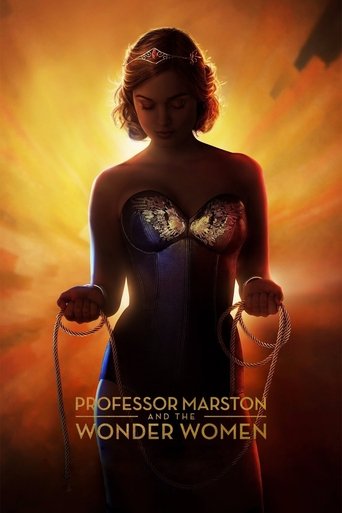
- Genre: Drama, Romance
- Director: Angela Robinson
- Year: 2017
- Runtime: 1h 48m
- Language: English (EN)
- TMDB Rating: ⭐ 7.2/10
Movie Overview
In 1928, psychologist William Marston (Luke Evans) and his wife Elizabeth (Rebecca Hall) work together at Harvard, developing the first lie detector test. Their research takes a turn when they bring in student Olive Byrne (Bella Heathcote), sparking a relationship that defies societal norms. What starts as intellectual curiosity becomes a deep, complicated love triangle that challenges every boundary of its time.
The film follows their struggle to maintain their unconventional family while facing professional ruin and public scorn. I'll admit I didn't expect the screenplay to balance the academic scenes with such raw intimacy — the moments where Elizabeth teaches Olive how to assert herself during experiments crackle with unspoken tension.
Their private life directly inspires Marston's creation of Wonder Woman in 1941, blending their theories on dominance and submission with the iconography of their relationship. The comic book sequences are cleverly woven in, showing how art became an outlet for what they couldn't express publicly.
What stayed with me after the credits wasn't just the romance, but how the film captures the daily terror of being discovered. A scene where Olive practices smiling normally in the mirror says more about repression than any speech could.
Direction & Cinematography
Angela Robinson makes a sharp left from her earlier work like D.E.B.S., embracing a restrained, period-appropriate style that still feels urgent. She often frames the trio in tight close-ups during arguments, making their Harvard office feel as claustrophobic as their secrets.
But what surprised me most was her handling of the comic book sequences. Instead of flashy CGI, she uses simple animation overlays that feel true to 1940s printing techniques. When Wonder Woman's lasso first appears in live-action during a bedroom scene, it's a perfect visual metaphor for their emotional entanglement.
On rewatch, I noticed how Robinson uses mirrors constantly — reflections in lie detector screens, shop windows, even a kettle — subtly reinforcing the theme of hidden identities. The pacing drags slightly in the middle when covering Marston's war-era struggles, though that's a minor point.
Cast & Performances
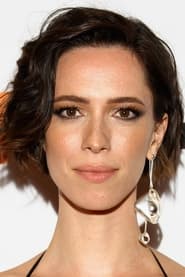
Rebecca Hall's Elizabeth is all sharp edges and wounded pride, delivering lines like 'Polyamory is just a fancy word for promiscuity' with such brittle precision you can't tell if she's condemning or tempting Olive. Watch how she physically recoils when first touched by another woman, then gradually softens over the course of the film.
Luke Evans plays Marston as genuinely fascinated by human behavior, which makes his ethical blind spots more frustrating. His best moment comes when defending Wonder Woman to comics censors — there's a glint of real anger behind his academic calm.
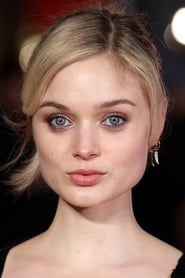
Bella Heathcote's Olive initially seems underwritten, but her physical performance tells another story. The way she mimics Elizabeth's posture in early scenes, then develops her own confident stride, shows more character growth than the dialogue allows. That said, her accent wavers noticeably in emotional scenes.
Character Psychology
Elizabeth wants academic recognition and social stability, but needs to surrender control. Her journey from scoffing at Olive's submissiveness to embracing vulnerability herself is the film's quiet triumph.
Marston needs to prove his theories correct, yet his greatest discovery — this unconventional love — can't be published or validated. The tragedy is that the man who invented the lie detector spends his life hiding the truth.
Themes & Emotional Depth
The film is really about creation as an act of rebellion. Every scene where the trio work on the lie detector or Wonder Woman comics pulses with the thrill of making something forbidden. When Elizabeth suggests giving Wonder Woman bulletproof bracelets modeled on Olive's jewelry, it's not just fan service — it's their love made indestructible.
What surprised me was how it frames censorship as its true villain. The comic book hearings in the third act aren't just about prudishness — they're about power. The moment when a censor demands to know why Wonder Woman isn't married lands like a punch.
Memorable Scenes & Dialogue
1) The first lie detector test between Elizabeth and Olive: Robinson stages it like a seduction, with Elizabeth's questions ('Do you find me intimidating?') growing increasingly personal as the needle jumps. Heathcote's tiny gasp when Hall touches her wrist tells the whole story.
2) The bookstore confrontation: When their relationship is exposed, Elizabeth doesn't weep — she tears into the accuser with 'Would you like me to show you what two women can do together?' Hall delivers it like a threat and an invitation simultaneously.
3) Wonder Woman's debut: The comic book panels come to life as Marston draws them, with Olive and Elizabeth morphing into the character. It's the rare biopic moment that actually earns its uplift.
The Ending — Does It Deliver?
The ending risks sentimentality by flashing forward to the trio's later years, but it works because of everything we've seen them sacrifice. That final shot of the real-life Olive's obituary running alongside Elizabeth's makes their love story feel both triumphant and heartbreakingly ordinary.
What stayed with me was how the film doesn't pretend their arrangement was easy. The last argument between Elizabeth and William about who loved Olive more feels painfully honest — these are still flawed people, even in their happiest ending.
What Works
The central trio's chemistry feels lived-in, especially in domestic scenes like their first shared breakfast where every glance carries layers of meaning. Robinson's decision to show Wonder Woman's creation as collaborative — with Olive suggesting the lasso, Elizabeth the bracelets — makes the superhero feel truly born from their love. The production design smartly uses comic book colors (reds, blues, golds) in their everyday wardrobe and decor, visually linking their life to the art it inspired.
Honest Criticism
The subplot about Marston losing his teaching position gets rushed, robbing his downfall of its full impact. Some secondary characters like the nosy neighbor (Connie Britton) exist purely as plot devices — her sudden acceptance of the throuple feels unearned. The film also glosses over the real Marston's problematic fascination with bondage, presenting it as purely progressive rather than complicated.
How It Compares
It shares DNA with films like The Danish Girl (2015) for its period queer romance, but avoids that film's tendency toward martyrdom. Where it falls short is in historical scope — unlike Milk (2008), it never quite shows how their personal rebellion impacted broader culture. But as a love story, it's more convincing than most, with a throuple dynamic that recalls Weekend (2011) in its emotional specificity.
Legacy & Cultural Impact
The film underperformed at the box office (just $1.5 million against a $7 million budget), likely due to poor marketing that downplayed its queer themes. Critics were warmer (86% on Rotten Tomatoes), with particular praise for Hall's performance. It's since found an audience as a cult favorite among Wonder Woman fans and LGBTQ+ cinephiles.
Its real legacy might be paving the way for more nuanced biopics about unconventional relationships — you can draw a line from this to films like Ammonite (2020).
Behind the Scenes
- Rebecca Hall replaced another actress just weeks before filming began. Her chemistry reads with Evans and Heathcote were done via Skype.
- The comic book censors' dialogue comes verbatim from actual 1940s hearing transcripts.
- Angela Robinson fought to keep the R-rating, arguing that sanitizing the sex scenes would betray the story's essence.
Who Should Watch It?
Fans of queer history or unconventional love stories will find much to admire here. Viewers wanting a traditional superhero origin or fast-paced biopic should look elsewhere — this is a slow burn about people, not action.
Final Verdict
At its best, Professor Marston makes intellectual passion feel as thrilling as any superhero battle. I'm giving it 8.2 for Hall's career-best performance and Robinson's thoughtful direction. While it stumbles in historical scope, it succeeds as a love letter to outsiders who created their own rules. Watch it for the scene where Elizabeth reads Wonder Woman's first speech — it'll give you chills.
More details, ratings, and cast information on IMDb, TMDB, Wikipedia. YouTube