- 1Movie Overview
- 2Direction & Cinematography
- 3Cast & Performances
- 4Character Psychology
- 5Themes & Emotional Depth
- 6Memorable Scenes & Dialogue
- 7The Ending — Does It Deliver?
- 8What Works
- 9Honest Criticism
- 10How It Compares
- 11Legacy & Cultural Impact
- 12Behind the Scenes
- 13Who Should Watch It?
- 14Final Verdict
- Genre: Thriller, Drama, Horror
- Director: Alejandro Jodorowsky
- Year: 1989
- Runtime: 2h 2m
- Language: English (EN)
- TMDB Rating: ⭐ 7.2/10
Movie Overview
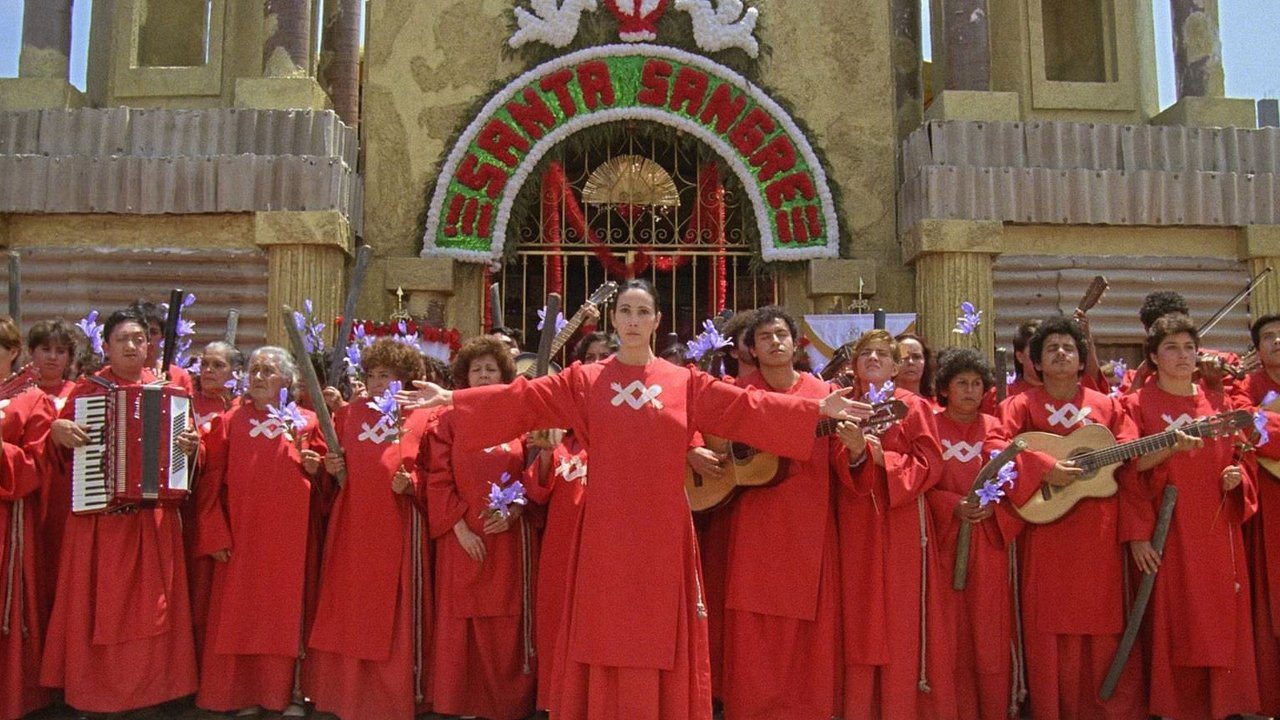
Young Fenix grows up in a traveling circus where his father is a knife-thrower and his mother leads a cult worshipping a martyred saint with severed arms. The film opens with adult Fenix (Axel Jodorowsky) naked in a mental asylum, howling like a wolf — already signaling we're in for something far from normal. The story jumps between his traumatic childhood and his escape years later, when he reunites with his now-armless mother Concha (Blanca Guerra). What starts as caretaking spirals into something much darker. Concha, using Fenix's body as her own missing limbs, forces him to enact violent retribution against women who tempt him. The circus backdrop isn't just setting — it's the film's twisted soul. Jodorowsky stages every scene like a deranged big top act. By the time Fenix meets Alma (Sabrina Dennison), a deaf-mute girl who might offer redemption, you're already braced for things to go horribly wrong. And they do.
Direction & Cinematography
Alejandro Jodorowsky directs with the same unrestrained id that fueled El Topo and The Holy Mountain, but here it serves a tighter narrative. The opening asylum sequence — with its stark white walls and inmates frozen in bizarre tableaus — immediately establishes this won't be a conventional psychological thriller. What struck me on rewatch was how Jodorowsky uses the circus environment: trapeze artists float through scenes unrelated to their acts, creating a constant sense of unstable reality. But the most disturbing choice might be how he shoots Fenix and Concha's merged body. When she 'uses' his arms, the camera often stays wide, forcing us to sit with the grotesque intimacy of their codependency. The pacing drags slightly when revisiting Fenix's childhood trauma, though that might be intentional — we're meant to feel stuck in his looping nightmare.
Cast & Performances
Axel Jodorowsky (the director's son) commits fully to Fenix's feral physicality, particularly in scenes where he's essentially a puppet for his mother. Watch how his shoulders hunch when Concha takes control — it's not just acting, it's full-body surrender. Blanca Guerra's Concha should feel over-the-top as the fanatical armless matriarch, but she finds chilling specificity in small moments, like the way she licks spilled soup off a table. That said, Thelma Tixou as the tattooed woman feels underused after her explosive early scene. Sabrina Dennison's silent performance as Alma works because she doesn't play innocent — there's something unsettling in her curiosity about Fenix's violence. When she finally screams near the end, it lands like a sledgehammer.
Character Psychology
Fenix wants freedom from his mother's control. What he needs is to sever the psychic umbilical cord entirely — but Jodorowsky isn't interested in clean psychological arcs. The film's most disturbing insight is that some people would rather be puppets than face the terror of autonomy. Concha doesn't just manipulate Fenix; she offers him purpose in his brokenness. Their relationship is the film's dark heart — a mutual destruction pact disguised as love. That final shot of them as children makes it clear: this was always going to end in flames.
Themes & Emotional Depth
Santa Sangre is about the violence of devotion — to parents, to gods, to our own scars. The 'Church of the Sacred Blood' cult isn't just background; it mirrors how Fenix worships his mother's suffering. When adult Fenix reenacts his father's knife-throwing act with real victims, it shows how trauma replicates itself. Jodorowsky suggests we're all performing versions of our deepest wounds. The circus isn't an escape from reality here — it's where reality gets amplified under garish lights.
Memorable Scenes & Dialogue
1) The tattooed woman's death — shot entirely from above like a macabre puppet show, with her blood pooling in a shape that mirrors her body art. It's gratuitous but unforgettable, turning violence into perverse art. 2) The silent film sequence where young Fenix watches his parents' romance decay. Projected on a bedsheet, it's the one moment of tenderness before everything shatters. 3) The final murder set to a circus waltz — Jodorowsky lets the music play too long after the act, forcing us to sit with the horror of spectacle.
The Ending — Does It Deliver?
The ending feels both inevitable and shocking — a rare combination. After all the surrealism, Jodorowsky lands on an image so simple it hurts. I'll admit I didn't expect the film to circle back to that early childhood trauma so literally, but on reflection, it makes brutal sense. What stayed with me after the credits wasn't the blood (of which there's plenty), but the look on young Fenix's face in that final flashback. The film leaves you feeling like you've witnessed a private exorcism — one that didn't quite take.
What Works
The merging of psychological horror with circus imagery creates something wholly original — when Fenix 'becomes' his mother's arms, it's both literal and metaphorical. Blanca Guerra's performance walks a razor's edge between camp and genuine pathos. The production design turns every location into an extension of Fenix's mind, from the asylum's blinding whiteness to the circus' grimy glamour. That silent film interlude is the kind of risky formal swing most directors wouldn't attempt.
Honest Criticism
The middle section sags under repetitive mother-son power struggles. Some symbolism (like the recurring mermaid) feels heavy-handed compared to the film's subtler touches. The deaf-mute love interest verges on ableist tropes, though Dennison's performance mostly saves it. A few gore effects haven't aged well — the blood often looks distractingly pink.
How It Compares
Fans of David Lynch's The Elephant Man will recognize the carnival-as-hell metaphor, but Jodorowsky goes further into the grotesque. It shares DNA with Tod Browning's Freaks in its outsider empathy, but lacks that film's camaraderie. Where something like Psycho dissects mother-son bonds with clinical precision, Santa Sangre douses them in gasoline and lights a match. It's not as philosophically dense as Jodorowsky's earlier work, but more emotionally raw.
Legacy & Cultural Impact
Santa Sangre flopped commercially in 1989 but became a midnight movie staple. It won the International Critics' Award at the Toronto Film Festival, though was overshadowed by Jodorowsky's more infamous earlier films. Modern horror directors like Julia Ducournau (Raw) cite its influence — particularly its blend of body horror and psychodrama. Arrow Video's 4K restoration in 2020 introduced it to new audiences, proving its images haven't lost their power to disturb.
Behind the Scenes
- The armless women's movement coach was a real amputee who lost her arms in a childhood accident. 2) The elephant funeral scene used a real elephant carcass from a zoo — the smell was reportedly unbearable. 3) Jodorowsky initially wanted Marilyn Manson for a planned remake that never materialized.
Who Should Watch It?
This will thrill fans of surreal, psychosexual horror like Possession or Eraserhead. Viewers who need clear narratives or dislike body horror should steer clear. It's absolutely not for anyone squeamish about violence against women, no matter how allegorical.
Final Verdict
Santa Sangre earns its 8.2 rating by being one of the few films that feels truly dangerous decades later. It's messy, excessive, and occasionally silly — but that's the point. Jodorowsky isn't probing trauma delicately; he's ripping it open under circus lights. Watch it for the most disturbing mother-son duet ever committed to film. Or don't — your nightmares will thank you.
More details, ratings, and cast information on IMDb, TMDB, Wikipedia. YouTube