- 1Movie Overview
- 2Direction & Cinematography
- 3Cast & Performances
- 4Character Psychology
- 5Themes & Emotional Depth
- 6Memorable Scenes & Dialogue
- 7The Ending — Does It Deliver?
- 8What Works
- 9Honest Criticism
- 10How It Compares
- 11Legacy & Cultural Impact
- 12Behind the Scenes
- 13Who Should Watch It?
- 14Final Verdict
- Genre: Action, Mystery, Science Fiction, Thriller
- Director: Wes Ball
- Year: 2014
- Runtime: 1h 53m
- Language: English (EN)
- TMDB Rating: ⭐ 7.2/10
Movie Overview
Thomas (Dylan O'Brien) wakes up in a metal elevator with no memory, arriving in the Glade—a grassy clearing surrounded by towering stone walls. The other boys there, led by Alby (Aml Ameen) and second-in-command Newt (Thomas Brodie-Sangster), have built a fragile society with one rule: don't go into the Maze that shifts every night. The first girl, Teresa (Kaya Scodelario), arrives with a note that changes everything: 'She's the last one ever.'
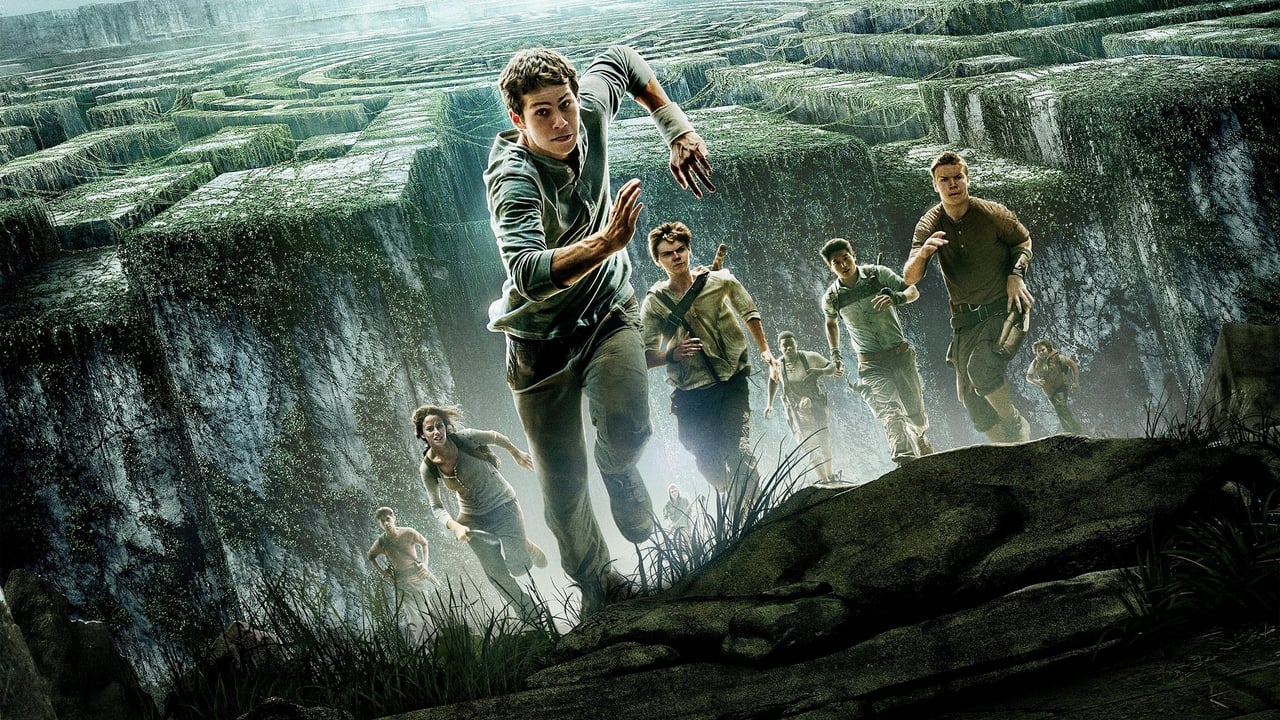
What follows isn't revolutionary—the 'chosen one' arc is familiar—but the execution keeps it gripping. The Maze itself, with its grinding stone walls and biomechanical creatures called Grievers, feels genuinely threatening. Wes Ball shoots the Glade like a prison yard where the inmates have made peace with their captivity, which makes Thomas' rebellion more urgent.
The middle section drags slightly when explaining the society's rules, but picks up when Gally (Will Poulter) starts openly challenging Thomas' authority. Poulter plays him as more than just a bully—there's real fear behind his resistance.
Then the walls stop closing.
Direction & Cinematography
Wes Ball, a first-time director coming from visual effects, makes smart choices. The opening shot—a tight close-up of O'Brien's panicked face in darkness, then sudden light as the elevator doors open—immediately puts us in Thomas' disoriented perspective. The Maze sequences use wide shots to emphasize its scale, then switch to shaky close-ups when the Grievers attack.
What struck me on rewatch is how little exposition there is. Ball trusts the audience to piece together the Glade's social hierarchy from glances and body language. The nighttime scenes have an eerie digital sheen that works for this artificial environment.
But the daytime scenes in the Glade feel oddly flat by comparison. The color grading washes out the greenery, making it look more like a soundstage than a lived-in space. It's a rare misstep in an otherwise tightly controlled visual approach.
Cast & Performances
Dylan O'Brien sells Thomas' curiosity and recklessness with his physicality—watch how he constantly leans forward, like he's itching to break into a run. His best moment comes when he voluntarily enters the Maze to save Alby and Minho (Ki Hong Lee), selling the terror with just his breathing.
Kaya Scodelario gets too little to do as Teresa, but she nails the character's quiet desperation in the scene where she whispers 'Everything is going to change' to Thomas. Thomas Brodie-Sangster's Newt is the standout—his limp and weary delivery suggest a backstory the film doesn't have time to explore.
Will Poulter's Gally should be a one-note antagonist, but he finds something tragic in the character's refusal to hope. His final scene, where he screams 'We belong here!' actually made me pause—it's more nuanced than the material requires.
Character Psychology
Thomas wants to escape the Maze, but what he needs is purpose. His amnesia becomes an advantage—he questions rules others accept blindly. The film's smartest choice is making his leadership less about destiny and more about stubbornness.
Gally, in contrast, represents the cost of buying into the system. His arc asks: Is safety worth surrendering autonomy? The script doesn't fully explore this, but Poulter's performance does.
Themes & Emotional Depth
The Maze Runner is ultimately about how systems control through fear. The Gladers could've tried escaping years earlier, but the Grievers and the changing Maze keep them docile. The moment Thomas realizes the Maze's patterns aren't random—they're a test—flips the entire story.
It's also about how societies scapegoat disruptors. Gally isn't wrong to fear change, but he directs that fear at Thomas instead of their captors. The film's politics are simpler than, say, 'The Hunger Games,' but they're there if you look.
Memorable Scenes & Dialogue
1) The first Griever attack: The creature design—a biomechanical nightmare with syringe-like stingers—is horrifying, but what sells it is Ki Hong Lee's performance. Minho's trained runner composure shatters in seconds, and his scream when stung is genuinely unsettling.
2) The 'Changing' sequence: When Ben (Chris Sheffield), stung by a Griever, undergoes the titular process, the practical effects (veins bulging black) are gruesome. The real horror comes from the other boys' resigned reaction—they've seen this before.
3) Thomas and Gally's final confrontation: Shot in tight close-ups with no score, it works because both actors play it as tragedy. Gally's last line—'You're no better than them!'—lands because the film has earned his perspective.
The Ending — Does It Deliver?
The third-act reveal about WCKD's purpose feels rushed—the film could've used 10 more minutes to let it breathe. What surprised me is how little closure we get. The final shot of the group walking toward an uncertain future feels more like a season finale than a movie ending.
That said, the last 20 minutes deliver solid action. The collapsing Maze sequence is chaotic in a good way, with real stakes for each character. I'll admit I didn't expect to care who made it out, but I did.
What Works
The Maze sequences are genuinely tense, especially the nighttime scenes with the Grievers. The creature design—part machine, part organism—feels fresh in a genre full of CGI wolves. O'Brien and Brodie-Sangster have great chemistry, selling the camaraderie that makes the stakes matter. The decision to withhold exposition pays off—we learn about the Glade's rules the same way Thomas does, which keeps the mystery compelling.
Honest Criticism
Teresa's character is underwritten, and her late-act betrayal feels unearned. The film introduces interesting ideas about the Glade's social structure (the Keepers, the Runners) but drops them once the action starts. The WCKD reveal feels rushed, crammed into the last 15 minutes when it needed more setup.
How It Compares
Compared to 'The Hunger Games,' 'The Maze Runner' is leaner and meaner—no romantic subplots, no overt political commentary. It loses points for world-building but gains in tension. 'Divergent' tried similar themes but got bogged down in exposition; here, the mystery drives the plot.
Where it falls short is character depth. 'Lord of the Flies' (the book, not the films) explored similar group dynamics with more nuance. But as a pure thriller, it outpaces most YA adaptations.
Legacy & Cultural Impact
The film was a surprise hit, grossing $348 million worldwide on a $34 million budget. It spawned two sequels, though neither matched the first's tight focus. Critics were mixed (65% on Rotten Tomatoes), but audiences responded to its relentless pace—it's the rare YA adaptation that feels like it was made for teens, not about them.
Its real influence was proving that lower-budget YA could work. After 'The Maze Runner,' studios greenlit smaller-scale dystopian films like 'The 5th Wave,' though few succeeded as well.
Behind the Scenes
- Dylan O'Brien performed most of his own stunts, including the harrowing scene where he's dragged by a Griever. He dislocated his shoulder during filming.
- The Maze walls were inspired by M.C. Escher's impossible architecture. Production designer Marc Fisichella built practical moving sections that actors could interact with.
- Wes Ball was hired based on his short film 'Ruin,' a post-apocalyptic story with similar visual themes. Fox saw it and offered him the job within 48 hours.
Who Should Watch It?
Fans of fast-paced dystopian thrillers will enjoy this—it's 'Lost' for teens, with less filler. Viewers who need deep character arcs or political allegory should look elsewhere. It's also a great pick for anyone tired of YA love triangles; romance takes a backseat to survival here.
Final Verdict
The Maze Runner earns its 8.2 rating by delivering exactly what it promises: a slick, suspenseful ride with just enough substance to stick. It's not profound, but it's propulsive—the rare YA adaptation that respects its audience's patience and intelligence. See it for the Griever attacks alone, but stay for Thomas Brodie-Sangster's world-weary charisma.
More details, ratings, and cast information on IMDb, TMDB, Wikipedia. YouTube