- 1Movie Overview
- 2Direction & Cinematography
- 3Cast & Performances
- 4Character Psychology
- 5Themes & Emotional Depth
- 6Memorable Scenes & Dialogue
- 7The Ending — Does It Deliver?
- 8What Works
- 9Honest Criticism
- 10How It Compares
- 11Legacy & Cultural Impact
- 12Behind the Scenes
- 13Who Should Watch It?
- 14Final Verdict

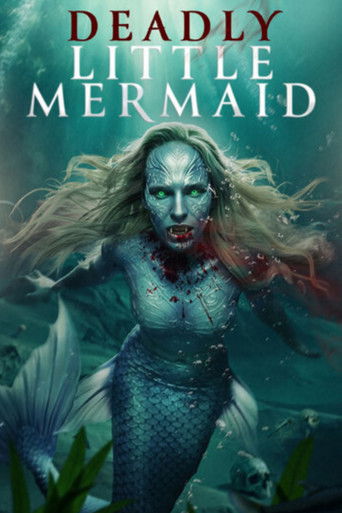
- Genre: Horror
- Director: Cameron Uzoka
- Year: 2026
- Runtime: 1h 20m
- Language: English (EN)
- TMDB Rating: ⭐ 5.0/10
Movie Overview
The Deadly Little Mermaid opens with one of the loneliest sounds in cinema: the relentless churn of waves against rocks. We meet Anton, a painter played by Elliott Eason, who seems more like a ghost haunting his own clifftop house than a man living in it. His daily routine involves staring at empty canvases and listening to the sea that took his family. The film’s central act happens fast. On a stormy night, he spots a figure in the surf and pulls a woman ashore. She’s Sophia, and she’s alive but silent.
Anton’s initial relief at saving a life quickly curdles. Sophia, played by Anastasia Nikolaeva, recovers with an eerie calm. She doesn’t speak, but she watches. She moves through his home with a quiet, unsettling familiarity, as if she’s always belonged there. Personally, I think the film is at its best in these quiet, creeping moments, where the horror is just Anton’s growing, unspoken dread.
The ‘unsettling events’ from the summary aren’t loud jump scares. A family photo he’d hidden is found on the mantle, perfectly centered. Paintings he’d left blank are suddenly filled with dark, watery shapes. His friend Eleanor, the only person who checks on him, becomes increasingly suspicious of the stranger in his house. The film builds a tight, paranoid pressure cooker, where Anton can’t tell if he’s being haunted, manipulated, or losing his mind.
What surprised me most was how the film ties Sophia’s presence directly to Anton’s past. It’s not a random monster attack. The connection to the ‘watery grave’ is literal and specific, revealed through fragmented memories and the increasingly aggressive behavior of the sea itself. The house, once a refuge, becomes a trap with the ocean on three sides.
Direction & Cinematography
Cameron Uzoka makes a clear choice to keep things tight and suffocating. Almost the entire film takes place in Anton’s modernist, glass-walled house, which should feel open but instead feels like a fishbowl. What struck me was how Uzoka uses reflections—in windows, in puddles, in Anton’s own spectacles—to suggest another presence always lurking just outside the frame. The camera often holds on empty doorways or the dark sea at night, training you to look for something that may or may not be there.
The pacing, however, is a double-edged sword. For the first hour, the slow, deliberate creep works. You feel Anton’s isolation. But I kept waiting for the release of a real confrontation, and when it finally comes, it feels rushed. The final act compresses several big reveals and a lot of action into a slim 15 minutes, which undercuts the careful dread that was built up.
And I’ll admit I didn’t expect the sound design to be such a character. The constant, groaning pressure of the wind, the drip of water in the pipes, the wet squelch of footprints on polished concrete—it all creates a brilliantly uncomfortable atmosphere. Uzoka understands that in a secluded house, every small noise is a potential threat.
Cast & Performances
Elliott Eason’s Anton is a study in frayed nerves. His performance is mostly in his physicality: the way his hands shake slightly when he pours a drink, or how he can’t stop adjusting objects on a shelf, trying to impose order. There’s a quiet desperation in his eyes that makes his later panic feel earned, not hysterical.
Anastasia Nikolaeva as Sophia has the tougher job, with almost no dialogue. She communicates through stillness and a penetrating gaze that’s more curious than malicious. A specific moment that stayed with me: when Anton confronts her about the paintings, she doesn’t deny it. She just slowly dips her finger in a glass of water and draws a line on the table, holding his stare. It’s chilling because her motives are completely opaque.
But the supporting cast feels underused. Eleanor Mackenzie, as Anton’s friend, delivers her lines with a believable concern, but the script gives her little to do besides express that concern and then become a plot device. Maddy Baskerville has a brief, memorable turn as a local historian who hints at the town’s lore, but she’s gone almost as soon as she arrives, which felt like a missed opportunity to deepen the mythology.
Character Psychology
On the surface, Anton wants to be a hero—to save a life and perhaps absolve himself for failing to save his family. He’s looking for redemption through a single act of bravery.
What he actually needs is to confront his grief and guilt, to stop drowning in the past. The house is a monument to his loss, and he’s trapped in it. Sophia’s arrival forces that confrontation, but not in a way he can process. He isn’t self-aware; he’s a man trying to outrun a shadow, and the film is about that shadow finally catching up.
He doesn’t so much change as he is unmade. The ending suggests he’s finally seeing the truth he’s spent years avoiding, but the cost is everything.
Themes & Emotional Depth
This isn’t really a film about mermaids. It’s a film about the prison of guilt. The sea isn’t just a setting; it’s the physical manifestation of Anton’s unresolved past, and it’s literally washing up on his doorstep. The horror comes from the idea that some debts—emotional ones—demand a terrible payment.
It’s also about the danger of isolation. Anton’s beautiful, remote house is his fortress, but it becomes his tomb because he’s cut himself off from any reality check. When strange things happen, there’s no one to tell him he’s not crazy. The film asks what happens when your safe space becomes the source of your terror.
Memorable Scenes & Dialogue
The ‘footprint’ scene is a masterclass in minimalism. Anton mopps his kitchen floor. He turns his back. When he turns around, a single, perfect wet footprint is on the dry tile. The camera doesn’t jump or zoom; it just sits on the footprint, and on Anton’s face as he processes it. It works because it’s so mundane and so impossible, sold entirely by Eason’s slow-dawning horror.
Another is the first ‘painting’ reveal. Anton enters his studio to find a canvas he left white now covered in a dark, swirling abstract pattern. He touches it—it’s wet, and the paint smears like sludge. The sound design here is key: you hear a thick, viscous drip as the paint runs down the canvas. It’s a violation of his creative space, and it feels deeply personal.
Sophia’s first real ‘action’ is also a standout. She finds Anton’s old record player and puts on a warped vinyl of a sea shanty. She doesn’t dance or smile; she just stands in the middle of the room, listening as the distorted music fills the house, a serene and unsettling expression on her face. Nikolaeva sells the moment by making it feel like a ritual, not a whim.
The Ending — Does It Deliver?
The climax, where the supernatural connection is fully revealed and the sea makes its final claim, has visual power. The practical effects for the water’s intrusion are impressively grim and wet. But it didn’t entirely land for me. The shift from psychological unease to full-blown aquatic haunting felt a bit abrupt, like the film had to suddenly remember it was a creature feature.
That said, the final shot earned its keep. Without spoiling it, it inverts the opening image of the lonely house in a way that’s bleakly poetic. It leaves you with a feeling of eerie completion, as if a cycle that began years ago has finally, terribly, closed. I wasn’t expecting much from the ending, but that final image stuck with me.
What Works
The atmosphere is incredibly effective. Cameron Uzoka wrings maximum dread from the lonely house and the punishing soundscape. Elliott Eason’s performance as a man unraveling is convincing and grounded—you believe his fear. The core metaphor of grief as a drowning force is compelling and well-integrated into the imagery. The practical effects in the finale, particularly the way water behaves, are grimly impressive and feel tangible, avoiding cheap CGI.
Honest Criticism
The plot’s mythology feels half-baked. We get hints of a town legend and a historical curse, but it’s never fleshed out enough to feel weighty, making the final explanation feel rushed. The supporting characters, especially Eleanor, are underwritten and exist primarily to deliver exposition or become victims. The shift from a slow-burn psychological piece to a more literal monster movie in the last 20 minutes creates a noticeable tonal rift that the film doesn’t fully bridge.
How It Compares
It shares DNA with ‘The Lighthouse’ in its bleak coastal isolation and a man succumbing to madness, but it lacks that film’s mythic strangeness and linguistic fireworks. It’s closer in spirit to ‘Under the Shadow’ or ‘The Babadook,’ where the monster is a metaphor for trauma, but it’s not as tightly focused as either.
Where it wins is in its setting and atmosphere. The glass house is a far more effective and modern prison than a creaky old mansion. Where it falls short is in its third-act pivot, which feels more conventional than the uniquely personal horror that preceded it. It can’t quite match the raw emotional punch of its influences.
Legacy & Cultural Impact
As a 2026 release, it’s too early to talk about legacy. It debuted with a quiet thud, garnering a middling 5.0/10 on TMDB and limited theatrical play, finding more of an audience on streaming services. It didn’t start a major conversation, but it’s a solid entry in the ‘arthouse horror’ catalog on platforms like Shudder. Its legacy will likely be as a moody, well-crafted hidden gem for horror fans who prefer dread over gore, remembered for its chilling atmosphere and central performances more than its plot.
Behind the Scenes
- The striking clifftop house is a real architectural home in Newfoundland, chosen specifically for its isolated, exposed location. The production had to haul equipment up a steep path, and several scenes were altered due to unpredictable coastal weather.
- Anastasia Nikolaeva, a trained dancer, performed almost all her own stunts, including the difficult underwater sequences in a tank. Her ability to hold her breath for long periods influenced how her ‘mermaid’ movements were staged.
- The distorted sea shanty on the record is a real, centuries-old folk song called ‘The Grey Funnel Line,’ slowed down and processed to sound unnerving. The director found it in an archive and built the scene around it.
Who Should Watch It?
Viewers who love slow-burn, atmospheric horror where the setting is the star will find a lot to admire here. Fans of films like ‘The Witch’ or ‘It Comes at Night’ that prioritize mood over action should give it a look. If you need fast-paced plots, clear monster rules, or likable characters making smart decisions, you’ll likely find this frustrating and slow.
Final Verdict
The Deadly Little Mermaid is a mixed bag, but its strengths are potent enough to make it worth a watch for horror enthusiasts. I’d recommend it primarily for its oppressive atmosphere and the committed, nervous performance from Elliott Eason. The rating reflects a film that excels in craft and mood but stumbles slightly in narrative execution. It’s the kind of film you appreciate for how it makes you feel—unsettled, claustrophobic, watched—even if the story logic doesn’t all hold up. Watch it on a stormy night when you want a chill that has less to do with blood and more to do with the dread of what’s lurking just outside your window.
More details, ratings, and cast information on IMDb, TMDB, Wikipedia. YouTube