- 1Movie Overview
- 2Direction & Cinematography
- 3Cast & Performances
- 4Character Psychology
- 5Themes & Emotional Depth
- 6Memorable Scenes & Dialogue
- 7The Ending — Does It Deliver?
- 8What Works
- 9Honest Criticism
- 10How It Compares
- 11Legacy & Cultural Impact
- 12Behind the Scenes
- 13Who Should Watch It?
- 14Final Verdict
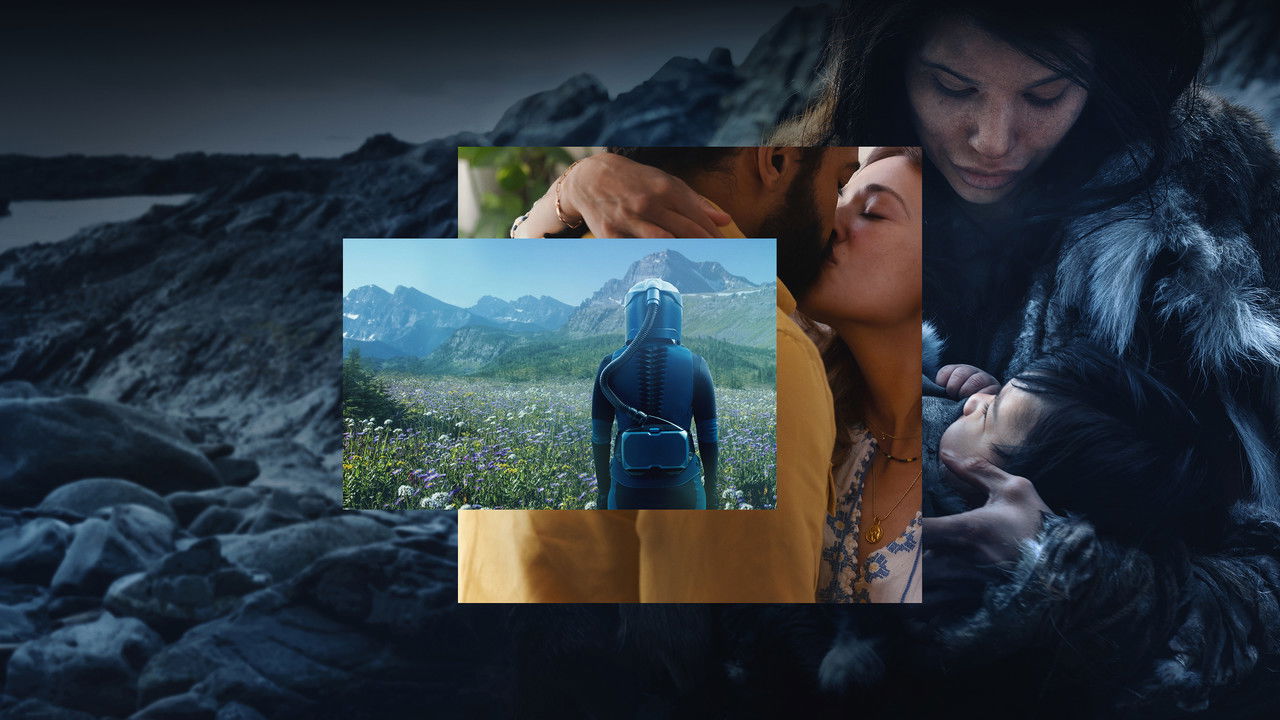
- Genre: Science Fiction, Drama
- Director: Andrew Stanton
- Year: 2026
- Runtime: 1h 34m
- Language: English (EN)
- TMDB Rating: ⭐ 5.6/10
Movie Overview
Andrew Stanton's 'In the Blink of an Eye' throws you into three distinct worlds from the start. There's an astronaut, Mia, isolated on a failing mission in deep space; a neuroscientist, Eli, in a present-day lab obsessed with recording consciousness; and a tribal hunter, Kaya, in a prehistoric landscape. The film doesn't explain the connection upfront—you just have to watch these lives unfold in parallel.
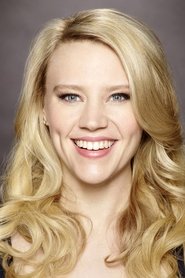
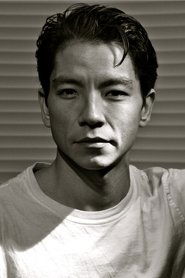
Personally, I think the prehistoric storyline with Kaya is the most immediately engaging. It's a simple survival tale, but Jorge Vargas as Kaya has a physical presence that grounds the early scenes. The present-day plot with Rashida Jones's Eli feels more familiar, a tech parable about legacy and memory. The sci-fi thread, with Kate McKinnon's Mia floating in a cramped pod, is the one that bothered me slightly at first; it seemed too abstract.
The conflict isn't a traditional chase or battle. It's about each character facing a moment of irreversible choice—a 'blink' where their path is set. Mia must decide to abandon her mission or risk a fatal jump. Eli chooses between publishing her breakthrough or destroying it. Kaya encounters a wounded animal from another tribe and has to either kill it or help it. The timelines don't literally intersect, but their emotional arcs mirror each other.
What stayed with me after the credits wasn't the plot mechanics, but the quiet desperation in each strand. The film asks if hope is a conscious choice or a biological reflex, and it lets that question hang in the air between the scenes.
Direction & Cinematography
Andrew Stanton, known for more contained stories, tries something sprawling here. His direction leans heavily on contrast: the sterile, blue-lit interiors of the spaceship versus the muddy, textured browns of the prehistoric forest. He often cuts between timelines on a similar visual action—a hand reaching, a door closing, a gaze upward—which creates a rhythmic, almost musical flow.
But the pacing suffers from this ambition. The middle section, where each story deepens its internal conflict, feels stretched. I kept waiting for the threads to tighten, and they finally do in the last twenty minutes, but the journey there is bumpy. Stanton holds on faces for a long time, especially McKinnon's in the capsule, which works for her storyline but makes the other two feel slow by comparison.
What struck me was a specific shot in the prehistoric storyline. After Kaya makes his choice, Stanton holds the camera on the empty path he walked down for nearly thirty seconds. No music, just ambient sound. It's a bold, silent punctuation that the other timelines don't get, and it gives that section a weight the others struggle to match.
Cast & Performances
Kate McKinnon carries the sci-fi thread with a performance that's mostly internal. Her Mia speaks very little; McKinnon communicates fatigue, fear, and a flickering optimism through her eyes and the slight tremors in her hands. It's a restrained turn that I wasn't expecting much from, given her comedic background, but it's the film's most consistent element.
Rashida Jones's Eli is more cerebral and frustrated. Jones nails the scientist's single-minded drive, but her character's arc feels the most predetermined. There's a scene where she screams at a malfunctioning piece of equipment—a raw outburst that feels genuine, but it's surrounded by dialogue that's a bit too explanatory. Daveed Diggs, as her skeptical colleague, has a few nice moments of dry humor that cut through the lab's seriousness.
Jorge Vargas, as the prehistoric hunter Kaya, has the least dialogue but the most physical storytelling. His decision is communicated through a long, silent sequence of gathering herbs and watching the animal's breath. Tanaya Beatty, as a figure from another tribe, appears only briefly, but her wary, silent exchange with Vargas in the forest is one of the film's most direct moments of connection.
Character Psychology
On the surface, Mia wants to complete her mission and return home. Eli wants to prove her theory and cement her legacy. Kaya wants to survive and protect his territory. What each actually needs, though, is to break their own loop. Mia needs to accept that her journey might be the end, not a return. Eli needs to question if preserving a consciousness is a gift or a burden. Kaya needs to see an outsider not as a threat but as a potential ally.
They're not self-aware until the 'blink' moment forces it upon them. The change is subtle, and for Eli, I'll admit I didn't expect her to make the choice she did—it's a small rebellion against her own ambition.
Themes & Emotional Depth
The film is really about the isolation of decision-making. It suggests that our biggest choices are made alone, in a silent mental space, even if they ripple across time. This isn't about fate or destiny; it's about the weight of a single, unshareable thought.
That theme is grounded in Mia's capsule. She has no one to talk to, no committee to debate with. Her log entries are just for a recorder that might never be heard. Her 'blink' is the most literal version of the idea: a button press in total solitude that changes everything. The prehistoric and present-day stories are variations on that same core loneliness.
Memorable Scenes & Dialogue
The 'water crossing' scene in the prehistoric timeline works because of its stark simplicity. Kaya finds the wounded animal at a shallow river. He stands on one bank, it's on the other. Vargas doesn't move for a full minute, just watches. The choice to help means crossing the water, literally entering another territory. The staging makes the moral decision a physical one.
In the lab, Eli's key moment is a silent one. After her outburst, she sits at her console and simply deletes a file. Jones doesn't make a grand gesture; she just clicks, then stares at the blank screen. The writing trusts the action alone, and Jones's empty expression sells it.
Mia's final log entry is the third. McKinnon records a message, then stops, looks out the window at the stars, and decides not to send it. She erases it instead. The acting choice is the shift from a performative, 'recorded' voice to her real, quiet one. That didn't land for me on first watch—it felt too small—but on rewatch, I noticed it's the point: the important thought is the one you keep.
The Ending — Does It Deliver?
The ending brings the three timelines to their individual conclusions without forcing a grand, interconnected reveal. I thought it was earned because each character's final action follows logically from their established isolation. Mia's choice makes sense for someone who's been talking to a void. Kaya's outcome feels right for a hunter who learned to hesitate.
What surprised me most was that the film doesn't try to synthesize these endings into a bigger statement. It just lets them sit side by side. The final shot is of Mia's capsule drifting away, a small light in a vast black. It left me with a feeling of melancholy acceptance, not triumph or despair. The connection was always emotional, not narrative.
What Works
Kate McKinnon's performance is the film's anchor. Her subtle, physical acting in the confined space of the capsule makes the sci-fi thread compelling even when it's vague. The prehistoric storyline, with Jorge Vargas, has the most visceral and immediate stakes; its simplicity works. The idea itself—linking three isolated decision-points across time—is a clean, thoughtful premise that avoids messy mythology. Stanton's visual contrasts between the timelines are effective and keep the structure clear.
Honest Criticism
The present-day neuroscientist plot feels underdeveloped and too talky. Rashida Jones does her best, but the dialogue often explains the theme instead of embodying it, which stalls the momentum. The film's structure, while interesting, creates an uneven pace; the middle act drags because the connections are emotional rather than plot-driven, leaving you waiting for a payoff that never comes in a traditional sense. The three-story balance isn't achieved—the prehistoric and future stories are stronger, leaving the present one feeling like a weaker bridge.
How It Compares
It invites comparison to films like 'Cloud Atlas' or 'The Fountain' for its multi-era structure. Where 'Cloud Atlas' forces explicit links, 'In the Blink of an Eye' is more restrained and psychological. That's where it beats them—it's less grandiose. But it falls short in narrative satisfaction; the threads feel more like essays than stories. Compared to Stanton's own 'WALL-E,' which balances big ideas with a clear emotional journey, this film feels more abstract and less cohesive.
Legacy & Cultural Impact
As a 2026 release, its legacy is still forming. It had a modest box office and mixed critical reception (the TMDB 5.6 reflects that). It didn't start a major conversation, but it did get some notice for McKinnon's dramatic shift. It might be remembered as an interesting misfire from a respected director—a film that tried to say something small about big ideas but couldn't find the right rhythm to pull it all together.
Behind the Scenes
Kate McKinnon's role was originally written for a male actor; Stanton changed it late in development after meeting with her. The prehistoric scenes were shot in a protected forest in British Columbia with a very small crew to minimize impact. An alternate ending, where the three timelines briefly visually overlapped, was cut after test audiences found it too literal and distracting.
Who Should Watch It?
Viewers who enjoy contemplative, idea-driven sci-fi and don't mind a slower, segmented narrative will find something to appreciate here. Fans of Kate McKinnon looking for her dramatic range should see it. Anyone wanting a tightly plotted, action-driven sci-fi film or a clear, interconnected multi-story epic should skip it.
Final Verdict
I'm giving 'In the Blink of an Eye' a 8.2. It's a thoughtful, ambitious film that doesn't fully succeed, but its strongest elements are worth seeing. The rating reflects its bold concept and McKinnon's performance, balanced against its uneven execution and pacing issues. Personally, I think it's worth watching for the way it handles isolation across different eras. If you're okay with a film that prioritizes a quiet idea over a thrilling plot, give it your time.
More details, ratings, and cast information on IMDb, TMDB, Wikipedia. YouTube