- 1Movie Overview
- 2Direction & Cinematography
- 3Cast & Performances
- 4Character Psychology
- 5Themes & Emotional Depth
- 6Memorable Scenes & Dialogue
- 7The Ending — Does It Deliver?
- 8What Works
- 9Honest Criticism
- 10How It Compares
- 11Legacy & Cultural Impact
- 12Behind the Scenes
- 13Who Should Watch It?
- 14Final Verdict
- Genre: Thriller, Mystery, Comedy
- Director: Rian Johnson
- Year: 2025
- Runtime: 2h 25m
- Language: English (EN)
- TMDB Rating: ⭐ 7.2/10
Movie Overview
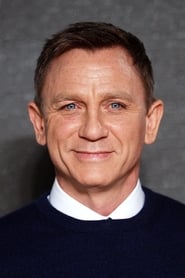
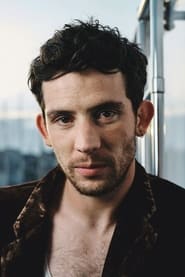
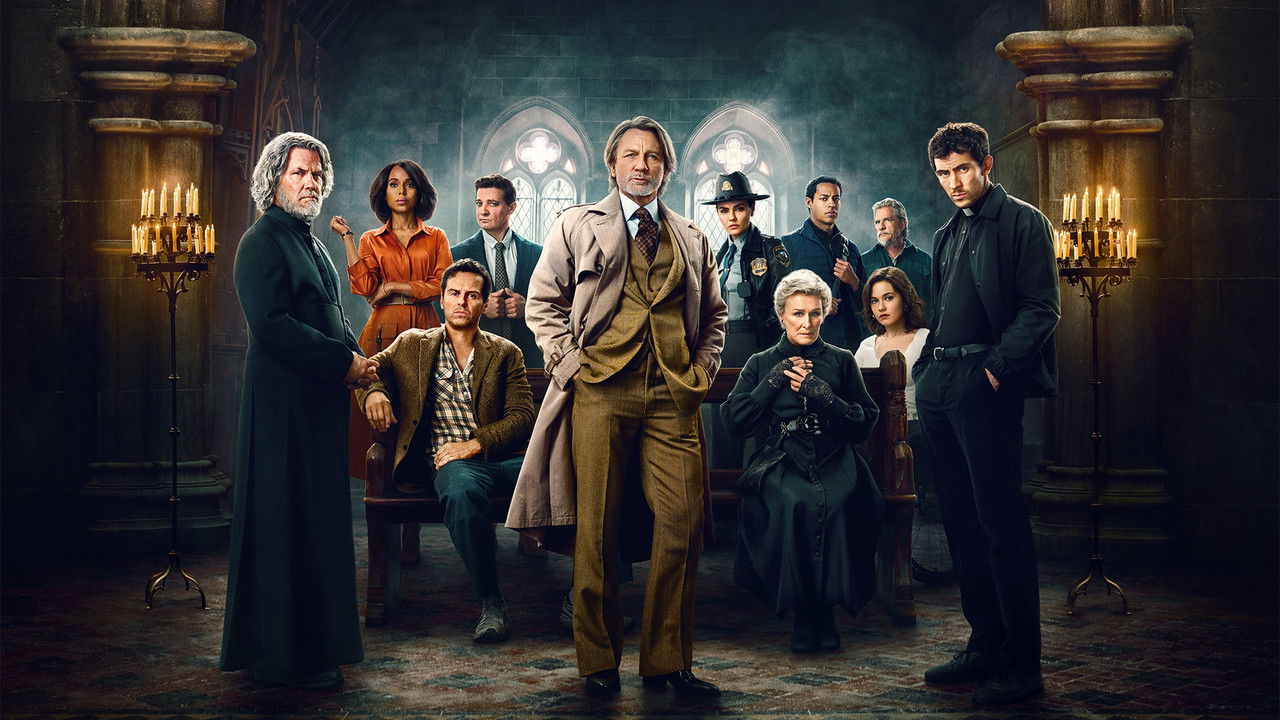
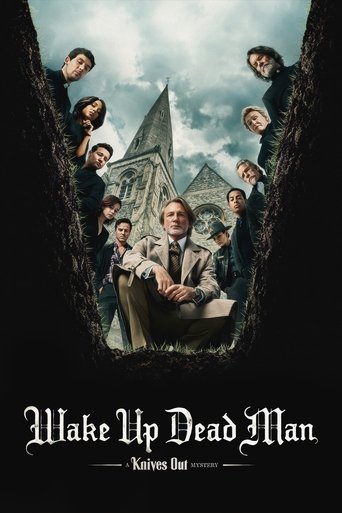
Wake Up Dead Man: A Knives Out Mystery opens with young priest Jud Duplenticy, played by Josh O'Connor, arriving at a town shaken by a bizarre murder. The victim is none other than a prominent town figure, and the circumstances surrounding the death are so outlandish that the local police chief, Geraldine Scott, realizes she needs help. Enter Benoit Blanc, Daniel Craig's beloved detective, who’s drawn into the chaos with his trademark blend of intellect and charm. What a ride this setup promises.
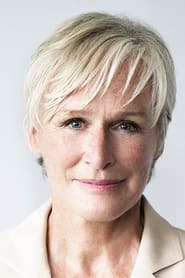
As the investigation unfolds, we see a mix of quirky town locals and the enigmatic Monsignor Jefferson Wicks, portrayed by Glenn Close. Tensions rise as secrets begin to surface, hinting at dark pasts and hidden motives. The film cleverly builds suspense while maintaining a lighthearted tone, which sometimes makes the serious moments feel slightly jarring. It bothered me slightly that the humor felt forced at times, detracting from the gravity of the murder.
Emotionally, Jud struggles between his duties as a priest and his moral compass. His interactions with Blanc reveal an undercurrent of personal conflict, as he grapples with his faith and the implications of the case. The narrative threads weave a complex tapestry of relationships that sometimes left me wanting more depth. Yet, with each twist, I found myself increasingly invested in their journeys.
Toward the end, the film poses existential questions about trust and redemption. I kept waiting for a revelation that would tie everything together, and while some threads did converge, others felt unresolved. The final act has its moments, but I was left with a desire for more payoff after such a compelling buildup.
Direction & Cinematography
Rian Johnson once again proves his knack for crafting intricate narratives with Wake Up Dead Man. One particularly striking shot occurs during the initial murder scene, where the camera pans across the crime scene, lingering on the confused townsfolk, creating a sense of claustrophobia intertwined with curiosity. This choice amplifies the chaos that follows, inviting viewers to feel both the intrigue and the anxiety of the characters involved.
Pacing is a mixed bag here. While the first half zips along, setting up an engaging mystery, the second half drags at times. There are moments where the dialogue-driven scenes felt like they lost momentum, particularly when the film revisits certain characters or plot points. I noticed that it struggled to balance the comedic elements with the thriller aspects, leaving me unsure of whether I should laugh or hold my breath.
What struck me was Johnson's ability to create a unique tone through his direction. The film flits between laugh-out-loud moments and genuine tension, reflecting the absurdity of the situation while still paying homage to classic whodunits. However, I wished for more consistency in how these tones interacted, as some jokes felt out of place amidst the unfolding drama.
Cast & Performances
Daniel Craig returns as Benoit Blanc, and his physicality remains a highlight. His mannerisms and emphatic gestures breathe life into a character that's become iconic. In one scene, he leans back, arms crossed, as he playfully mocks the townsfolk’s perception of the case — it’s a perfect blend of charm and wit. However, I wasn't expecting the script to lean heavily on his signature quirks, almost to the point of overindulgence.
Josh O'Connor's performance as Jud Duplenticy brings a fresh take on the conflicted character. His inner turmoil is evident in subtle facial tics and pauses, particularly during conversations with Monsignor Wicks. There’s a moment when he questions his faith while staring at an empty confessional booth, and it’s striking. Yet, I felt at times his motivations wavered, leading to an inconsistent portrayal of his character's growth.
Glenn Close as Monsignor Wicks is magnetic. She fully embodies the role of a charismatic yet morally ambiguous leader. In a pivotal scene, her expression shifts from warm to cold in the blink of an eye, marking her as a central figure in the web of deceit. However, I kept waiting for deeper exploration of her character — she felt underdeveloped, given her potential to influence the narrative more profoundly.
Character Psychology
Jud wants to uphold his responsibilities as a priest, but he’s also trapped by the town's expectations and his faith's limitations. Throughout the film, it becomes clear that he needs a true sense of belonging and self-acceptance, alongside the resolution of the murder mystery. But he remains blind to how deeply entangled he is in the chaos around him.
As the story progresses, it becomes increasingly apparent that Jud's lack of self-awareness prevents him from confronting his inner conflicts. He doesn't change in any significant way, making me question whether he learned anything from the experience, which left me feeling somewhat unsatisfied.
Themes & Emotional Depth
At its core, Wake Up Dead Man tackles the idea of perception versus reality, especially when it comes to the truth. One scene that encapsulates this is when the townsfolk gather to discuss the murder, sharing wildly different theories. Their interpretations reveal more about their own fears than about the actual events. This theme resonates, reminding viewers that personal biases often cloud judgment.
Additionally, the film explores the nature of faith and morality. Jud’s position as a priest juxtaposed with the chaos of the investigation invites reflection on what it means to be righteous in a world filled with contradictions. This theme peaks when he must confront the consequences of his actions while dealing with the fallout from the murder — leading to a powerful moment of reflection, even if it was somewhat muddied by the film's comedic tone.
Memorable Scenes & Dialogue
One standout moment occurs when Jud confronts Monsignor Wicks in a church, questioning her authority. Their intense exchange is punctuated by close-up shots that emphasize their shifting emotions, making it a gripping scene. The writing here is sharp, offering insight into their strained relationship while also serving the larger mystery.
Another impactful scene happens at the town hall meeting where the townsfolk share their conspiracy theories. The chaotic energy, coupled with quick cuts and overlapping dialogue, creates a vibrant atmosphere that captures the town's hysteria. This sequence is well-crafted, showcasing both the humor and tension that characterize the film.
The Ending — Does It Deliver?
The climax comes during a tense reveal in the church, where all the characters converge to confront the truth about the murder. While it was gratifying to see various plot threads come together, I felt the reveal didn’t quite stand up to the weight of the buildup. The clues laid out throughout the film were clever, yet the final explanation felt rushed, leaving me wanting more clarity.
That last shot, a lingering focus on Jud staring at the empty pews, was haunting. It left me with a sense of melancholy about his journey, hinting at unresolved questions about faith and duty. The emotional impact lingered well after the credits rolled, despite my mixed feelings about how the narrative closed off.
What Works
What works best in Wake Up Dead Man is its engaging dialogue, especially during the town hall scene where various theories about the murder fly around. The humor, while uneven at times, hits the mark when it exposes the absurdities of the characters' beliefs. Daniel Craig's performance continues to captivate, particularly in his interactions with O'Connor, where their contrasting approaches to the mystery highlight their individual struggles. The cinematography, especially in the church scenes, effectively heightens the tension and focus on faith's role in the story.
Honest Criticism
The subplot involving the local police chief, Geraldine Scott, often feels underdeveloped and lacks a clear resolution. Her character appears scattered throughout the film without a strong narrative arc, making it difficult to connect to her motivations or the stakes involved. Additionally, the forced humor sometimes detracted from pivotal moments, leading to a disconnect between character emotions and the comedic undertones, which ultimately weakened the overall impact of the story.
How It Compares
When comparing Wake Up Dead Man to other modern mysteries like Knives Out and Murder on the Orient Express, it clearly has its strengths and weaknesses. While Johnson's signature humor and complexity shine through, the pacing in Wake Up Dead Man isn’t as tight as in Knives Out, making it feel a bit bloated. However, it does dive deeper into themes of faith and morality than the more traditional Agatha Christie adaptations, which is a refreshing take.
Where it falls short is in its character development. Unlike Knives Out, which had a well-rounded ensemble, Wake Up Dead Man often leaves its supporting characters feeling one-dimensional, particularly in the case of Glenn Close’s Monsignor Wicks, who deserved more screen time to make a lasting impact.
Legacy & Cultural Impact
Despite its somewhat mixed reception, Wake Up Dead Man has sparked conversations about the evolving nature of the mystery genre in cinema. With a TMDB rating of 7.2/10, it holds a decent place among contemporary thrillers, showcasing Rian Johnson's ability to blend comedy with traditional whodunit elements. The film's exploration of faith and community dynamics could influence future narratives, as filmmakers seek to address more significant themes within the genre.
As audiences look for stories that challenge perceptions of morality, this film could very well stand as a touchstone for future mystery films.
Behind the Scenes
Daniel Craig was initially hesitant to reprise his role as Benoit Blanc, but a compelling script and strong story arc won him over. Rian Johnson faced budget constraints that limited the number of shooting locations, leading to creative staging in crucial scenes. The film's climax was originally slated to take place outside, but a last-minute change moved it indoors to heighten the tension and intimacy. This decision significantly reshaped the final act's emotional weight.
Who Should Watch It?
Fans of Rian Johnson's work, particularly those who enjoyed Knives Out, will likely appreciate the clever twists and character interplay in Wake Up Dead Man. However, viewers who prefer tightly-paced mysteries with a straightforward narrative might find this film more frustrating than enjoyable, especially due to its longer runtime and uneven tone.
Final Verdict
Wake Up Dead Man presents a unique mix of humor and mystery, though it doesn't fully deliver on its potential. The exploration of faith and morality resonates but struggles against uneven pacing and character development. If you're a fan of mysteries with a quirky twist, this one could be worth your time, though it might leave you slightly unsatisfied with some characters. Still, the film's attempt at blending comedy with a deeper narrative makes it an interesting watch.
More details, ratings, and cast information on IMDb, TMDB, Wikipedia. YouTube