- 1Movie Overview
- 2Direction & Cinematography
- 3Cast & Performances
- 4Character Psychology
- 5Themes & Emotional Depth
- 6Memorable Scenes & Dialogue
- 7The Ending — Does It Deliver?
- 8What Works
- 9Honest Criticism
- 10How It Compares
- 11Legacy & Cultural Impact
- 12Behind the Scenes
- 13Who Should Watch It?
- 14Final Verdict
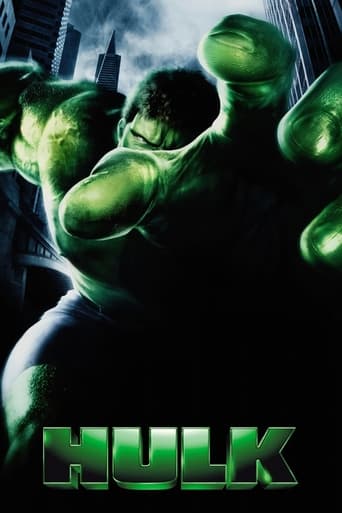
- Genre: Science Fiction, Adventure, Action
- Director: Ang Lee
- Year: 2003
- Runtime: 2h 18m
- Language: English (EN)
- TMDB Rating: ⭐ 5.6/10
Movie Overview
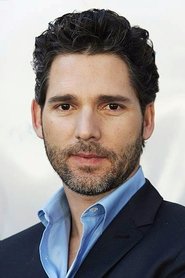
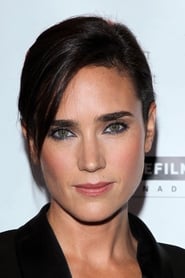
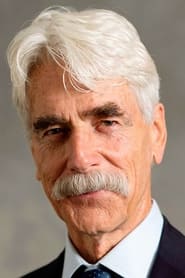
Ang Lee's Hulk is less a superhero story and more a Greek tragedy that happens to feature gamma radiation. We meet Bruce Banner, a quiet, intensely repressed geneticist played by Eric Bana. He's haunted by a childhood he can't remember and carries a deep, unexamined sadness. His only real connection is with his colleague and ex-girlfriend, Betty Ross (Jennifer Connelly), the daughter of the stern General Thaddeus Ross (Sam Elliott).
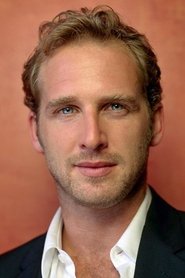
An accident in the lab bombards Bruce with radiation. Instead of killing him, it unlocks something buried in his DNA. When his anger spikes, he transforms into a giant, green, impossibly strong creature. The military, led by the obsessive General Ross and the opportunistic Glenn Talbot (Josh Lucas), sees a weapon to be contained or a monster to be destroyed. Bruce just wants to understand what is happening to him.
The film isn't about saving the world. It’s about a man literally running from his own rage, embodied by a creature he can't control.
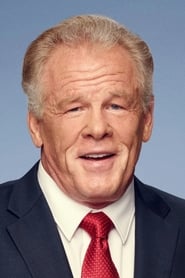
His journey forces him to confront his long-lost father, David Banner (Nick Nolte), a disgraced scientist whose genetic experiments are the source of all Bruce's pain. The conflict becomes deeply personal, a psychological battleground where the biggest threat isn't a supervillain, but inherited trauma.
Direction & Cinematography
What's most apparent about Ang Lee's direction in Hulk is how much he resists making a conventional action movie. Instead, he shoots a somber family drama, focusing on pained close-ups and quiet, empty rooms. He’s far more interested in Bruce Banner’s tormented psyche than in the Hulk’s destructive power. Personally, I think this is why the film remains so fascinating, even if it frustrated audiences back in 2003.
Lee's most discussed decision is the editing, which uses split screens and panel-like transitions that directly mimic the comic book page. At first, I found it distracting. But on rewatch, I noticed how it fragments the screen to show multiple perspectives at once—a character’s reaction shot held in one box while action unfolds in another. It’s an attempt to create a visual language for a comic book that feels both innovative and, at times, a bit clumsy. The pacing is deliberate, even slow, building a sense of dread rather than excitement.
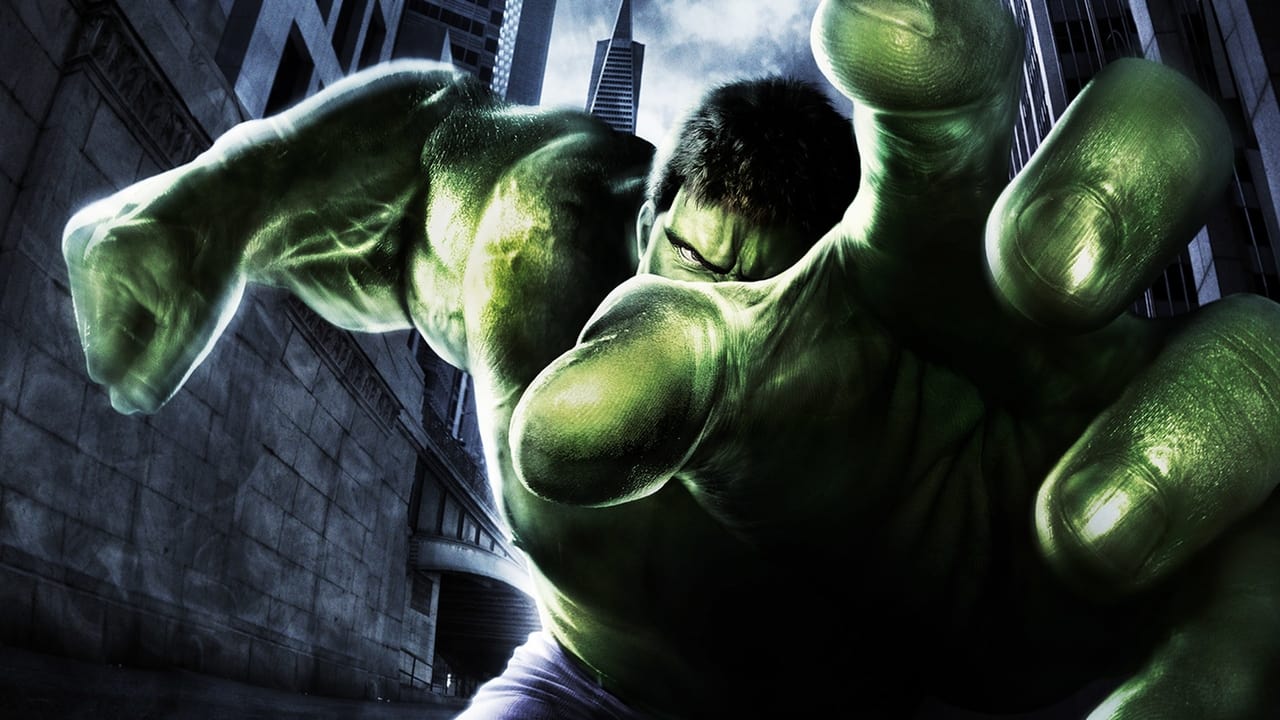
And then there's the action. When the Hulk finally fights tanks in the desert, Lee frames him against the vast landscape like a force of nature. It’s less a fight scene and more a kind of terrible ballet. It’s a strange, often beautiful film that prioritizes mood over momentum.
Cast & Performances
Eric Bana’s performance in Hulk is the quiet anchor of the entire film. He plays Bruce Banner not as a nerdy scientist but as a man holding himself so tightly he might shatter. There’s a permanent sadness in his eyes. He internalizes everything, which makes the Hulk’s explosive release feel earned. It’s a subtle, withdrawn performance that I think is underrated; he feels like a man genuinely damaged by his past.
Jennifer Connelly, as Betty Ross, does the difficult job of grounding the film's more outlandish ideas. She has a believable warmth and intelligence, and her concern for Bruce feels real. I'll admit I didn't expect her to have such solid, unfussy chemistry with Bana, but their scenes together provide the film's emotional core. Sam Elliott is perfectly cast as General Ross, all rigid posture and simmering disapproval behind that iconic mustache. He is military authority personified.
But the wild card is Nick Nolte as David Banner. He's a whirlwind of gravel-voiced monologues and unhinged energy. What stayed with me after the credits was Nolte's sheer commitment to the part; he’s either giving a truly daring performance or just completely losing his mind on camera. It’s hard to tell, and that’s what makes it so compelling to watch.
Character Psychology
Bruce Banner wants what any man in his position would: a cure. He wants to be rid of the monster inside him and to live a quiet, normal life. But the film makes it clear that what he actually needs is to stop running from his past and confront the source of his rage—his father.
The Hulk isn't just a side effect of an accident; he is the physical manifestation of a lifetime of suppressed trauma and anger. Bruce doesn't change by finding a cure, he changes by finally accepting that the Hulk is a part of him.
Themes & Emotional Depth
This isn't a film about power and responsibility. It’s a story about fathers and sons, and the destructive baggage that gets passed from one generation to the next. David Banner's reckless ambition and abusive nature are literally encoded into Bruce’s genetics. Bruce's struggle isn't with an external villain; it's an internal war against an inheritance he never asked for. The entire plot is driven by this toxic family dynamic.
It’s also about the danger of repression. Bruce has spent his entire life bottling up his emotions, and the Hulk is the inevitable, violent consequence of that. The film suggests that rage, when denied, doesn't disappear. It just grows stronger in the dark until it can't be contained anymore. That moment when Bruce mutters, "You're making me angry," isn't a threat; it's a plea.
Memorable Scenes & Dialogue
1. The Desert Battle. After being captured, the Hulk breaks free and faces off against General Ross's army. What surprised me most was how Lee shoots this not as a triumphant action set piece, but as a depiction of pure, unstoppable force. The shots of the Hulk leaping miles across the desert and tearing a tank turret off to use as a weapon have a mythic quality. It's the one sequence where the film fully delivers on blockbuster spectacle.
2. The Gamma Poodles. Yes, really. In a fit of mad science, David Banner exposes three poodles to gamma radiation, and they become monstrous beasts that attack Betty. It’s a bizarre, almost campy scene that feels teleported in from a different movie. That moment didn't land for me then, and it doesn't now, but it is undeniably memorable for its sheer weirdness.
3. Bruce and Betty in the cabin. After escaping, the two hide out in a remote cabin. There's a quiet, tender scene where they talk, and Bruce’s fear and vulnerability are on full display. It’s a necessary breather that reminds you of the human stakes.
The Ending — Does It Deliver?
The final confrontation is not the city-smashing brawl you'd expect. Instead, it's a bizarre, abstract, and deeply psychological battle between Bruce and his father, who has absorbed a massive amount of energy. They don't just trade punches; they argue about their past while transforming into elemental beings of pure energy and water. I kept waiting for a more conventional fight, and it never came.
I’ll admit I didn’t expect the ending to be so purely conceptual. It’s more of a Freudian lightshow than a boss fight. It left me feeling more bewildered than satisfied on first viewing, but I've come to appreciate its refusal to give audiences an easy, triumphant conclusion. The film earns its strange ending by being strange all the way through.
What Works
The film's greatest strength is its unwavering commitment to being a serious psychological drama. Ang Lee treats the material with the gravity of a classic tragedy, and that ambition is compelling. Eric Bana's performance as the withdrawn, tormented Bruce is excellent, and Sam Elliott is pitch-perfect as the obsessive General Ross. Danny Elfman's score is also a high point, adding a gothic, sorrowful mood to the proceedings.
Honest Criticism
The early 2000s CGI is the film's most glaring issue. The Hulk often looks weightless and rubbery, an effect that pulls you out of the movie, especially during his running sequences. It bothered me slightly that the infamous 'gamma poodle' scene exists at all, as it's a tonal mess. The final confrontation with David Banner is also a visually confusing climax that sacrifices clarity for abstract symbolism.
How It Compares
Ang Lee's *Hulk* is the antithesis of the 2008 reboot, *The Incredible Hulk*. The latter is a lean, conventional chase film that fits neatly into the MCU mold. Lee’s film is a sprawling, introspective drama that would never get made today. It has more in common with the psychological horror of David Cronenberg's *The Fly*—both are about scientists whose bodies betray them in tragic ways—than it does with *The Avengers*.
Compared to modern superhero films, it feels like a relic from another era. It's slower, more talkative, and far more interested in character psychology than world-building. It doesn't 'win' against the MCU in terms of fun, but it offers a depth and artistic ambition that later versions never even attempted.
Legacy & Cultural Impact
Upon its release in 2003, *Hulk* was a commercial disappointment and a critical punching bag. Its $245 million worldwide gross wasn't enough to justify a sequel, leading Marvel Studios to reboot the character completely just five years later for their new cinematic universe. For years, it was seen as a prime example of how *not* to make a comic book movie: too serious, too slow, too weird.
However, its reputation has softened considerably. Critics and audiences now often praise it for its unique vision and artistic ambition, seeing it as an experimental blockbuster that was simply ahead of its time. It’s a fascinating 'what if' in the history of the superhero genre—a look at the path not taken before the Marvel formula became king.
Behind the Scenes
- Ang Lee, who had just come off *Crouching Tiger, Hidden Dragon*, performed some of the Hulk's motion capture himself to get the character’s rage-filled facial expressions just right.
- Before Eric Bana was cast, the role of Bruce Banner was offered to Edward Norton, who declined. Norton would, of course, go on to play the character in the 2008 reboot.
- The film's unique split-screen editing was handled by two legendary editors, Tim Squyres (Lee's regular collaborator) and the great Walter Murch (*Apocalypse Now*).
Who Should Watch It?
This is a film for patient viewers who appreciate directorial ambition and character-driven drama, even in a blockbuster package. If you like Ang Lee's other work, you'll find a lot to admire here. Anyone looking for a fun, fast-paced action movie in the vein of the MCU should absolutely skip this; you will be bored.
Final Verdict
A flawed but fascinating and deeply misunderstood film. Ang Lee's *Hulk* is an art-house psycho-drama masquerading as a summer blockbuster, and its refusal to compromise is both its biggest weakness and its greatest strength. It earns its high marks for daring to be something so different in a genre that now prizes uniformity above all else. For all its clumsy CGI, it has an intelligence and a soul that most modern superhero films lack. Watch it as a bold, beautiful, and sometimes baffling cinematic experiment.
More details, ratings, and cast information on IMDb, TMDB, Wikipedia. YouTube