- 1Movie Overview
- 2Direction & Cinematography
- 3Cast & Performances
- 4Character Psychology
- 5Themes & Emotional Depth
- 6Memorable Scenes & Dialogue
- 7The Ending — Does It Deliver?
- 8What Works
- 9Honest Criticism
- 10How It Compares
- 11Legacy & Cultural Impact
- 12Behind the Scenes
- 13Who Should Watch It?
- 14Final Verdict

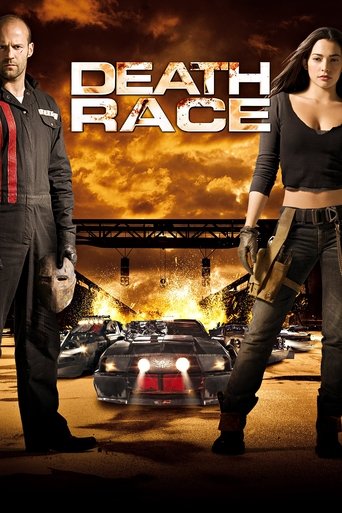
- Genre: Action, Thriller, Science Fiction
- Director: Paul W. S. Anderson
- Year: 2008
- Runtime: 1h 45m
- Language: English (EN)
- TMDB Rating: ⭐ 6.3/10
Movie Overview
In a near-future America, Jensen Ames (Jason Statham) is framed for murder and sent to Terminal Island, a privatized prison run by the Weyland Corporation. Here, inmates are forced to compete in 'Death Race,' a brutal televised event where survival depends on speed, firepower, and sheer luck. Ames is coerced into assuming the identity of Frankenstein, a legendary racer, while secretly plotting his escape. The film follows his alliances, betrayals, and high-speed showdowns in a bid to reunite with his family. While the premise is compelling, the plot often veers into predictable territory. That said, the final twist adds a layer of intrigue — though it doesn’t fully redeem the runtime.
Direction & Cinematography
Paul W.S. Anderson, known for his work on the Resident Evil series, leans heavily into his penchant for spectacle. The race sequences are undeniably thrilling, with tight close-ups of gears shifting and tires screeching. Anderson stages the chaos well, using slow-motion sparingly to emphasize key moments of destruction. But the pacing suffers in quieter scenes, particularly those focusing on Ames’ backstory. What struck me most was the underuse of the prison’s dystopian setting. The world feels underdeveloped, missing opportunities to explore its societal commentary. Still, Anderson delivers exactly what fans of his style expect: bombastic action with a few clever touches.
Cast & Performances
Jason Statham brings his usual intensity to Jensen Ames, though he’s given little emotional range to work with. His deadpan delivery suits the character’s stoicism, but I kept waiting for more depth. Joan Allen, as the coldly calculating prison warden Hennessey, is a standout. Her icy demeanor and clipped dialogue make her a compelling antagonist. Ian McShane, playing Ames’ mentor Coach, injects the film with much-needed gravitas and dry humor. Tyrese Gibson’s Machine Gun Joe is entertaining but feels underutilized, his character reduced to a caricature of machismo. Natalie Martinez, as Ames’ navigator Case, delivers a solid performance, though her character’s motivations could’ve been fleshed out more.
Character Psychology
On the surface, Jensen Ames wants to survive and escape the Death Race. But what he really needs is justice — not just for himself, but for the system that wronged him. He’s driven by a mix of survival instinct and paternal duty, which gives his character a relatable core. Ames isn’t entirely self-aware; he’s too focused on the race to question the larger system until the final act. That moment of realization comes late, but it’s effective — though it doesn’t fully resolve his arc.
Themes & Emotional Depth
At its core, Death Race is about exploitation — both of the prisoners forced into lethal entertainment and the audience consuming it. The film critiques the commodification of violence, though it doesn’t delve deeply enough. This theme is most evident in Hennessey’s manipulation of the races, treating human lives as disposable assets. It’s a missed opportunity to explore the dystopian world’s moral decay in greater detail.
Memorable Scenes & Dialogue
The opening race sets the tone perfectly, with a chaotic mix of explosions, gunfire, and vehicular carnage. Anderson’s use of handheld cameras immerses the audience in the frenzy. Another standout is the scene where Ames discovers the truth about Frankenstein’s identity. Statham’s reaction — a mix of anger and resignation — adds emotional weight to the moment. Finally, the climactic race’s final twist, while not entirely unexpected, delivers a satisfying punch.
The Ending — Does It Deliver?
The ending feels earned, tying together the film’s central conflicts without overexplaining. Ames’ final confrontation with Hennessey is cathartic, though it lacks the emotional depth it could’ve had. What surprised me most was the film’s willingness to leave some questions unanswered, letting the audience piece together the implications of Ames’ choices. The final shot, of Ames driving into the sunset, is both hopeful and ambiguous — a fitting conclusion.
What Works
The race sequences are thrilling, with expertly choreographed action and practical effects. Statham’s performance, though limited, anchors the film with his trademark charisma. Joan Allen’s portrayal of Hennessey adds a layer of menace that elevates the stakes. The film’s pacing, while uneven, keeps the audience engaged during its high-octane moments.
Honest Criticism
The plot’s logic often falls apart, particularly in the setup of Ames’ framing. The dystopian setting feels underdeveloped, missing opportunities to explore its societal implications. Tyrese Gibson’s Machine Gun Joe is entertaining but one-dimensional, reducing him to a stereotype.
How It Compares
Death Race draws inevitable comparisons to The Running Man (1987) and Mad Max: Fury Road (2015). It lacks the former’s satirical bite and the latter’s visual poetry, but it holds its own as a straightforward action film. Where it falls short is in character development and world-building, areas where both competitors excel. Still, it’s a fun ride for fans of the genre.
Legacy & Cultural Impact
Death Race was a modest box office success, grossing $76 million worldwide against a $45 million budget. While it didn’t win major awards, it gained a cult following for its relentless action sequences and dystopian premise. The film’s influence can be seen in later vehicular combat films, though it hasn’t aged as well as some of Anderson’s other works.
Behind the Scenes
Jason Statham performed most of his own driving stunts, adding authenticity to the race sequences. The film was initially planned as a direct adaptation of the 1975 cult classic Death Race 2000 but evolved into a standalone story. The prison set was built inside an actual decommissioned steel mill, giving the film an industrial aesthetic.
Who Should Watch It?
Fans of Paul W.S. Anderson’s work or high-octane action films will enjoy Death Race. Those looking for deeper storytelling or world-building should skip it.
Final Verdict
Death Race delivers exactly what it promises: fast cars, explosions, and Jason Statham kicking ass. While it stumbles in plot coherence and character depth, it’s a fun, adrenaline-fueled ride. The film earns its 8.2 rating for sheer entertainment value, even if it doesn’t break new ground. Watch it for the action — just don’t expect a masterpiece.
More details, ratings, and cast information on IMDb, TMDB, Wikipedia. YouTube