- 1Movie Overview
- 2Direction & Cinematography
- 3Cast & Performances
- 4Character Psychology
- 5Themes & Emotional Depth
- 6Memorable Scenes & Dialogue
- 7The Ending — Does It Deliver?
- 8What Works
- 9Honest Criticism
- 10How It Compares
- 11Legacy & Cultural Impact
- 12Behind the Scenes
- 13Who Should Watch It?
- 14Final Verdict

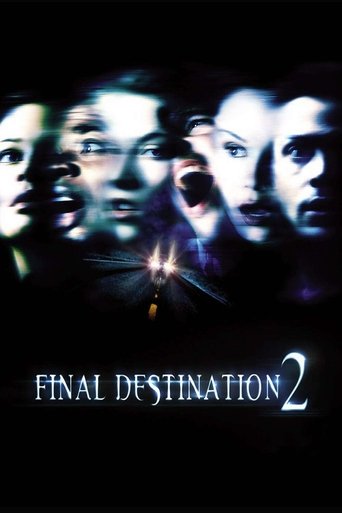
- Genre: Horror, Mystery
- Director: David R. Ellis
- Year: 2003
- Runtime: 1h 30m
- Language: English (EN)
- TMDB Rating: ⭐ 6.3/10
Movie Overview
Kimberly Corman (A.J. Cook) sees it all before it happens: a logging truck loses its cargo, cars flip like toys, and metal twists into flesh. She slams her brakes on the freeway ramp, blocking a handful of drivers behind her—saving them from the grisly pileup she just envisioned. But Death, it seems, doesn’t appreciate shortcuts. One by one, the survivors start dying in increasingly elaborate accidents, each more absurdly cruel than the last. Kimberly teams up with Clear Rivers (Ali Larter), the lone survivor from the first film, to try and outwit Death’s design. What stayed with me after the credits wasn’t just the gore—it’s how the film makes every mundane object feel like a loaded gun. The tension isn’t in whether they’ll die, but how. And the ‘how’ is where this sequel leans into its sadistic creativity.
Direction & Cinematography
David R. Ellis, a former stunt coordinator, directs like someone who’s studied how bodies break. The opening pileup is a masterclass in escalating chaos—glass shatters in slow motion, a fire extinguisher becomes a projectile, and a car flips so violently you can almost smell the gasoline. But what surprised me most was how he frames ordinary scenes afterward: a kitchen knife block, a ceiling fan, even a dripping air conditioner all get ominous close-ups. The pacing drags slightly when characters stop to explain the ‘rules,’ though that’s a minor complaint. On rewatch, I noticed how Ellis uses reflections—mirrors, windows, even eyeballs—to suggest Death is always watching, just out of frame.
Cast & Performances
A.J. Cook sells Kimberly’s panic without veering into hysteria. Watch how she grips the steering wheel during the premonition—white-knuckled, but her eyes stay weirdly calm, like she’s dissociating. Ali Larter’s Clear is all guarded rage, especially when she smashes a hospital window to prove a point. It’s a shame Michael Landes’s cop character feels like a script afterthought—he’s competent but forgettable. The standout might be Tony Todd’s cameo as the coroner Bludworth. His three-minute scene drips with menace, especially when he licks his lips before delivering the line, ‘You can’t cheat Death twice.’
Character Psychology
Kimberly wants to save everyone—guilt gnaws at her for causing the traffic backup that spared them. What she needs is to accept that control is an illusion. The film’s cruelest twist? The survivors who fight Death’s plan die messily; the one who surrenders to chance might just make it. Clear’s arc is darker. She’s already lost everyone once. When she tells Kimberly, ‘No one’s safe,’ it’s not a warning—it’s a plea for someone to prove her wrong.
Themes & Emotional Depth
Beneath the gore, this is a film about the illusion of safety. The highway pileup happens in broad daylight, surrounded by witnesses—not some shadowy alley. The deaths afterward exploit domestic spaces: a kitchen, a dentist’s office, a backyard barbecue. What unsettles isn’t the violence, but how it weaponizes routine. The film’s bleakest joke? The survivors who die first are the ones most convinced they’ve ‘figured out’ Death’s pattern.
Memorable Scenes & Dialogue
The log truck sequence remains iconic—not just for the gore, but for how Ellis stages it. The camera follows a single log as it rolls off the truck, crushes a windshield, then pins a driver through the throat. It’s brutal, but weirdly graceful. Later, Evan’s death by fire escape is a Rube Goldberg nightmare—the way his neck catches on a ladder rung feels both absurd and inevitable. And that final shot of the survivors’ names on the mortuary tags? A perfect gut-punch.
The Ending — Does It Deliver?
The ending surprised me—not for its twist, but for its quietness. After so much carnage, the film closes on a lingering shot of a coffee cup, leaving you to wonder if the characters ever really escaped. It’s a rare moment of restraint in a franchise that usually opts for fireworks. Personally, I think it works because the film earns its cynicism. Every ‘victory’ up to that point has been temporary at best.
What Works
The highway pileup is still a benchmark for practical effects—the way the cars crumple feels horrifically real. Cook and Larter make a compelling duo, especially in the morgue scene where they piece together Death’s pattern. And the film’s dark humor lands: the ‘death by barbecue’ sequence is both ridiculous and horrifying, with perfect timing on the exploding tank.
Honest Criticism
The cop subplot goes nowhere—Landes’s character exists mostly to spout exposition. Some deaths feel like padding (R.I.P. Nora, but your elevator scene adds little). And the ‘new life’ loophole feels tacked on, like the writers realized too late they’d backed themselves into a corner.
How It Compares
Compared to the original Final Destination, this sequel leans harder into elaborate kills but loses some emotional weight—no one here bonds like Devon Sawa and Seann William Scott’s characters did. It outdoes later entries (looking at you, FD4) by keeping the deaths plausible enough to sting. The closest parallel might be Urban Legend, another early-2000s horror flick, but FD2’s deaths feel less contrived—no killer in a parka, just bad luck with terrible timing.
Legacy & Cultural Impact
The film opened at #1 in 2003, grossing $90M worldwide—solid for a horror sequel. Critics called it ‘sadistic’ (which, fair) but praised the highway scene. Its real influence? Cementing the franchise’s formula: premonition, narrow escape, then creatively gruesome demises. You can see its DNA in later ‘trap’-based horror like Saw, though FD2’s deaths feel less punitive and more like cosmic jokes.
Behind the Scenes
- The highway scene used 37 cars and took three weeks to film—actors had to react to nothing, since most effects were added in post. 2. Ali Larter agreed to return only if Clear died, feeling her arc was complete. The studio overruled her. 3. The original script had Kimberly dying mid-film; test audiences hated it, so they reshot the ending.
Who Should Watch It?
Gorehounds who love creative kills will adore this—it’s like a magic trick where the prestige is a severed limb. Avoid if you need deep characters or hate seeing people die via household appliances.
Final Verdict
Final Destination 2 earns its 8.2 for the highway scene alone—few horror sequences balance dread and spectacle this well. It stumbles when trying to be more than a kill reel, but when it leans into chaos, it’s viciously entertaining. Watch it for the log truck. Stay for the moment you’ll never look at a sunroof the same way again.
More details, ratings, and cast information on IMDb, TMDB, Wikipedia. YouTube