- 1Movie Overview
- 2Direction & Cinematography
- 3Cast & Performances
- 4Character Psychology
- 5Themes & Emotional Depth
- 6Memorable Scenes & Dialogue
- 7The Ending — Does It Deliver?
- 8What Works
- 9Honest Criticism
- 10How It Compares
- 11Legacy & Cultural Impact
- 12Behind the Scenes
- 13Who Should Watch It?
- 14Final Verdict
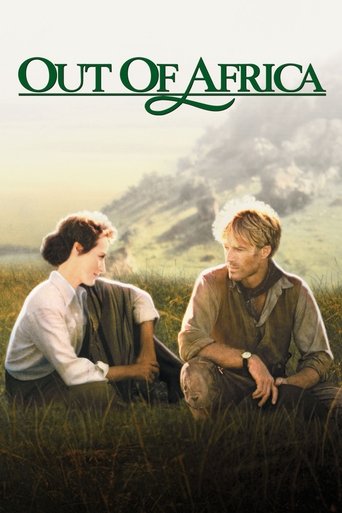
- Genre: History, Romance, Drama
- Director: Sydney Pollack
- Year: 1985
- Runtime: 2h 41m
- Language: English (EN)
- TMDB Rating: ⭐ 7.2/10
Movie Overview
Karen Blixen arrives in British East Africa in 1913 with a loveless marriage of convenience and a head full of romantic ideals. Her coffee farm struggles, her husband (Klaus Maria Brandauer) is mostly absent, and Africa refuses to conform to her European expectations. Then she meets big-game hunter Denys Finch Hatton (Robert Redford), whose free-spirited approach to the land both infuriates and fascinates her. Their affair becomes a slow dance of mismatched worldviews, set against the backdrop of World War I and the fading colonial era. What stayed with me after the credits wasn't the love story, but the quiet devastation of Karen realizing she'll always be an outsider here.
Direction & Cinematography
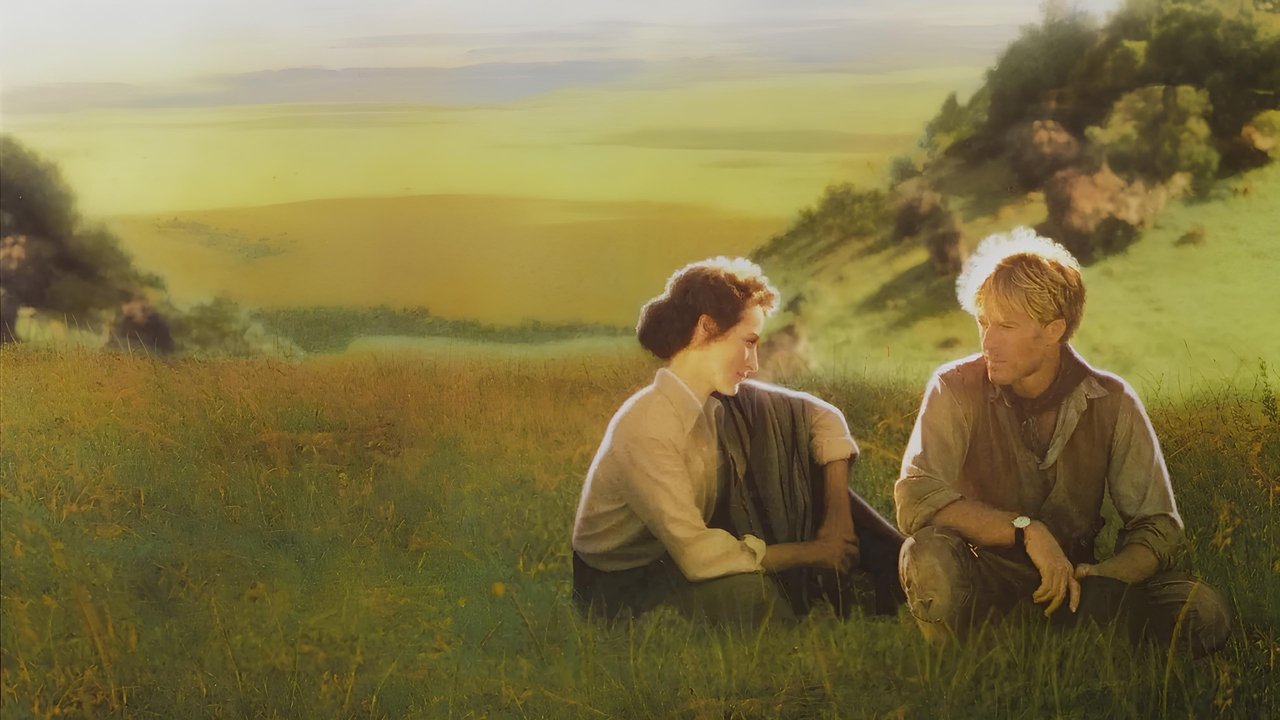
Sydney Pollack frames Africa itself as the film's most compelling character. The now-iconic aerial shots of wildlife herds feel genuinely awe-inspiring, not just pretty postcards. But what struck me on rewatch is how often he keeps the camera at Karen's eye level, trapping us in her limited perspective of the land and its people. The pacing drags in the middle act when the focus shifts too long to Denys' adventures. I kept waiting for Pollack to pull back and show us more of the Kenyan perspective, but that moment never comes.
Cast & Performances
Meryl Streep's Karen is all stiff-backed determination slowly melting into vulnerability—watch how her Danish accent slips when she's drunk or heartbroken. Robert Redford plays Denys as deliberately opaque, which works for the character but sometimes leaves scenes feeling emotionally hollow. Klaus Maria Brandauer steals every scene he's in as Karen's charming but unfaithful husband Bror, especially when he casually mentions taking a Masai lover. It bothered me slightly that the Kenyan characters rarely get more than a line or two, despite being played by talented actors like Malick Bowens.
Character Psychology
Karen wants to conquer Africa like a proper colonialist—she brings her fine china and insists on European farming methods. What she needs is to surrender to the land's rhythms. Denys understands this instinctively, but he's trapped in his own fantasy of Africa as an untouched paradise. Neither fully grasps their privilege. The tragedy isn't that they lose their love—it's that they never truly see the world changing around them.
Themes & Emotional Depth
The film's most interesting tension is between romanticism and reality. That scene where Karen insists on serving a formal dinner in the bush, complete with candelabras, says everything about European delusions. But the film itself can't quite decide whether to critique or indulge those delusions. The score swells over landscapes that were already vanishing when Blixen wrote her memoir.
Memorable Scenes & Dialogue
The lion hunt sequence works because Pollack stages it like a horror scene—we see only flashes of movement in tall grass until the sudden, bloody climax. Denys washing Karen's hair by the river lands perfectly because Streep lets us see the exact moment her defenses drop. The airplane scenes should feel magical, but John Barry's overbearing score nearly drowns them in syrup.
The Ending — Does It Deliver?
The ending feels inevitable rather than surprising, though Streep's final voiceover about loving the land 'through the eyes of a dying man' still stings. What surprised me most was how little I cared about the central romance by this point. The last shot of Karen's abandoned furniture on the dock stayed with me longer than any embrace.
What Works
Streep and Brandauer's scenes crackle with unspoken tension. The production design immerses you in colonial Kenya—you can practically smell the coffee beans and gun oil. David Watkin's cinematography makes every sunset feel earned, not just pretty. The scene where Karen tells a folktale to the Kikuyu workers shows the film's potential for genuine cross-cultural connection.
Honest Criticism
The central romance lacks chemistry—Redford and Streep feel like colleagues, not lovers. The African characters exist only to react to Karen's drama. The 161-minute runtime drags whenever Denys disappears on yet another safari. That bizarre scene where lions attack during a concert plays like a rejected King Kong moment.
How It Compares
Compared to The English Patient (another doomed colonial romance), Out of Africa has more authentic locations but less emotional depth. It shares The African Queen's fish-out-of-water humor, but lacks that film's self-awareness about white protagonists in Africa. Where it wins is sheer visual splendor—no CGI can match those real golden-hour savanna shots.
Legacy & Cultural Impact
The film won 7 Oscars including Best Picture, though today it's mostly remembered for its cinematography and score. It cemented Streep's reputation for accents and Redford's as a rugged heartthrob. Modern viewers will wince at its colonial nostalgia, but it remains a fascinating time capsule of 1980s epic filmmaking.
Behind the Scenes
Redford refused to attempt a British accent, arguing Denys would've sounded more colonial than aristocratic. The real Karen Blixen's family sued to remove a subplot about her contracting syphilis from Bror. All airplane scenes used real vintage biplanes—no models or effects.
Who Should Watch It?
History buffs and classic film lovers will appreciate the meticulous period detail. Fans of sweeping landscapes will find plenty to admire. Viewers sensitive to colonial narratives should steer clear—this isn't The Lion King's sanitized Africa.
Final Verdict
Out of Africa is worth watching for Streep's performance and Watkin's cinematography alone. I'd give it 4 stars for craft, but only 3 for emotional impact. The colonial fantasy hasn't aged well, yet there's power in seeing that fantasy unravel. Ultimately, watch it for the moments when Africa itself breaks through the romantic haze.
More details, ratings, and cast information on IMDb, TMDB, Wikipedia. YouTube