- 1Movie Overview
- 2Direction & Cinematography
- 3Cast & Performances
- 4Character Psychology
- 5Themes & Emotional Depth
- 6Memorable Scenes & Dialogue
- 7The Ending — Does It Deliver?
- 8What Works
- 9Honest Criticism
- 10How It Compares
- 11Legacy & Cultural Impact
- 12Behind the Scenes
- 13Who Should Watch It?
- 14Final Verdict

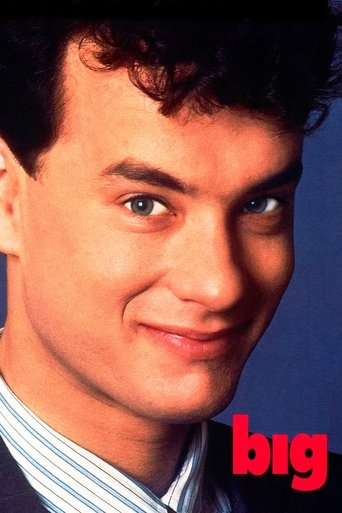
- Genre: Fantasy, Drama, Comedy
- Director: Penny Marshall
- Year: 1988
- Runtime: 1h 44m
- Language: English (EN)
- TMDB Rating: ⭐ 7.2/10
Movie Overview
Josh Baskin just wants to be taken seriously. After a humiliating rejection at a carnival ride for being too short, he jams a coin into a mysterious fortune-teller machine and wishes he were 'big.' The next morning, he wakes up in a 30-year-old's body (Tom Hanks) — but with all the wide-eyed wonder and insecurities of a 13-year-old. What follows isn't just a fish-out-of-water comedy, but a surprisingly tender exploration of how adulthood corrupts innocence.
Panicked, Josh confides in his best friend Billy (Jared Rushton), who hilariously becomes his manager in navigating this bizarre situation. Forced to flee home when his mother doesn't recognize him, Josh lands a data-entry job at a toy company through sheer childlike enthusiasm during an impromptu piano duet with the CEO (Robert Loggia) on a giant floor keyboard. This scene alone justifies the film's existence.
At work, Josh's unfiltered kid perspective makes him a rising star, catching the eye of marketing exec Susan (Elizabeth Perkins). Their budding romance creates the film's central tension: Josh is experiencing first love with adult stakes, while Susan is drawn to qualities in him that she doesn't realize are literally childish. The film smartly avoids easy answers about whether Josh should return to his real age.
What surprised me most was how the third act resists schmaltz. When the inevitable choice comes, it's treated with genuine weight — this isn't just about reversing a magical mistake, but deciding what parts of ourselves we're willing to sacrifice to grow up.
Direction & Cinematography
Penny Marshall directs with a light touch that belies the film's emotional intelligence. She frames Hanks frequently from slightly low angles, emphasizing his physical size while letting his face register childlike reactions — it's a simple but effective visual metaphor for the character's duality.
The famous FAO Schwarz piano scene demonstrates Marshall's strengths: she lets the moment breathe, allowing Loggia's gradual delight and Hanks' uninhibited joy to build naturally. There's no quick cutting or forced energy — just two characters connecting through play, which becomes the thesis of the entire film.
But I'll admit the pacing drags slightly in the second act once Josh settles into his corporate job. Some of the toy testing montages feel repetitive, and Perkins' character gets sidelined for long stretches. Still, Marshall nails the ending's bittersweet tone — that final shot of the shrunken suit gets me every time.
Cast & Performances
Tom Hanks makes Josh's physicality feel utterly authentic. Watch how he runs — arms slightly flailing, with that unselfconscious energy of a kid who hasn't learned to be embarrassed by his body yet. His line readings have this wonderful lack of filter, especially when he bluntly tells a colleague their toy idea 'stinks.' It's a performance that could have veered into caricature, but Hanks keeps it grounded in real vulnerability.
Elizabeth Perkins does subtle work as Susan, particularly in the scene where she pieces together Josh's secret. There's a heartbreaking moment where her smile fades as she realizes the implications — the man she's falling for is essentially a child. Perkins lets us see the exact second her heart breaks.
Robert Loggia steals every scene he's in as the toy company CEO. His chemistry with Hanks feels spontaneous, especially when they're riffing on product ideas. That said, John Heard's villainous executive is underwritten — he's mostly just generically smarmy without any interesting motivations.
Character Psychology
Josh wants to be treated as an equal by the adult world, but what he really needs is to appreciate the freedom of childhood before it's gone. His corporate success comes from qualities that adulthood typically beats out of us — honesty, imagination, and playing for play's sake.
Susan thinks she wants a mature partner, but is drawn to Josh precisely because he hasn't developed adult cynicism. Her arc is realizing how much she's compromised her own joy to fit into the professional world.
Themes & Emotional Depth
Big is ultimately about how adulthood demands we suppress our most authentic selves. The toy company becomes a perfect metaphor — these adults have turned play into work, while Josh reminds them of its original purpose. The film argues that maturity shouldn't mean abandoning wonder.
What stayed with me was how the film portrays first love from both perspectives simultaneously. For Josh, it's pure adolescent infatuation; for Susan, it's a painful lesson about what she's been settling for in relationships.
Memorable Scenes & Dialogue
The floor piano duet is iconic for good reason. Loggia's gradual transition from skeptical to delighted mirrors the audience's own surrender to the film's magic. Hanks' physical comedy here is perfect — he plays with his whole body in a way no actual adult would.
The 'talking penis' scene at the corporate retreat still lands because of Hanks' delivery. His complete lack of embarrassment about the topic highlights how adulthood sexualizes things kids see as straightforward biology.
Josh's final walk home through his neighborhood hits harder than expected. Seeing familiar places from his new height makes the loss of childhood tangible in a way dialogue couldn't.
The Ending — Does It Deliver?
The ending works because the film earns Josh's decision through small moments — like him noticing Susan's sadness at dinner, or realizing his mother's grief over his disappearance. It's not just about reversing the wish, but understanding why he needs to go back.
What surprised me was how quiet the resolution is. There's no grand speech or dramatic transformation — just a kid who's grown in ways that don't show on the outside. The final shot of the shrunken suit left me with a lump in my throat.
What Works
Hanks' performance remains a masterclass in physical acting. Watch how he holds a fork or reacts to new experiences — every choice reinforces Josh's inner child. The production design subtly contrasts adult spaces (sterile offices) with places Josh finds joy (the loft apartment full of toys). The script avoids easy moralizing about growing up, instead showing the bittersweet trade-offs of maturity. That final shot of the empty suit perfectly encapsulates the film's themes without a word of dialogue.
Honest Criticism
The subplot about Josh's mother searching for him feels underdeveloped — we never get her perspective after the initial shock. Some corporate satire moments haven't aged well, like the 'stress reliever' toy that's just a screaming head. The third-act conflict with the jealous executive (John Heard) resolves too neatly compared to the nuanced handling of Josh and Susan's relationship.
How It Compares
Compared to other body-swap comedies like 13 Going on 30 or Freaky Friday, Big stands apart by taking its premise seriously as emotional drama. The fantasy elements serve the characters rather than just driving jokes.
Where it falls short is in developing its supporting cast. Films like Splash (also starring Hanks) give more dimension to the romantic lead's perspective, while Susan remains somewhat underwritten until late in the game.
Legacy & Cultural Impact
Big was a massive commercial success, becoming the first female-directed film to gross over $100 million. It earned Hanks his first Oscar nomination and cemented Penny Marshall as a major director. The FAO Schwarz piano became so iconic that the store reinstalled it as a permanent attraction.
The film's influence is seen in later 'magical realism' comedies like Elf, where childlike innocence disrupts adult cynicism. Its examination of masculinity through Josh's experiences predates similar themes in films like Boyhood.
Behind the Scenes
- The role was originally offered to Robert De Niro, who turned it down because he didn't want to do a 'kids' movie.'
- The floor piano scene was mostly improvised — the script just called for 'Josh impresses MacMillan with a toy.'
- Tom Hanks based Josh's physicality on his younger brother, who had a similar gangly energy.
Who Should Watch It?
Fans of 80s comedies with heart will adore this. It's also perfect for anyone who's ever felt caught between childhood and adulthood. Viewers who prefer fast-paced plots or cynical humor might find it too sentimental.
Final Verdict
Big earns its status as a classic through genuine emotional intelligence, not just nostalgia. Hanks' performance alone makes it worth watching, but the film's insights about preserving wonder in adulthood give it lasting power. While some pacing issues and thin supporting characters hold it back from perfection, few films balance comedy and poignancy this deftly. Ultimately, it's that rare fantasy that feels more true to life than most realistic dramas — a testament to its sharp writing and direction. Watch it for the scene where a grown man reminds adults how to play.
More details, ratings, and cast information on IMDb, TMDB, Wikipedia. YouTube