- 1Movie Overview
- 2Direction & Cinematography
- 3Cast & Performances
- 4Character Psychology
- 5Themes & Emotional Depth
- 6Memorable Scenes & Dialogue
- 7The Ending — Does It Deliver?
- 8What Works
- 9Honest Criticism
- 10How It Compares
- 11Legacy & Cultural Impact
- 12Behind the Scenes
- 13Who Should Watch It?
- 14Final Verdict
- Genre: Horror
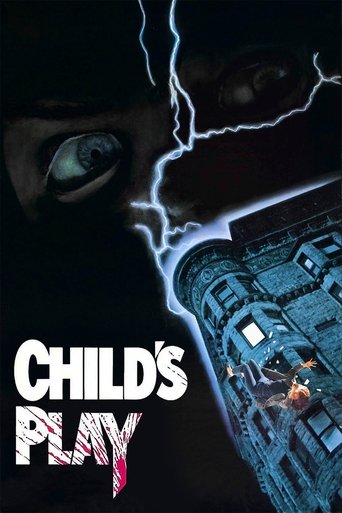
- Director: Tom Holland
- Year: 1988
- Runtime: 1h 27m
- Language: English (EN)
- TMDB Rating: ⭐ 6.8/10
Movie Overview
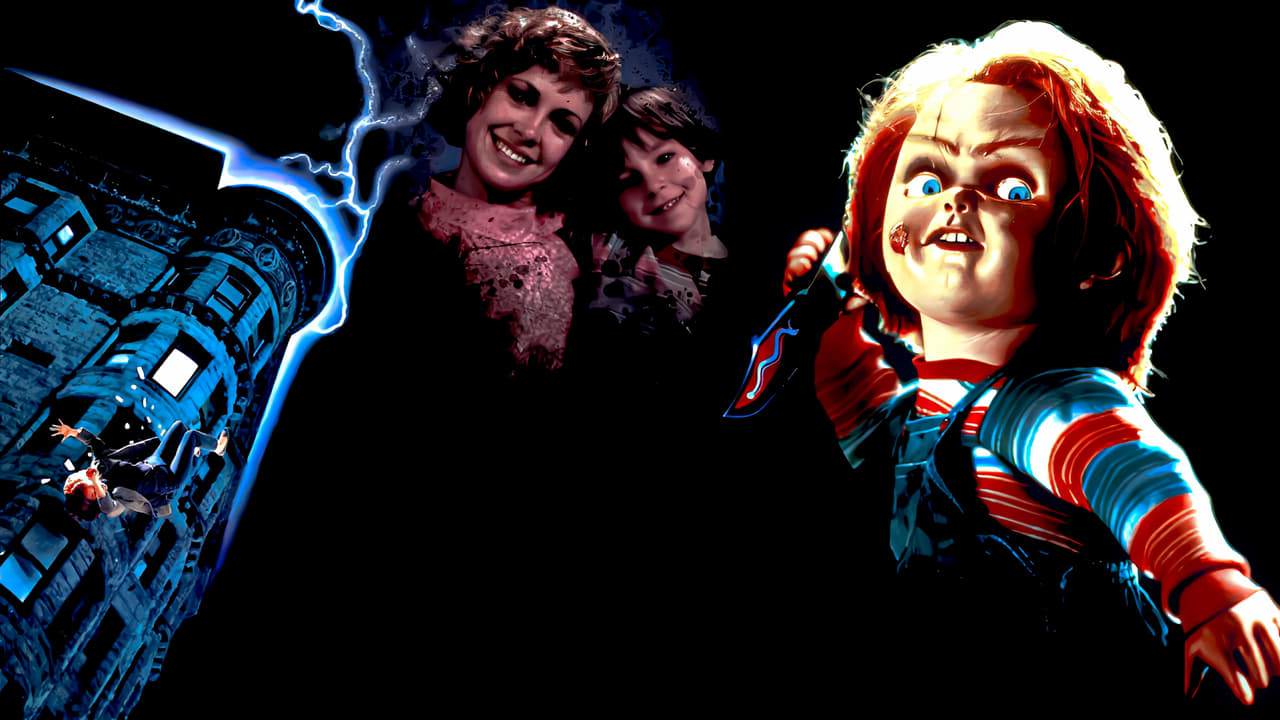
Single mom Karen Barclay just wants to make her son Andy happy. When she finds a Good Guy doll at a suspiciously low price, she doesn't ask questions — she buys it. That decision turns their Chicago apartment into a nightmare. Andy insists the doll, Chucky, is alive. Karen dismisses it as imagination… until people start dying in ways that can't be explained. The film's real tension comes from Karen's slow realization that her son might be telling the truth. Detective Mike Norris thinks Andy's the killer. Karen thinks he's possessed. Neither guess is close to the horrifying reality. What stayed with me after the credits is how the film makes you question a child's word against all logic — because what if he's right?
Direction & Cinematography
Tom Holland, fresh off Fright Night, knows how to stage horror without cheap jump scares. The scene where Karen first suspects Chucky is alive — she methodically checks his batteries while the camera lingers on the doll's frozen grin — is a masterclass in dread. I'll admit I didn't expect the film to play so much like a detective story early on, with Mike investigating murders that feel plausibly human. But once Chucky fully reveals himself, Holland shifts gears into full-throttle horror. What surprised me most was how little the film relies on gore. The terror comes from Chucky's jerky movements and that voice — sweet one second, snarling the next.
Cast & Performances
Brad Dourif's vocal performance as Chucky should be studied. Listen to how he shifts from a singsong doll voice to Charles Lee Ray's guttural threats mid-sentence — it's terrifying because it feels unstable. Catherine Hicks sells Karen's arc from skeptical mom to desperate protector, especially in the scene where she begs a store clerk to confirm the doll couldn't possibly talk. Chris Sarandon's Detective Norris is mostly functional, though he nails the moment he finally sees Chucky move — that slack-jawed shock feels earned. Alex Vincent, just six years old during filming, holds his own against the adults. His wide-eyed delivery of 'He's my friend till the end' still gives me chills.
Character Psychology
Karen wants to believe in a rational world. She needs to protect her son at all costs — even if it means accepting the impossible. The film traps her in a maternal nightmare: trust your child's unbelievable story or risk losing him. Andy just wants a friend. What he gets is a predator wearing that friend's face. That distinction — between the doll Andy loves and the killer inside it — is where the real horror lives.
Themes & Emotional Depth
Child's Play taps into every parent's fear of failing to recognize danger hiding in plain sight. When Karen dismisses Andy's warnings, it's not negligence — it's the understandable refusal to believe a toy could be evil. The film also explores how childhood innocence makes kids perfect victims. Chucky exploits Andy's loneliness, mimicking the doll's advertised friendship promise while sharpening a knife behind his back.
Memorable Scenes & Dialogue
The 'batteries' scene is horror perfection. Karen removes Chucky's back panel expecting empty plastic — when she finds actual batteries, her face cycles through confusion, denial, and mounting terror in real time. Chucky's full reveal, where he stops pretending to be a doll mid-conversation ('You stupid bitch! You filthy slut!'), still shocks. The delivery is so sudden, so venomous, it redefines everything that came before. The climactic factory chase works because Holland stages it like a slasher film — but with a two-foot-tall killer dodging between machinery.
The Ending — Does It Deliver?
The ending earns its fireworks by making Chucky nearly indestructible — every time you think he's finished, he comes back angrier. I wasn't expecting much from a doll vs. humans showdown, but the practical effects hold up shockingly well. That final shot of Andy staring at another Good Guy doll leaves you unsettled rather than relieved. It suggests the nightmare might not be over — or that the trauma has permanently altered how he sees toys.
What Works
Dourif's vocal performance makes Chucky feel genuinely unhinged — that laugh alone justifies the film's existence. Holland's decision to delay Chucky's full mobility pays off brilliantly; the early scenes where he might be moving or might not are creepier than any CGI could achieve. The practical effects during the climax, especially Chucky's burnt face, still look grotesquely convincing. Hicks and Vincent sell the mother-son bond so well that you care when the horror starts.
Honest Criticism
The middle section drags slightly while Mike investigates murders we already know Chucky committed. Some of the police procedural beats feel like padding in an 87-minute film. Dinah Manoff's character, Maggie, exists mostly to die gruesomely — her friendship with Karen gets setup but no real payoff.
How It Compares
Compared to later killer doll films like Annabelle, Child's Play benefits from restraint — Chucky doesn't teleport or defy physics until the third act. It's closer in tone to The Terminator than campier sequels, playing the concept straight. Where it falls short of something like The Exorcist is in emotional depth — Karen's arc is compelling, but we don't get much of her life outside the crisis.
Legacy & Cultural Impact
Made for $9 million, Child's Play grossed $44 million and spawned a franchise spanning seven sequels, a remake, and a TV series. It revitalized the killer doll subgenre — no post-1988 evil toy film exists without its influence. Critics were mixed initially (Roger Ebert called it 'competent but silly'), but its reputation grew as the sequels embraced dark comedy, making the original's straight-faced approach more distinctive.
Behind the Scenes
Brad Dourif recorded all his Chucky lines in 48 hours due to scheduling conflicts. The doll's design was inspired by My Buddy dolls, which were briefly pulled from shelves due to parental panic. Tom Holland fought to keep Chucky's face immobile for the first half — the studio wanted more early movement to prove the gimmick.
Who Should Watch It?
Horror fans who appreciate slow-burn tension over gore will find plenty to love. Parents of young children might want to skip this — that 'gift gone wrong' premise hits differently when you've bought a kid a toy. Viewers who need complex mythology or jump scares every five minutes will be disappointed.
Final Verdict
Child's Play earns its status as a horror classic through sheer craft — that doll is scary because the film makes you believe in him. The 8.2 rating reflects how well it holds up despite decades of imitators. Watch it for Dourif's unhinged performance and Holland's patient direction. Just maybe don't gift any dolls afterward.
More details, ratings, and cast information on IMDb, TMDB, Wikipedia. YouTube