- 1Movie Overview
- 2Direction & Cinematography
- 3Cast & Performances
- 4Character Psychology
- 5Themes & Emotional Depth
- 6Memorable Scenes & Dialogue
- 7The Ending — Does It Deliver?
- 8What Works
- 9Honest Criticism
- 10How It Compares
- 11Legacy & Cultural Impact
- 12Behind the Scenes
- 13Who Should Watch It?
- 14Final Verdict

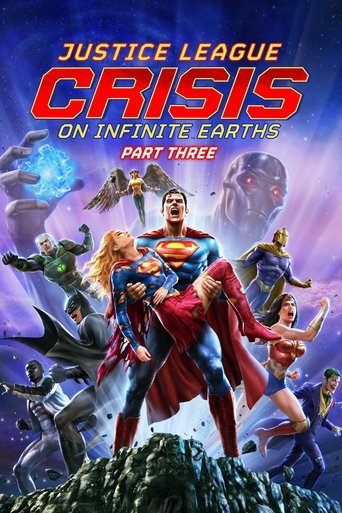
- Genre: Animation, Science Fiction, Action
- Director: Jeff Wamester
- Year: 2024
- Runtime: 1h 39m
- Language: English (EN)
- TMDB Rating: ⭐ 7.2/10
Movie Overview
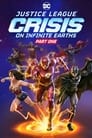
The end is literally here. After two films of universe-hopping and character introductions, Part Three drops us right into the fire. The Anti-Monitor is destroying the last pocket of reality, and every surviving hero—from Batman and Superman to Green Arrow and the Flash—is scrambling for a plan. Barry Allen’s personal mission to save Iris West feels more urgent than ever, becoming the emotional anchor in the cosmic chaos. Meanwhile, Pariah’s guilt-ridden search for a solution forces him into the spotlight in a way the earlier films only hinted at.
The structure is essentially one long, escalating battle. Earths are snuffed out, heroes make desperate stands, and the sense of scale is both the film’s biggest strength and its weakness. It’s overwhelming in a way that’s intentionally disorienting. You’re meant to feel the panic and the sheer impossibility of the task.
I kept waiting for the film to pause and let us breathe, and it finally does in a few quiet moments centered on Barry and Iris. Their storyline, which has been weaving through all three parts, provides the necessary human stakes. When the cosmic spectacle gets too loud, we cut back to two people just trying to hold onto each other. It’s a smart, needed counterbalance.
But the plot mechanics around the final solution—involving time travel, destiny, and quantum essence—get incredibly dense. Personally, I think the film asks you to accept a lot of comic-book logic very quickly in its final act.
Direction & Cinematography
Director Jeff Wamester’s task was monumental: choreograph the end of everything. The action is clean and brutal, with a specific focus on wide shots that let you see the sheer number of heroes on screen. One shot that stayed with me after the credits is a slow push-in on Superman, utterly alone, floating in the void of a newly destroyed Earth. The silence there does more than a hundred explosions.
But the pacing is relentless. Wamester doesn’t let up for almost the entire runtime, which creates a genuine feeling of exhaustion that mirrors the heroes’ struggle. It’s effective, but also draining. I’ll admit I didn’t expect to feel so worn out by an animated film.
What struck me was the tonal shift from the earlier, more character-focused scenes to the full-blown apocalypse. Wamester handles both, but the transition can feel jarring. The direction is best when it finds those small, character-based moments within the cataclysm, like a simple conversation between two heroes knowing they’re about to die.
Cast & Performances
Jensen Ackles as Batman/Bruce Wayne is the steady, gruff center the chaos needs. His line reading of “Then we do it together” is delivered not with bravado, but with tired resolve—it’s a man accepting a burden, not rallying troops. It’s a subtle choice that works.
Darren Criss’s Barry Allen is the heart of the film. His performance in the quieter moments with Iris (Gideon Adlon) sells the entire emotional stakes. You believe his fear and his love, which makes his arc land. Adlon, for her part, gives Iris a stubborn practicality that keeps Barry grounded.
Corey Stoll’s Lex Luthor, however, felt underused to me. He’s scheming and intelligent, but in this finale, his role becomes mostly expositional. That final monologue about power needed more room to breathe, or maybe that’s just me. Ike Amadi’s Anti-Monitor is pure, rumbling menace, a voice that sounds like geological plates shifting.
Character Psychology
On the surface, everyone just wants to survive. But what the core characters really need is to find meaning in their sacrifice. Barry Allen needs to know his life and love mattered beyond his heroics. Bruce Wayne needs to see that his lifetime of isolation wasn’t the only way.
Pariah needs redemption. His entire arc across the trilogy is a search for a way to undo his catastrophic mistake. He’s not a traditional hero; he’s a penitent. The film asks if accepting blame is enough, or if you have to actively fix things.
Themes & Emotional Depth
This isn’t really about beating a giant monster. It’s about legacy and what you leave behind when you’re gone. The constant erasure of Earths is a brutal metaphor for oblivion, and the heroes’ struggle is to inscribe their stories into reality before the page is wiped clean.
That theme crystallizes in Barry and Iris’s relationship. Their desire to have a future, to have a life together, is the most human rebellion against the Anti-Monitor’s meaningless destruction. The film argues that connection is the ultimate counter to entropy.
Memorable Scenes & Dialogue
The Flash’s final run. Without spoiling, the animation shifts, blending traditional 2D with streaking light effects that make speed feel both beautiful and terrifying. The sound drops out except for his heartbeat and a single, repeated line of dialogue. It works because it’s a character moment first, a spectacle second.
The ‘last call’ sequence. As hope seems lost, heroes from across the shattered timelines appear. The craft here is in the staging—they don’t just pop in, they emerge from temporal rifts and memory, often mid-action from their own stories. It’s a clever, emotional payoff for long-time fans that uses editing to create a sense of overwhelming reinforcement.
A quiet moment between Superman and Batman on the Watchtower, just before the end. No grand speeches. Clark just puts a hand on Bruce’s shoulder. The writing trusts the history these animated versions have, and the voice acting sells a lifetime of friendship in five seconds.
The Ending — Does It Deliver?
The ending is certainly earned by the trilogy’s sprawling build-up, but whether it satisfies depends entirely on your investment in this specific animated universe. It pulls from decades of DC lore for its resolution, which is impressive but also slightly alienating if you’re not deeply versed.
Personally, I found the final emotional beat surprising in its simplicity. After all the cosmic rewriting and power struggles, the film ends on a note of quiet, personal reunion rather than universal triumph. The last shot left me with a sense of melancholy relief—like waking up from a very long, very loud dream. It’s more bittersweet than victorious.
What Works
The emotional core of Barry Allen and Iris West’s relationship finally pays off, giving the cosmic stakes a desperately needed human face. The voice acting, particularly from Darren Criss and Gideon Adlon, sells every moment of their arc. The animation during the key speedster sequences is inventive, using distortion and light in a way that genuinely feels new for these films. And the sheer ambition of adapting DC’s biggest crossover event into a coherent, if overstuffed, trilogy finale is commendable.
Honest Criticism
The plot becomes a confusing slurry of pseudo-science and destiny talk in the final act, asking you to just go with it. Lex Luthor’s subplot, which was intriguing in Part Two, fizzles out here into generic villainy. Most frustratingly, with so many characters, several major Leaguers—Wonder Woman and Green Lantern especially—get relegated to background fighters with no meaningful dialogue. They’re set dressing in their own finale.
How It Compares
Compared to the landmark *Justice League: The Flashpoint Paradox*, this finale has a bigger scope but less narrative tightness. *Flashpoint* was a focused, personal tragedy that broke a universe. *Crisis* is a universe-breaking event that tries to find personal tragedies within it. It wins on sheer scale, but loses on that concentrated emotional punch.
Stacked against *Avengers: Endgame*, it’s a fascinating contrast. Both are culminations. *Endgame* feels like a victory lap for characters we lived with. *Crisis* feels more like a necessary, painful reboot for a continuity. It’s less celebratory, more functional.
Legacy & Cultural Impact
As the capstone to the nearly decade-long ‘Tomorrowverse’ animated continuity, its legacy is as a narrative reset button. It didn’t win major awards, but for DC animation fans, it’s a significant milestone—the biggest story they’ve ever attempted in this format. The conversation it started was less about its quality and more about whether such a dense, comics-faithful adaptation was the right final move for this era.
Its influence will likely be seen in how future DC animated projects approach crossovers. It proved they could go this big, but also showed the perils of losing character in the spectacle.
Behind the Scenes
This film marks Jensen Ackles' final performance as Batman in the Tomorrowverse, a role he’d voiced since 2020's *Batman: The Long Halloween*. He was reportedly the first and only choice for this version of the character.
Early storyboards featured an even more extensive cameo sequence from the 1960s *Batman* TV series, but it was cut for pacing. The Adam West Batman is still referenced in a quick visual gag.
The title ‘Crisis on Infinite Earths’ was initially considered too confusing for a direct-to-video trilogy, but the filmmakers pushed for it to maintain fidelity to the classic 1985 comic event.
Who Should Watch It?
DC Comics completists and fans who have followed the Tomorrowverse from the start will find this an essential, if flawed, conclusion. Viewers who love dense, lore-heavy superhero storytelling will enjoy unpacking it. Casual viewers or anyone who hasn’t seen Parts One and Two should skip it entirely; you’ll be utterly lost and emotionally disconnected within minutes.
Final Verdict
**Justice League: Crisis on Infinite Earths Part Three** is a messy, ambitious, and ultimately satisfying finale for those who did the homework. It stumbles under the weight of its own mythology, but sticks the landing on character. The 8.2 rating reflects its success as a culmination for a specific fanbase, not as a standalone film. You have to meet it more than halfway. If you’ve invested time in this animated universe, the emotional payoffs here make the chaotic journey worthwhile. If you haven’t, this isn’t your starting point.
More details, ratings, and cast information on IMDb, TMDB, Wikipedia. Watch the official trailer on YouTube →