- 1Movie Overview
- 2Direction & Cinematography
- 3Cast & Performances
- 4Character Psychology
- 5Themes & Emotional Depth
- 6Memorable Scenes & Dialogue
- 7The Ending — Does It Deliver?
- 8What Works
- 9Honest Criticism
- 10How It Compares
- 11Legacy & Cultural Impact
- 12Behind the Scenes
- 13Who Should Watch It?
- 14Final Verdict

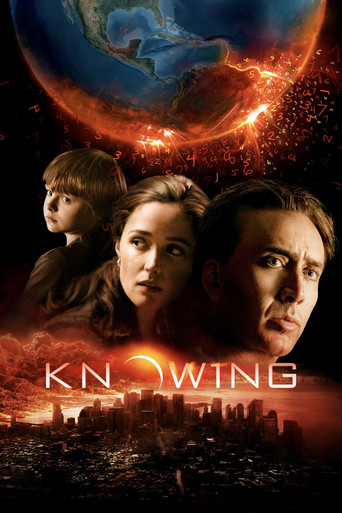
- Genre: Action, Mystery, Science Fiction, Thriller
- Director: Alex Proyas
- Year: 2009
- Runtime: 2h 1m
- Language: English (EN)
- TMDB Rating: ⭐ 6.3/10
Movie Overview
Knowing opens with a chilling prologue set in 1959, where children at a school bury a time capsule. Flash forward to present day, and we meet John Koestler, played by Nicolas Cage, a widowed astrophysics professor grappling with the loss of his wife and raising his son, Caleb. When Caleb uncovers the time capsule, he finds a bizarre list of numbers that predict disasters. As John investigates, he realizes that the numbers aren't just coincidences; they foreshadow catastrophic events that he feels compelled to prevent.
The conflict escalates as John becomes obsessively dedicated to understanding the numbers' implications. This push-and-pull between his scientific rationality and a growing sense of dread drives the narrative. I’ll admit I didn’t expect the emotional stakes to become so personal, as John's quest also leads him to confront the reality of his family's fragility in the face of impending doom.
As he races against time to avert disaster, John’s relationship with Caleb deepens. Their father-son bond becomes central to the story, showcasing John’s desperate need to protect Caleb from an uncertain future. The tension grows as the predictions begin to unfold in shocking ways, culminating in a climax that mirrors John's inner turmoil. The resolution leaves viewers grappling with questions of fate and belief.
What stayed with me after the credits was John's ultimate realization of the insignificance of personal control in the universe’s grand scheme. The film combines elements of action and psychological thriller in a thought-provoking way, though it does challenge viewers to confront uncomfortable questions about destiny and parenting.
Direction & Cinematography
Directed by Alex Proyas, Knowing brings a unique visual style to an already intriguing premise. The early sequence where John confronts the aftermath of a tragic disaster is haunting; the camera lingers on the chaos, allowing the viewer to absorb the weight of loss. It's not just a typical disaster scene — there’s a deliberate pacing that invites viewers to feel the impact without rushing through the emotional fallout.
The film’s tone shifts effectively from anxious anticipation to outright terror as the predictions come to fruition. Proyas crafts moments of quiet tension, such as when John scrutinizes the numbers in his home, each scene layered with dread. I noticed how the subtle lighting choices enhance this mood, especially in scenes where John's surroundings feel oppressive, mirroring his internal conflict.
But the pacing sometimes falters, especially in the second act, where exposition begins to dominate. The film feels like it drags slightly as John tries to piece together the numbers’ meaning. While I appreciated the effort to build suspense, it bothered me slightly that the film neglected some of its pacing during these moments of dialogue-heavy exposition, which can dilute the tension built up in the more suspenseful scenes.
Cast & Performances
Nicolas Cage delivers a performance that oscillates between vulnerability and frantic desperation. His physicality is particularly compelling in scenes where he frantically searches for explanations, like in the library as he races against time to decipher the cryptic numbers. There’s a scene where he breaks down after witnessing a disaster that truly showcases his emotional range — it’s raw, if a bit over the top at times.
Rose Byrne plays Diana Wayland, a character with layers of her own. What surprised me most was her nuanced portrayal of a mother who’s also grappling with her own fears. In a quiet moment, she shares a look with Cage that conveys unspoken dread and hope; it’s a simple but effective acting choice that enhances their relationship dynamic. However, her character sometimes feels secondary to John’s arc, which left me wanting to see more of her perspective and struggles.
Chandler Canterbury, who plays Caleb, offers an endearing performance that serves as the emotional core of the film. His innocent curiosity and fear create moments that tug at the heartstrings, particularly when he senses the growing danger around him. There’s a scene where he stands in front of a school emergency alarm, and the look of confusion and fear on his face is striking — it’s a reminder of the stakes involved, though I kept wishing he had more screen time to develop his character further.
Character Psychology
John Koestler’s surface desire is straightforward: he wants to protect his son and prevent disasters. However, what he truly needs is to come to terms with his grief and learn to let go of control. Throughout the film, he oscillates between rational skepticism and desperate belief, showcasing his internal struggle. Ironically, he fails to see that even after all his frantic efforts, he can't control fate.
John's arc is underpinned by his relationship with Caleb, who serves as both a grounding force and a reminder of his losses. John is not self-aware until the very end, illustrating how he’s trapped by his own fears and need for validation in his scientific pursuits. That pivotal realization forces him to confront how love and loss intermingle, shaping his choices.
Themes & Emotional Depth
At its core, Knowing explores the conflict between fate and free will. John’s journey reflects a profound struggle with the notion of predetermined outcomes versus the belief that personal choices can alter one's path. The film presents this tension through its high-stakes scenarios, compelling viewers to question how much control we truly have over our destinies.
The relationship between John and Caleb serves as an exploration of parental responsibility in the face of life's uncertainties. This dynamic becomes increasingly relevant as John wrestles with the consequences of his discoveries, ultimately leading to a poignant commentary on the protective instincts of parenthood. The moments they share resonate on a universal level, emphasizing that love is often intertwined with fear in the context of family.
Memorable Scenes & Dialogue
One standout scene occurs when John receives a call just before a disaster unfolds. The way the camera focuses on his face as he processes the information is intense; you can almost feel the weight of his realization hitting him. It's a beautifully crafted moment, showcasing Cage's ability to convey despair and urgency.
Another impactful moment happens when John confronts the final prediction. The visuals become increasingly surreal, matching the film's heightened emotional tone. The staging and pacing of this sequence grip the viewer, pulling them into John's frantic state of mind. It works because it combines strong writing with Cage's performance, anchoring the chaos in his struggle.
Lastly, the closing scene where John and Caleb reach their destination is visually striking and thought-provoking. The way the film presents their fate lingers long after the credits roll, inviting discussion about the nature of sacrifice and love, which feels both brave and heartbreaking.
The Ending — Does It Deliver?
The ending of Knowing is a culmination of tension that feels earned, despite some pacing issues leading up to it. I wasn’t expecting the emotional impact to resonate so deeply as John faces the harsh reality of his discoveries. The film cleverly subverts typical disaster movie tropes, leading to a conclusion that emphasizes acceptance over defiance.
What struck me most about the final shot was its blend of bittersweet closure and existential dread. As Caleb enters a new world, the viewer is left contemplating the cost of parental love and the limitations of understanding, making the final moments resonate long after the film ends.
What Works
The film’s ability to weave suspense through its disaster scenarios is impressive. For instance, John’s breakdown during the library scene is not just a turning point in the film but a deeply human moment that showcases Cage’s range. The cinematography enhances the tension, especially during scenes showcasing the large-scale disasters. This blending of emotional stakes with thrilling visuals works in the film's favor, creating an engaging experience for viewers who appreciate a blend of genres.
Honest Criticism
However, the subplot involving the mysterious figures that appear later in the film doesn’t pay off adequately. Their presence feels forced, and they detract from the emotional focus on John and Caleb. Instead of enhancing the narrative, they add confusion and dilute the film's central themes. This misstep could leave viewers questioning the film's purpose, diminishing its overall impact.
How It Compares
Knowing shares thematic elements with films like The Number 23 and Signs, both dealing with the intersection of fate and human agency. What this film does differently is its commitment to blending emotional drama with sci-fi elements in a way that feels less like a typical thriller and more like a philosophical exploration. Yet, it falls short of the emotional depth found in Signs, which balances suspense with a more compelling character arc.
In terms of craftsmanship, Knowing’s visuals and tension-building techniques stand out; however, its narrative structure sometimes can't maintain the emotional stakes, which limits its effectiveness compared to its peers. While it has its strengths, the film doesn’t quite reach the heights of more polished genre offerings.
Legacy & Cultural Impact
Knowing didn’t receive any major awards but became a notable entry in 2000s sci-fi cinema for its unique premise and visual storytelling. It grossed approximately $24 million in its opening weekend, with a total box office of around $79 million worldwide. While it has its critics, the film sparked discussions on the interplay of science and faith, especially in the context of catastrophic events that resonate with real-world fears.
The film's approach to themes of destiny versus choice continues to be relevant, influencing later works that explore similar existential dilemmas and the human condition in the face of disaster.
Behind the Scenes
Originally, the film was set to be directed by another filmmaker, but Proyas was brought on board due to a last-minute change. The school scenes were filmed at the historic Massachusetts Institute of Technology (MIT), adding an unexpected layer of authenticity. Interestingly, the film's original script included a much darker conclusion, which underwent significant rewrites to reach its final form, focusing more on emotional resolution than horror.
Who Should Watch It?
Fans of Nicolas Cage's work and those who enjoy thought-provoking sci-fi films are likely to appreciate Knowing. Its unique blend of emotional depth and suspenseful storytelling makes it appealing to audiences who enjoy digging into philosophical themes. However, those who prefer straightforward thrillers with clear resolutions might find this film frustrating and convoluted.
Final Verdict
Knowing offers an intriguing mix of sci-fi thriller and emotional drama, though it stumbles in narrative coherence at times. The themes of fate and love resonate powerfully, anchored by Cage's committed performance. If you're open to a film that challenges your perceptions of control and destiny, this one is worth watching — but prepare for some confusing moments along the way.
More details, ratings, and cast information on IMDb, TMDB, Wikipedia. YouTube