- 1Movie Overview
- 2Direction & Cinematography
- 3Cast & Performances
- 4Character Psychology
- 5Themes & Emotional Depth
- 6Memorable Scenes & Dialogue
- 7The Ending — Does It Deliver?
- 8What Works
- 9Honest Criticism
- 10How It Compares
- 11Legacy & Cultural Impact
- 12Behind the Scenes
- 13Who Should Watch It?
- 14Final Verdict
- Genre: Action, Comedy, Science Fiction
- Director: Johnny Crash
- Year: 2003
- Runtime: 1h 29m
- Language: English (EN)
- TMDB Rating: ⭐ 4.5/10
Movie Overview
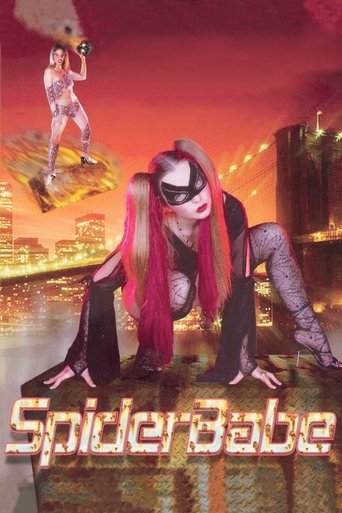
Spiderbabe opens on Patty Porker, a painfully awkward college student working at the campus paper. Played by Erin Brown, Patty is a mess of social anxiety and unrequited crushes, particularly on her jock colleague, Lance. During a lab field trip, she's bitten by a genetically altered spider, and after a night of feverish, mildly erotic dreams, she wakes up with new abilities. She can climb walls, has superhuman strength, and most importantly, an uninhibited libido.
Her transformation into the crime-fighting, promiscuous 'Spiderbabe' is immediate. She crafts a costume out of lingerie and begins taking on street-level thugs, usually ending with her seducing them. The central conflict arrives with a rival scientist, Dr. Menta, who becomes the villainous Cephalopod after his own experiment goes wrong. He wants to steal the spider that bit Patty for his own nefarious, and equally nonsensical, purposes.
But the plot is mostly an excuse for a series of comedic and sexual vignettes.
Patty's journey isn't about learning responsibility; it's about embracing a newfound confidence that expresses itself almost entirely through sexuality. She goes after Lance, other men, and even her female roommate, all while occasionally remembering to fight Cephalopod and his clumsy henchmen. The narrative barely holds together, lurching from one set piece to the next.
Direction & Cinematography
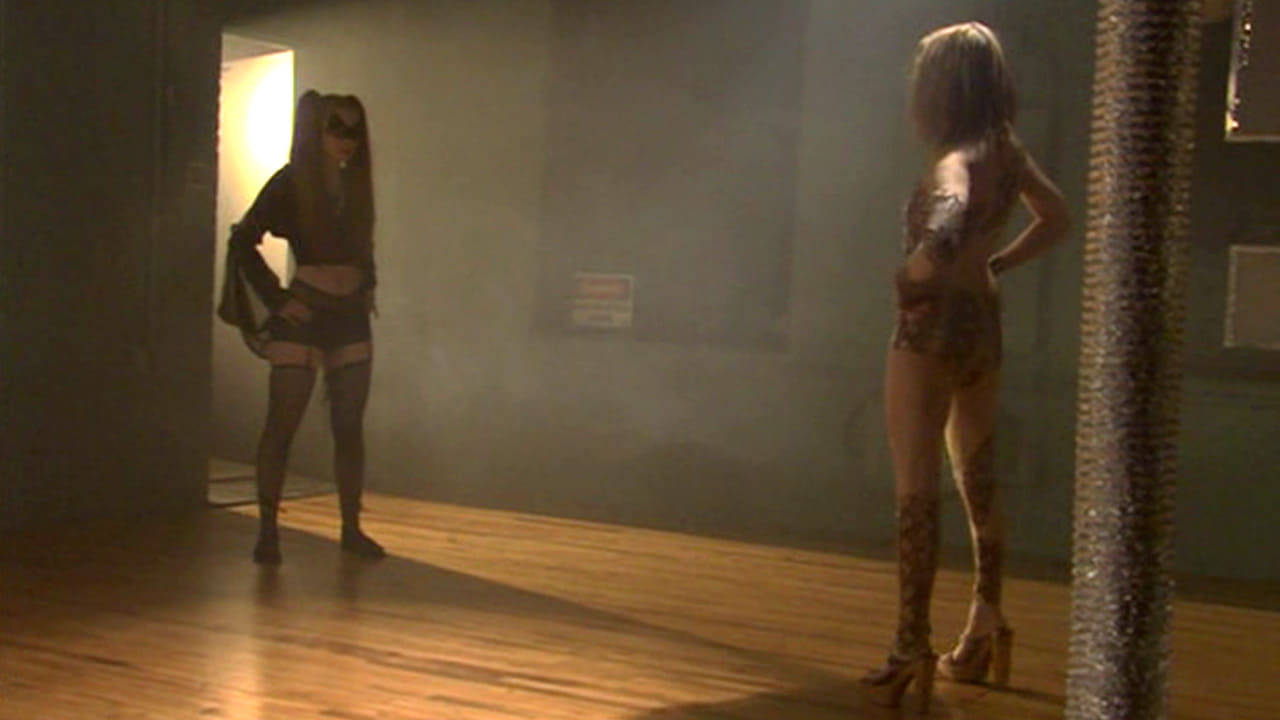
Johnny Crash's work on Spiderbabe is exactly what you'd expect from the world of Seduction Cinema: functional, cheap, and completely without pretense. The entire film is shot on what looks like early digital video, giving it the flat, overlit aesthetic of a home movie or a public access TV show from the era. There's no attempt to hide the budget limitations; in fact, they become part of the central joke.
Take the 'web-slinging' effects. They consist of someone off-screen spraying silly string, sometimes hitting the actors, sometimes missing entirely. Crash’s camera just sits there, capturing the limpness of the gag. There’s no kinetic energy, no attempt at clever angles to sell the action. Personally, I think this straight-faced presentation of something so shoddy is where the film finds its few genuine laughs. It’s not trying to fool you; it’s inviting you to smirk at the attempt.
But the pacing is lethargic. Scenes go on for far too long, especially the dialogue-heavy moments that are meant to build character but just end up repeating the same joke. I kept waiting for a moment of visual wit or a clever transition, but the direction remains stubbornly utilitarian from start to finish. It gets the job done, and absolutely nothing more.
Cast & Performances
The cast of Spiderbabe understands the assignment, which is to play things with a level of straight-faced sincerity that borders on the amateurish. Erin Brown as Patty Porker is the film's core, and she manages the shift from mousey nerd to confident seductress well enough for this kind of production. Her physical comedy as the pre-bite Patty, all fumbling and awkward gestures, is more effective than her later attempts at being a femme fatale, which often feel a bit forced.
Julian Wells and Darian Caine, as Patty's roommate and a rival, respectively, are mainstays of this particular corner of filmmaking. They deliver their lines with a stilted quality that feels intentional, leaning into the campy, soap-opera feel of the whole affair. What surprised me most was how little energy there is between them; they feel like they are in separate rooms even when sharing a scene.
Adam Cox as the villain Cephalopod is just goofy, saddled with a cheap tentacle costume and dialogue that was probably funnier on the page. That 'laughing maniacally for no reason' moment didn't land for me at all. It bothered me slightly that no one seems to be having that much fun; there's a sense of going through the motions that even a low-budget parody can't quite survive.
Character Psychology
On the surface, Patty Porker wants what any nerdy outcast in a teen movie wants: to be noticed, to be desired, and to get the guy. The spider bite gives her all of that, but it does so by completely erasing her old personality rather than building on it. Her core need isn't really for love or acceptance, but for a confidence that she has no idea how to acquire on her own.
The film never asks if this transformation is actually good for her. It just presents her newfound sexual aggression as an unvarnished superpower, the ultimate solution to social anxiety. She never integrates her old self with her new one; Patty is simply replaced by Spiderbabe.
Themes & Emotional Depth
At its heart, the film is a direct parody of Sam Raimi's 2002 *Spider-Man*, attempting to subvert its 'great power, great responsibility' message. Here, power only brings sexual indulgence. It's a one-note joke, but it's the film's entire reason for being. The theme is about stripping the earnestness and nobility from the superhero origin story and replacing it with pure id.
What stayed with me after the credits, though, was its commentary on female agency, however clumsy. Patty goes from being an object of pity to a subject who takes what she wants without apology. It's presented as empowerment, but it's a very narrow, male-gaze version of it. She gains power, but only a power defined by her effect on men (and women), not by any internal growth or self-realization.
Memorable Scenes & Dialogue
1. The Spider Bite. It's not a marvel of special effects. It's a plastic spider on a string being dangled onto Erin Brown's hand. The scene works because of its sheer, unadulterated cheapness. Her subsequent 'transformation' scene, writhing on her bed, is shot with the dramatic seriousness of an arthouse film, a choice so tonally bizarre that it becomes funny in its own right.
2. The First 'Web-Sling'. Spiderbabe confronts a mugger and shoots a pathetic stream of silly string in his general direction. The mugger just looks confused. The gag is so underwhelming and poorly executed that it perfectly encapsulates the film's entire comedic strategy: promise something grand and deliver something pathetic. I'll admit I didn't expect to laugh, but I did.
3. The Final Battle. The fight between Spiderbabe and Cephalopod in a warehouse is a masterclass in clumsy choreography. Punches don't connect, actors wait for their cues, and the villain's tentacles are clearly just being waved around by stagehands just out of frame. It's memorable not for being exciting, but for its commitment to looking bad.
The Ending — Does It Deliver?
The final confrontation with Cephalopod is exactly what the preceding 80 minutes trained you to expect: slow, awkward, and low-stakes. The resolution isn't earned through character growth or a clever plan; it just sort of happens. Patty wins because the script says she has to. I wasn't expecting much, but the lack of any real creativity in the finale was still a letdown.
There's no sense of catharsis or victory. The final scene simply resets the status quo, with Spiderbabe ready for more adventures that will presumably be just like these. It leaves you feeling empty, not because it’s a dark ending, but because it’s a shoulder-shrug ending. It confirms that nothing that happened really mattered, which I suppose is the film's most honest statement.
What Works
The film's complete and utter lack of shame is its strongest asset. It knows it's cheap and leans into it, making the shoddy effects and wooden acting part of the joke. Erin Brown commits to the role of Patty Porker, and her initial awkwardness is genuinely funny. On rewatch, I noticed the soundtrack's generic synth-rock is so perfectly mismatched to the 'action' that it creates its own layer of accidental comedy. It’s a film that is exactly what it appears to be.
Honest Criticism
The central parody is just not very sharp. Beyond the premise ('what if Spider-Man was horny?'), the script has no witty observations about the superhero genre. The pacing is a real problem; scenes drag on long after the joke has been made, and the 89-minute runtime feels much longer. Most of the gags, like the silly string webs, are funny once but become tiresome through repetition.
How It Compares
The most obvious comparison is to Sam Raimi's *Spider-Man* (2002), which it directly spoofs. Where Raimi's film is full of heart and technical polish, *Spiderbabe* is its cynical, no-budget shadow. It also sits in the tradition of Troma films like *The Toxic Avenger*, which also feature nerdy outcasts transforming into bizarre heroes. But Troma's best work has a manic, inventive energy that Johnny Crash's film completely lacks.
It's probably better compared to other Seduction Cinema spoofs like *The Erotic Witch Project*. In that context, *Spiderbabe* is one of the more coherent efforts. It at least follows a recognizable three-act structure, which is more than can be said for some of its peers. But it has none of the knowing wit of a better-funded parody like the *Scary Movie* franchise.
Legacy & Cultural Impact
*Spiderbabe* has no mainstream legacy. It wasn't reviewed by major critics upon release and made its money in the direct-to-DVD market of the early 2000s. Its reputation exists entirely within the small, dedicated fanbase of Seduction Cinema and B-movie aficionados. For them, it's a known quantity and a fairly representative example of the studio's output during that period.
Personally, I think its only influence is as a footnote in the careers of its stars, particularly Erin Brown (aka Misty Mundae), who was a prolific figure in this micro-budget world. The film is a time capsule of a specific type of digital, shot-for-video filmmaking that has since been replaced by YouTube skits and other user-generated content.
Behind the Scenes
- This film was produced by E.I. Independent Cinema, a company that operated under several names (like Seduction Cinema) and specialized in low-budget horror and erotic parodies, often using the same recurring cast members like Erin Brown, Julian Wells, and Darian Caine.
- The title 'Patty Porker' is a direct, and rather juvenile, play on Peter Parker, but it's also a reference to 'Peter Porker, the Spectacular Spider-Ham,' a Marvel Comics character.
- Director Johnny Crash is a pseudonym for William Hellfire, a prolific figure in underground and shot-on-video horror filmmaking throughout the 90s and 2000s.
Who Should Watch It?
This is strictly for viewers who actively seek out 'so bad it's good' movies and have a high tolerance for Z-grade production values. Fans of Troma or the specific Seduction Cinema catalog will find what they're looking for. Everyone else, especially anyone looking for a genuinely clever superhero parody, should stay far away.
Final Verdict
Spiderbabe is a bad movie, but it's a very specific and honest kind of bad movie. It never pretends to be anything other than a cheap, direct-to-video erotic spoof with a single joke. My rating reflects its near-total failure as a competent film, but it earns a half-point for its unapologetic commitment to its own schlockiness. There's a strange purity to its ineptitude. Watch it only if you're a connoisseur of cinematic garbage; otherwise, your time is better spent elsewhere.
More details, ratings, and cast information on IMDb, TMDB, Wikipedia. YouTube