- 1Movie Overview
- 2Direction & Cinematography
- 3Cast & Performances
- 4Character Psychology
- 5Themes & Emotional Depth
- 6Memorable Scenes & Dialogue
- 7The Ending — Does It Deliver?
- 8What Works
- 9Honest Criticism
- 10How It Compares
- 11Legacy & Cultural Impact
- 12Behind the Scenes
- 13Who Should Watch It?
- 14Final Verdict
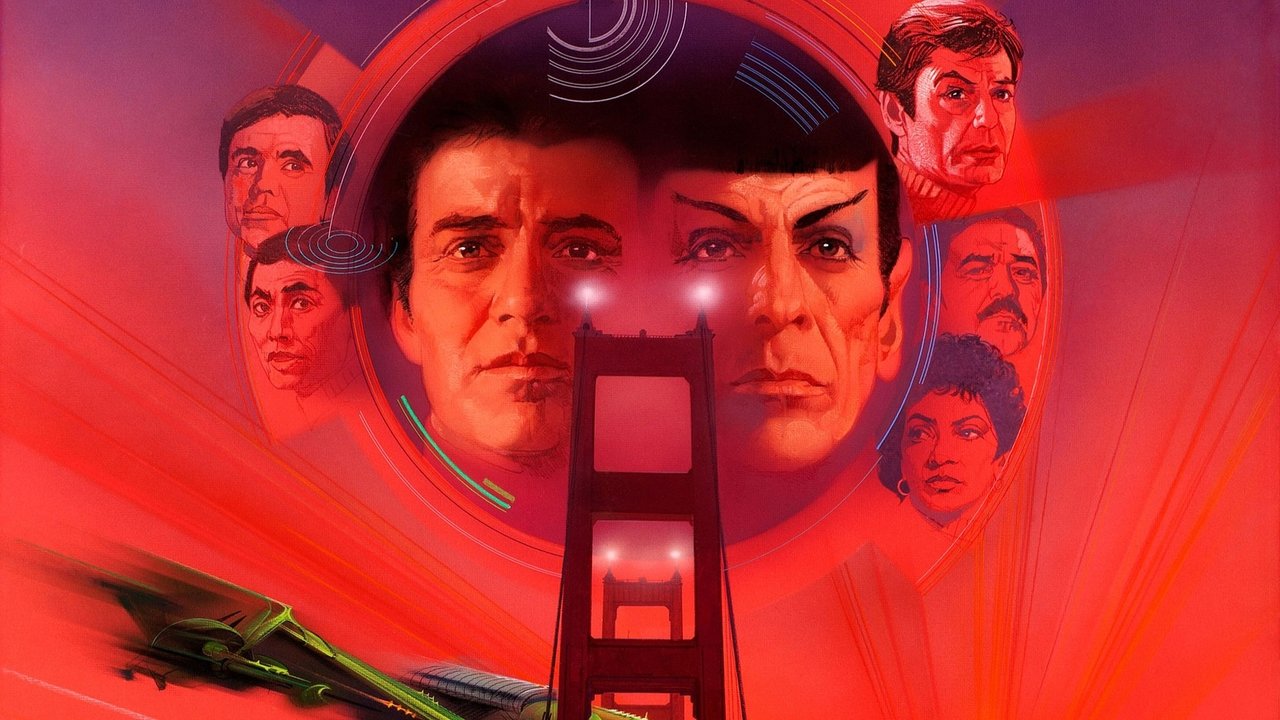
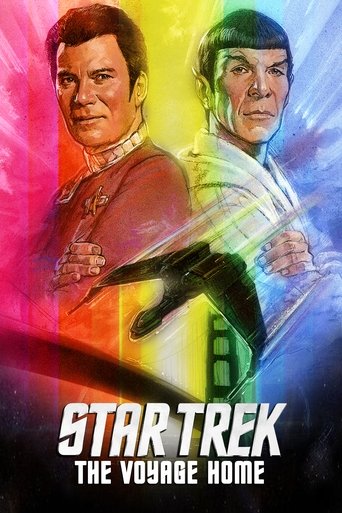
- Genre: Science Fiction, Adventure
- Director: Leonard Nimoy
- Year: 1986
- Runtime: 1h 58m
- Language: English (EN)
- TMDB Rating: ⭐ 7.2/10
Movie Overview
Star Trek IV: The Voyage Home begins with Earth in crisis. A massive alien probe has arrived, vaporizing the oceans and demanding a response from humanity. The problem? The probe is trying to communicate with humpback whales — a species extinct in the 23rd century. Kirk and his crew, still exiled after the events of The Search for Spock, must travel back in time to 1986 to bring whales to the future. The setup feels absurd at first, but it quickly becomes a surprisingly grounded adventure. The crew’s interactions with 1980s San Francisco are both hilarious and awkward, from Spock’s struggle to grasp slang to Scotty’s frustration with primitive computers. What surprised me most was how much the film leans into comedy without losing the stakes. The mission isn’t just about saving Earth — it’s about proving Kirk’s leadership after his recent failures. The emotional arc sneaks up on you, especially in the quieter moments aboard the Bird of Prey. By the end, it’s clear this isn’t just a time-travel caper; it’s a story about responsibility and second chances.
Direction & Cinematography
Leonard Nimoy, returning as director, crafts a film that feels tonally distinct from the previous entries. What struck me was how lighthearted it is, even during moments of tension. The pacing is brisk, with Nimoy avoiding the darker, more ponderous tone of The Wrath of Khan. One standout choice is the opening sequence — the probe’s eerie hum, combined with shots of Earth’s oceans boiling, sets up the stakes beautifully. But Nimoy doesn’t linger too long on the doom and gloom. Instead, he focuses on the fish-out-of-water humor of the crew in 1986. Personally, I think the film’s charm lies in its small moments, like Kirk patiently explaining why Spock can’t swear on a bus. That said, some of the transitions between Earth and space feel a bit abrupt, as though Nimoy wasn’t sure how to balance the two worlds. On rewatch, I noticed how much he relies on Spock’s deadpan humor to ground the film’s sillier moments, which works more often than not.
Cast & Performances
William Shatner’s Kirk is at his most charming here, leaning into the character’s swagger while showing a softer side. His scenes with Dr. Gillian Taylor, the marine biologist played by Catherine Hicks, have a warmth that feels genuine. Leonard Nimoy, meanwhile, steals nearly every scene as Spock. His struggle to act ‘human’ — like his overly literal responses to questions — is comedy gold. I’ll admit I didn’t expect DeForest Kelley’s McCoy to get so many laugh lines, but his exasperation with 1980s medicine (“What is this, the Dark Ages?”) is a highlight. George Takei’s Sulu gets less to do here, though his joy at flying a helicopter is infectious. The only performance that falls a bit flat is James Doohan’s Scotty, who feels underused compared to his standout moments in earlier films.
Character Psychology
Kirk wants to save Earth, but what he really needs is redemption. After losing Spock and sacrificing the Enterprise, he’s desperate to prove he’s still the leader his crew believes in. Spock, on the other hand, is grappling with his recent resurrection. His journey is less about saving whales and more about rediscovering his humanity — or, as he puts it, his ‘logic.’ What stayed with me after the credits was how quietly self-aware Kirk becomes by the end. He knows he’s been reckless, but he also knows he’s capable of fixing his mistakes. That’s what makes the final act so satisfying.
Themes & Emotional Depth
At its core, The Voyage Home is about environmental stewardship, but it’s also about communication. The probe isn’t hostile — it’s just trying to talk, and humanity’s inability to respond is what causes the crisis. This theme is echoed in Spock’s struggle to connect with humans and Kirk’s efforts to win over Gillian. The film suggests that understanding — whether between species or individuals — is the key to survival. It’s a surprisingly timely message, even decades later.
Memorable Scenes & Dialogue
The bus scene is a classic — Spock’s attempt to swear, amplified by Nimoy’s perfectly stoic delivery, never fails to land. Another standout is the moment Kirk and Spock dive into the freezing water to free the whales. The tension is real, and Shatner’s performance sells Kirk’s determination. What surprised me most was the scene where McCoy heals the woman with kidney failure. Kelley’s mix of disbelief and compassion adds depth to a moment that could have felt silly.
The Ending — Does It Deliver?
The ending feels earned, largely because the film spends so much time building the stakes — both for Earth and for Kirk personally. I wasn’t expecting much, but the final moment aboard the Enterprise-A actually got to me. It’s a quiet, hopeful note that contrasts with the bombast of earlier films. What stayed with me after the credits was the sense that Kirk and his crew had truly earned their second chance.
What Works
The film’s humor is its strongest asset, particularly Spock’s deadpan reactions to 1980s culture. Shatner’s performance adds depth to Kirk, making him more than just a swaggering hero. The environmental message, while heavy-handed at times, feels ahead of its time. And the final act — with its mix of tension and heart — ties everything together beautifully.
Honest Criticism
The middle act slows down a bit too much, especially during the scenes with Gillian. Scotty’s subplot feels underdeveloped, and the film occasionally leans too hard on its environmental theme. That final scene with the punk rocker didn’t land for me — it feels like a gag that outstays its welcome.
How It Compares
Compared to The Wrath of Khan, The Voyage Home feels like a deliberate left turn — lighter, funnier, and more accessible. It shares some DNA with Back to the Future, especially in its time-travel humor, but it lacks that film’s tight pacing. Where it shines is in its optimism; even in the face of extinction, Kirk and his crew never lose hope. That’s something few sci-fi films manage to pull off.
Legacy & Cultural Impact
The Voyage Home was a box office hit, grossing over $133 million worldwide — the highest-earning Star Trek film at the time. It received four Academy Award nominations, including Best Cinematography, and remains a fan favorite for its unique tone. Its emphasis on environmentalism also made it one of the most thematically ambitious entries in the franchise. Today, it’s remembered as the film that proved Star Trek could be funny without sacrificing its heart.
Behind the Scenes
The humpback whales were portrayed by animatronics, as real whales couldn’t be used for filming. The scene where Spock performs a Vulcan nerve pinch on a punk rocker was improvised on set. Catherine Hicks almost turned down the role of Dr. Gillian Taylor because she didn’t want to work with animatronic whales, but she was convinced by the script’s humor.
Who Should Watch It?
If you’re a Star Trek fan who enjoys lighter, character-driven stories, you’ll love this. It’s also a great entry point for newcomers thanks to its humor and accessibility. Hard sci-fi fans looking for a more cerebral experience might find it lacking.
Final Verdict
Star Trek IV: The Voyage Home is a delightful mix of humor, heart, and sci-fi ambition. While it’s not without flaws, its charm and optimism make it a standout in the franchise. I’d recommend it to anyone looking for a feel-good adventure with a timely message. The final moments aboard the Enterprise-A alone are worth the watch.
More details, ratings, and cast information on IMDb, TMDB, Wikipedia. YouTube