- 1Movie Overview
- 2Direction & Cinematography
- 3Cast & Performances
- 4Character Psychology
- 5Themes & Emotional Depth
- 6Memorable Scenes & Dialogue
- 7The Ending — Does It Deliver?
- 8What Works
- 9Honest Criticism
- 10How It Compares
- 11Legacy & Cultural Impact
- 12Behind the Scenes
- 13Who Should Watch It?
- 14Final Verdict
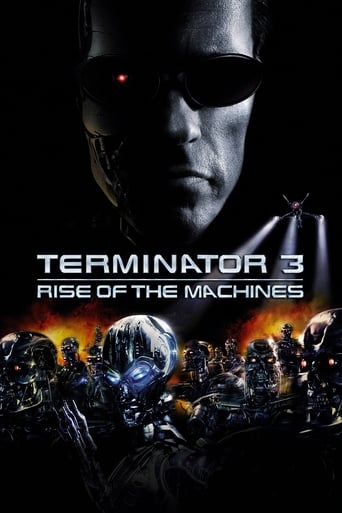
- Genre: Action, Thriller, Science Fiction
- Director: Jonathan Mostow
- Year: 2003
- Runtime: 1h 49m
- Language: English (EN)
- TMDB Rating: ⭐ 6.2/10
Movie Overview
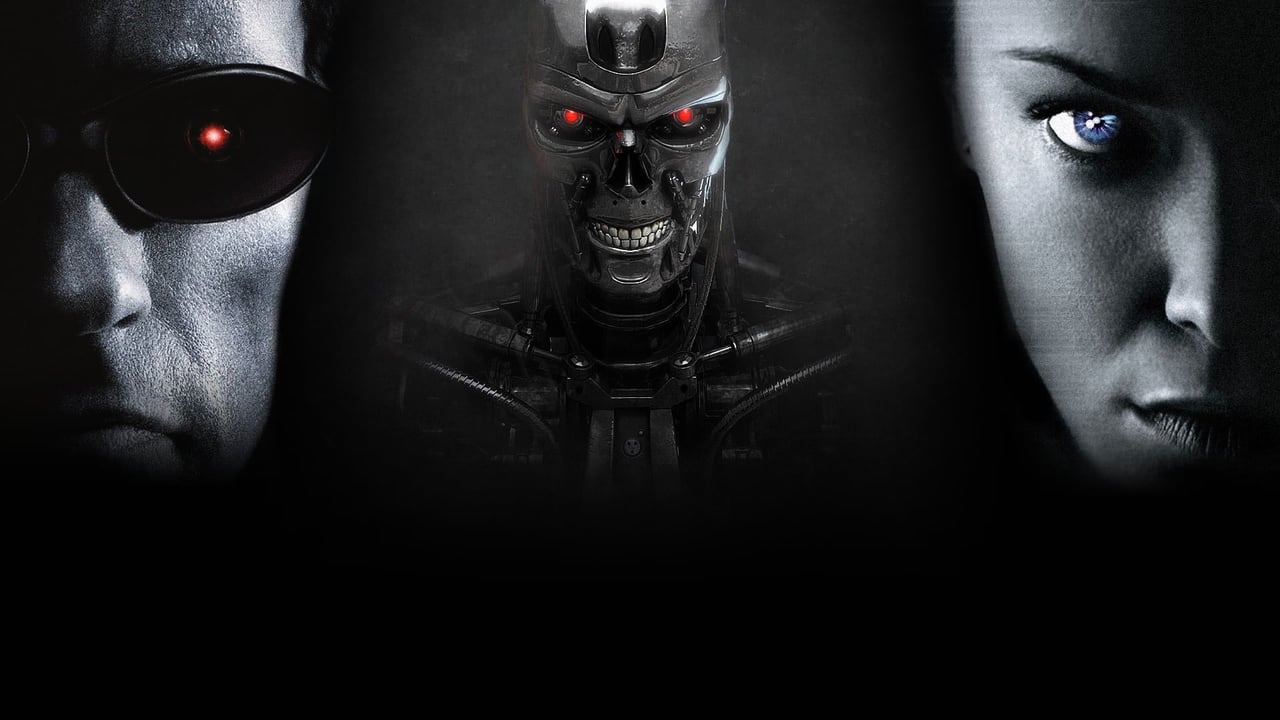
Terminator 3: Rise of the Machines picks up a decade after the events of Terminator 2. John Connor, played by Nick Stahl, is now living a quiet life, avoiding any technology that might lead Skynet to him. But that peace is shattered when T-X, a new and deadly cyborg played by Kristanna Loken, is sent back in time to eliminate Connor and pave the way for Judgment Day. What becomes immediately clear is that the stakes are even higher this time, and Connor must once again rely on his old protector, the Terminator, portrayed by Arnold Schwarzenegger.
The narrative initially seems straightforward, but there's a deeper emotional arc at play. Connor grapples with the burden of knowing he might not be able to stop Skynet and his struggle to protect those around him, particularly his newfound ally, Catherine Brewster, played by Claire Danes. Their relationship adds a layer of urgency to the story; she’s not just a pawn in this battle, but a crucial ally in the fight against fate. I kept waiting for more character depth, but that ultimately doesn’t materialize.
As the plot unfolds, we watch as the T-X relentlessly pursues Connor, showcasing a new level of threat with abilities that surpass previous Terminators. The action scenes are packed with explosive set pieces and high-octane chases that elevate the tension. However, what stayed with me after the credits was the lingering question: did the film truly develop its characters, or did it rely too heavily on nostalgia?
The climax introduces a surprising twist regarding Judgment Day, which I won't spoil, but it left me feeling a mix of dread and acceptance about the characters' fates. While the film wraps up some threads, it opens the door to questions about free will and destiny, echoing themes from earlier films in the franchise. It's an ambitious move that doesn’t always pay off, yet it keeps the viewer engaged throughout the runtime.
Direction & Cinematography
Directed by Jonathan Mostow, Terminator 3 brings a different flair to the franchise. The pacing is a roller coaster, alternating between intense action sequences and more subdued moments that aim to develop the characters. I noticed that Mostow often uses wide shots in chase scenes to emphasize the scale of destruction, particularly during the freeway scenes, which makes the action feel grander and more chaotic.
But the tonal shifts don’t always click. For example, while the earlier films balanced humor and horror expertly, here the attempts at humor occasionally feel forced. There's a scene in which the Terminator discusses his 'friendship' with Connor that tries to lighten the mood but falls flat, sometimes feeling more like an afterthought than an essential part of the narrative.
Mostow also attempts to infuse some social commentary about technology and reliance on machines. However, it can feel heavy-handed at times. The contrast between the action-driven sequences and more profound themes could have created a richer experience, but instead, they often feel disjointed. Still, the film does deliver enough thrills to keep viewers on the edge of their seats, but I expected a bit more coherence in the direction overall.
Cast & Performances
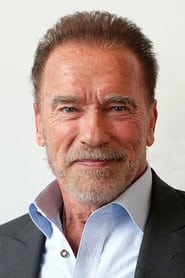
Arnold Schwarzenegger reprises his role as the Terminator, and his physicality remains a highlight. In a memorable line delivery, he states, 'I’ll be back' with a mix of irony and weight that reminds viewers of his legacy. There's a moment during a tense confrontation when he shows a flicker of emotional depth, as he instructs Connor on the importance of accepting fate, significantly adding to the character’s arc from protector to mentor.
Nick Stahl as John Connor doesn't quite hit the mark. While he has moments of intensity, especially when confronting the upcoming danger, there are scenes where he appears somewhat subdued. I kept waiting for that fiery determination from the previous film, but it never fully came. His chemistry with Claire Danes is palpable, yet I felt like he could have delivered a stronger performance in moments of crisis.
Claire Danes also brings a solid performance, effectively portraying Catherine Brewster as both resourceful and vulnerable. In one scene, she reacts with raw terror when confronted by the T-X, which grounded the more outrageous action elements. However, her character felt underwritten, often relegated to supporting a male-centric story rather than standing out in her own right. The lack of depth for her character slightly detracted from the overall impact of the film.
Character Psychology
John Connor is an intriguing character; on the surface, he wants to evade his destiny and live a normal life. However, he deeply needs to embrace his role as a leader and protector. Throughout the film, he's hesitant to accept his purpose, which is evident in his initial reluctance to engage with Catherine or the Terminator. This internal conflict is key to his character development.
Ultimately, Connor fails to fully realize his potential. His journey is marred by self-doubt and a lack of agency. It bothered me slightly that he didn't confront his fate head-on until the end, which seems a missed opportunity for a richer emotional payoff. The film hints at growth but never quite delivers on it in a substantial way.
Themes & Emotional Depth
At its core, Terminator 3 explores the themes of destiny versus free will. Connor struggles against the predetermined fate of Judgment Day, even as the T-X relentlessly pursues him. In a pivotal scene where they discuss choices, Connor’s refusal to accept his future reveals his underlying desire for agency in a world increasingly defined by technology. This conflict is both compelling and relatable, tapping into our fears regarding the uncontrollable advancements in our own lives.
Moreover, the film touches on the notion of legacy. The Terminator’s role shifts from a mere machine to a figure of mentorship, embodying the idea that we can shape our destinies despite our origins. This relationship is pivotal, particularly in light of the film's concluding moments, which poignantly reflect on the cyclical nature of conflict and survival.
Memorable Scenes & Dialogue
One standout scene occurs during a high-speed chase where the T-X demonstrates its lethal capabilities by taking control of a vehicle with impressive precision. The choreography of the scene, combined with sharp editing, creates a pulse-pounding sequence that showcases the film’s action-oriented essence. It works because of the escalating tension — you literally feel the stakes heighten with every car crash.
Another memorable moment happens when the Terminator and John Connor visit the military base. The Terminator's straightforward and literal approach to social interactions provides a darkly comedic contrast to the tension of their situation. It works due to Schwarzenegger’s deadpan delivery, effectively highlighting his character's artificial nature while emphasizing the human capacity for humor even in dire situations.
The Ending — Does It Deliver?
The film’s ending, which reveals that Judgment Day is unavoidable, struck me as both a bold and weary conclusion to the saga. It’s earned through the film’s exploration of fate versus the choices we make, but it still left me wondering if the franchise had something more profound to say. The final shot, which features the Terminator standing amidst chaos, left me with a sense of bitter acceptance; the fight continues, but at what cost?
That sense of inevitability is both haunting and thought-provoking, as it confronts the audience with the realization that the battle against fate is ongoing. It felt like a fitting, if slightly depressing, way to conclude the film, echoing the cyclical struggle of the characters.
What Works
The action sequences, particularly the freeway chase, stand out as some of the most thrilling parts of the film. The visual effects are impressive for their time, effectively blending CGI with practical effects to create a sense of realism. Arnold Schwarzenegger's portrayal of the Terminator remains iconic, with his physicality and deadpan humor bringing a familiar charm back to the franchise. The film's exploration of fate versus free will adds an intriguing layer to the action-packed narrative, prompting viewers to ponder deeper themes between scenes of chaos.
Honest Criticism
The character development feels shallow, particularly with John Connor's arc. He often appears passive, which undermines the tension. I wished for a more dynamic performance from Nick Stahl, as his character could have benefited from clearer motivations and growth. Additionally, Kristanna Loken's T-X, while visually striking, is underutilized in terms of emotional depth, reducing the stakes in her conflict with the heroes. The film leans heavily on established tropes rather than innovating them, which diminishes its impact.
How It Compares
When compared to The Terminator and Terminator 2: Judgment Day, this sequel falls short in both character development and emotional weight. Those earlier films balanced action with stronger thematic elements and character arcs. Terminator 3, while entertaining and visually striking, feels more like a rehash of its predecessors, lacking the innovation that made them classics. However, in terms of sheer action, it bests many modern blockbusters with its intense sequences and practical effects.
In contrast to similar films like I, Robot or Minority Report, which also grapple with technology's evolution, Terminator 3 feels less about the philosophical implications and more focused on thrills. It provides an adrenaline rush but often sacrifices depth for spectacle.
Legacy & Cultural Impact
Although Terminator 3 didn’t receive the critical acclaim of its predecessors, it performed reasonably well at the box office, grossing over $433 million worldwide against a $200 million budget. Critics noted its action sequences but pointed out the lack of emotional stakes. While it didn’t start any significant cultural conversations, it did remind audiences of the franchise's legacy and paved the way for the subsequent films, thus maintaining its place in the sci-fi action genre.
The film’s attempt to update the franchise for a new generation reflects a transitional period in early 2000s action cinema, steering towards more CGI-heavy sequences while still attempting to honor its roots.
Behind the Scenes
The role of John Connor was originally offered to actor Edward Furlong, who played the character in Terminator 2, but he turned it down due to personal issues. The T-X character was intended to blend both a female and male terminator concept, which is why she has such an array of destructive capabilities. Interestingly, many of the impressive stunt sequences were intentional callbacks to classic action films, showcasing a blend of homage and innovation in the film’s design.
Who Should Watch It?
Fans of Schwarzenegger and the original Terminator films will likely enjoy this installment, as it offers familiar characters and action-packed sequences reminiscent of the franchise’s roots. However, viewers seeking deeper character exploration or a fresh narrative will probably find this film lacking. If you're not a fan of action-heavy plots with minimal character depth, this one might not be for you.
Final Verdict
While Terminator 3: Rise of the Machines has its entertaining moments and action-packed sequences, it ultimately falls short of the franchise's high bar. The lack of significant character development detracts from the emotional stakes, making it a passable addition rather than a worthy successor. If you’re looking for mindless action and nostalgia, it’s worth a watch, but don't expect the depth of its predecessors.
More details, ratings, and cast information on IMDb, TMDB, Wikipedia. YouTube