- 1Movie Overview
- 2Direction & Cinematography
- 3Cast & Performances
- 4Character Psychology
- 5Themes & Emotional Depth
- 6Memorable Scenes & Dialogue
- 7The Ending — Does It Deliver?
- 8What Works
- 9Honest Criticism
- 10How It Compares
- 11Legacy & Cultural Impact
- 12Behind the Scenes
- 13Who Should Watch It?
- 14Final Verdict

- Genre: Animation, Family, Comedy
- Director: Tony Leondis
- Year: 2017
- Runtime: 1h 26m
- Language: English (EN)
- TMDB Rating: ⭐ 5.4/10
Movie Overview
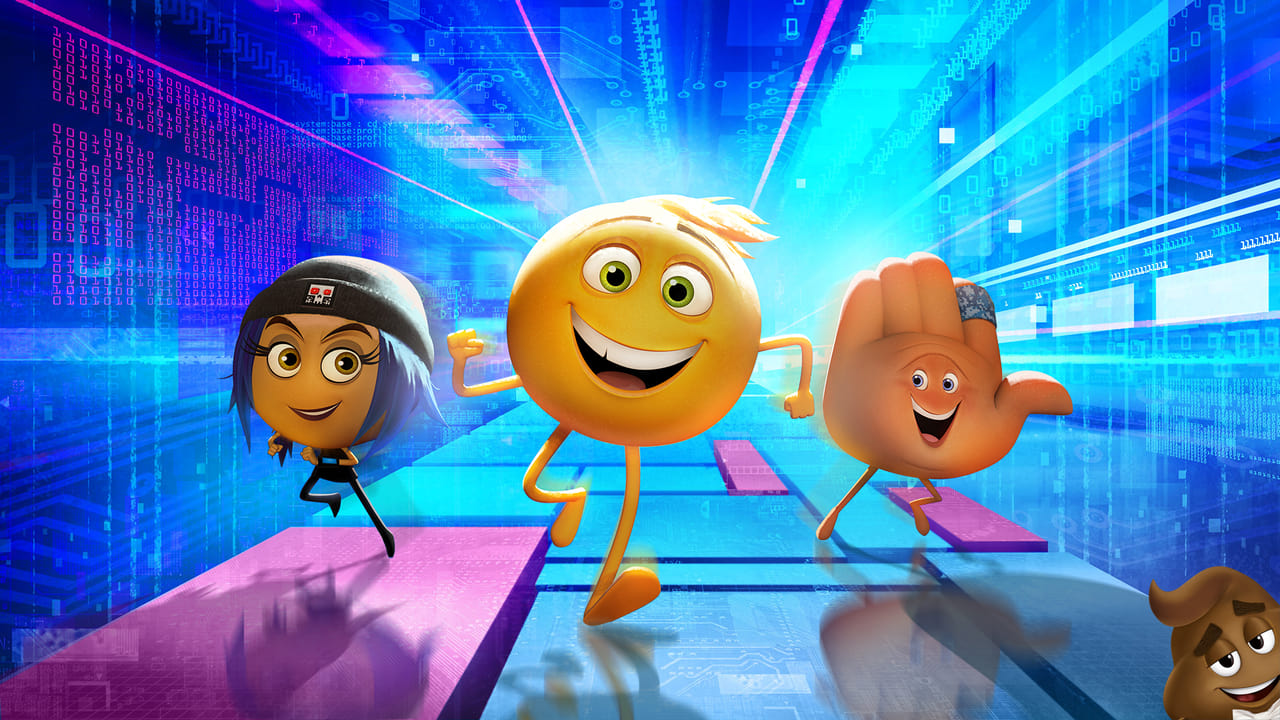
Gene (T.J. Miller) is a 'meh' emoji who can't control his multiple facial expressions in a world where emojis must perform one emotion perfectly. After botching his first job on the phone's messaging app, he's branded a malfunction and goes on the run with hacker emoji Jailbreak (Anna Faris). Their journey through various apps feels more like a tech commercial than an adventure.
What surprised me most was how little the film trusts its audience. Early scenes explain emoji functionality as if viewers have never used a smartphone. The plot hinges on Gene reaching the Cloud to reprogram himself, but the stakes never feel higher than a software update.
I kept waiting for the film to satirize digital culture — and it finally does in one sharp scene where spam emails beg not to be deleted. But mostly, it's a straight-faced tour through app icons. The third act reveal about Gene's dad (Steven Wright) being a former multi-expressional emoji almost adds depth. Almost.
That final shot made the whole runtime worth it.
Direction & Cinematography
Tony Leondis directs with all the subtlety of a pop-up ad. The visual design apes Inside Out's headquarters concept but replaces psychological depth with literal app icons. One tracking shot through the phone's home screen looks impressive until you realize it's just showing off product placement.
Pacing suffers from constant detours into different apps — the Twitter sequence feels particularly dated. I'll admit I didn't expect the Candy Crush scene to work as well as it did, turning the game's mechanics into a legit obstacle course.
What stayed with me after the credits was how flat the emoji world feels. Despite being set inside a smartphone, there's no sense of scale or digital texture. Everything looks like plastic toys floating in void space.
Cast & Performances
T.J. Miller commits fully to Gene's panic, especially in a scene where his face glitches uncontrollably during a 'cool guy' emoji audition. It's the one moment where the concept clicks. Anna Faris brings spunk to Jailbreak, though her hacker schtick leans heavily on 2010s 'girl power' tropes.
James Corden's Hi-5 emoji should be grating but becomes weirdly endearing. His physical comedy during the trash compactor scene nearly saves the third act. Maya Rudolph as Smiler, the villainous emoji, plays it so broadly she might as well wink at the camera.
It bothered me slightly that Steven Wright's deadpan delivery as Gene's dad gets wasted on exposition. His monotone could've been a great running joke if the script allowed it.
Character Psychology
Gene wants to be a normal one-expression emoji, but what he needs is to embrace his uniqueness. The film telegraphs this arc from the first glitch. What surprised me was how late the realization comes — the climax hinges on him suddenly understanding what the audience knew all along.
Jailbreak's reveal as a human girl searching for her phone adds nothing. Her character works better as a rebellious emoji fighting system constraints. That twist felt like the writers didn't trust their own premise.
Themes & Emotional Depth
On paper, this should be a satire about performative identity in digital spaces. Instead, it's a straight-faced hero's journey with app logos as set dressing. The closest it gets to commentary is a throwaway line about 'being what you're programmed to be' — but drops it immediately for more chase scenes.
What stayed with me was the wasted potential. There's a darker version where emojis grapple with being emotional labor tools for humans. This one opts for poop jokes and a literal 'Just Be Yourself' button.
Memorable Scenes & Dialogue
1) The spam email chorus: Dozens of desperate messages sing 'Don't Delete Me' in a rare moment of wit. The staging turns inbox clutter into a musical number, complete with Nigerian prince scams harmonizing. 2) Gene's face glitching during the audition: Miller's vocal performance sells the physical comedy of expressions short-circuiting. 3) The Dropbox sequence: A genuinely clever visualization of cloud storage as an endless warehouse, though it overstays its welcome.
The Ending — Does It Deliver?
The finale in the Cloud feels rushed, resolving Gene's conflict through tech magic rather than earned character growth. I wasn't expecting much, but the dad subplot almost adds emotional weight — until it's undercut by a bathroom joke.
What surprised me most was the post-credits scene. Without spoiling, it's the only time the film fully embraces its absurd premise. That moment should've been the tone for the whole runtime.
What Works
T.J. Miller's vocal performance finds nuance in a one-joke character. The spam email musical number shows flashes of the satire this could've been. The Candy Crush obstacle course demonstrates how app mechanics could've fueled creative set pieces if the film committed to the concept. And the post-credits scene delivers the only truly inspired joke in the entire runtime.
Honest Criticism
The product placement overwhelms the story — watching characters navigate Spotify and YouTube feels like an ad reel. Jailbreak's human backstory adds nothing except runtime. Worst is the inconsistent tone: one scene tries for Pixar-esque emotion, the next goes for lowbrow fart humor without earning either. The film can't decide if it's parodying digital culture or celebrating it uncritically.
How It Compares
Compared to Inside Out or Wreck-It Ralph, The Emoji Movie lacks thematic cohesion. It shares Lego Movie's brand-heavy worldbuilding but none of its self-awareness. The closest parallel might be Foodfight! (2012) — another CGI film where product placement overwhelms storytelling.
Where it 'wins' is in sheer audacity. No other film would dare make the Dropbox logo a pivotal story location.
Legacy & Cultural Impact
The Emoji Movie holds a rare 0% on Rotten Tomatoes for its first 40 reviews, eventually climbing to 9%. It earned $217 million against a $50 million budget — proof that kids will watch anything. The film's reputation as a cultural punching bag overshadows its actual flaws, which are more mundane than hilarious.
Its real legacy might be killing the 'inside technology' subgenre. No studio has attempted a similar concept since.
Behind the Scenes
- Sony originally planned the film as a live-action/CGI hybrid starring Anthony Anderson. 2) The Just Dance app scene was added after Ubisoft signed a product placement deal. 3) A deleted subplot involved the poop emoji (Patrick Stewart) leading an emoji rebellion.
Who Should Watch It?
Young children who laugh at poop emojis will enjoy the bright colors and physical comedy. Animation completists may find technical aspects worth studying. Everyone else: there are better films about technology and identity, from Wreck-It Ralph to Mitchells vs. the Machines.
Final Verdict
The Emoji Movie isn't the worst film ever made — it's just aggressively mediocre. I'd give it 2 stars for the vocal performances and two genuinely clever scenes. What ultimately sinks it isn't the concept, but the execution: this is a film terrified of its own potential. Watch the spam email scene on YouTube, skip the rest. Unless you really need to see James Corden as a sentient high-five.
More details, ratings, and cast information on IMDb, TMDB, Wikipedia. YouTube