- 1Movie Overview
- 2Direction & Cinematography
- 3Cast & Performances
- 4Character Psychology
- 5Themes & Emotional Depth
- 6Memorable Scenes & Dialogue
- 7The Ending — Does It Deliver?
- 8What Works
- 9Honest Criticism
- 10How It Compares
- 11Legacy & Cultural Impact
- 12Behind the Scenes
- 13Who Should Watch It?
- 14Final Verdict

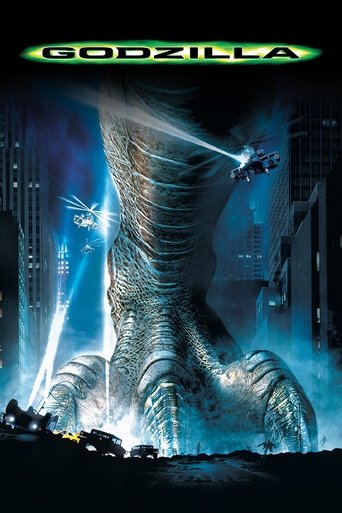
- Genre: Science Fiction, Action, Thriller
- Director: Roland Emmerich
- Year: 1998
- Runtime: 2h 19m
- Language: English (EN)
- TMDB Rating: ⭐ 5.7/10
Movie Overview
Roland Emmerich's Godzilla introduces us to a chaotic world where French nuclear tests inadvertently create a monstrous iguana. This oversized reptile, named Godzilla, starts wreaking havoc on shipping lanes in the Pacific. Niko Tatopoulos, a biologist played by Matthew Broderick, discovers that this creature is not just a myth but a significant threat to humanity. His team must race against time to stop Godzilla before it reaches the urban sprawl of Manhattan.
As the narrative unfolds, the U.S. military, led by Colonel Hicks (Kevin Dunn), attempts several misguided strategies to combat the creature, resulting in spectacular destruction but little effectiveness. Tension mounts as Godzilla makes its way into the heart of New York, setting the stage for a showdown that feels increasingly inevitable. Yet, amid the chaos, there's a thread of personal stakes as Niko tries to connect with his ex-girlfriend, Audrey (Maria Pitillo), who is torn between her career ambitions and her feelings for him.
What surprised me most was the emotional dynamic between Niko and Audrey, which at times adds a layer of depth to the otherwise straightforward action. However, their romantic subplot feels tacked on rather than central to the story, and it bothered me slightly that the film didn't explore this theme more deeply. Ultimately, the film shifts towards a typical monster movie climax, with the city in ruins while the characters scramble to survive.
The finale culminates in a showdown that delivers the destruction one expects from a Godzilla film, but it ultimately feels like a letdown. Rather than creating a genuine sense of terror, the film leaves you with a feeling of disconnection amidst the action, and the potential for emotional stakes, whether personal or societal, is left unfulfilled.
Direction & Cinematography
Roland Emmerich’s direction here is a mixed bag. His penchant for large-scale destruction comes through in scenes like the initial assault on Manhattan, where Godzilla's massive tail demolishes buildings with a flick of its wrist. The cinematography captures both the vastness of the creature and the helplessness of the humans below, yet the shaky camerawork during action sequences can be disorienting — I noticed it took away from the scale of destruction and made it hard to focus on key moments.
Emmerich's pacing feels uneven throughout the film. The early scenes spend considerable time setting up the monster's origin and the military's response, but once Godzilla hits New York, things shift into overdrive. You'll find action sequences that are exciting but lack depth, making it challenging to truly engage with the stakes. The tonal shifts between comedy, disaster, and monster movie tropes sometimes clash, leading to a disjointed experience.
But there are moments of visual flair that stand out, particularly when Godzilla appears for the first time in the city. The adrenaline rush is palpable as the soundtrack swells, and the chaos unfolds. However, this excitement often dips when the focus shifts back to the human characters. Emmerich's bold choices often lead to spectacle over substance, leaving the viewer longing for a more cohesive narrative experience — or maybe that's just me.
Cast & Performances
Matthew Broderick brings a boyish charm to Niko Tatopoulos, often displaying a mix of curiosity and anxiety that feels authentic. One notable moment comes during a frantic scene where he attempts to convince military officials about the monster's true nature. His urgency is palpable, though I was surprised by how humor often undermined his character's seriousness, making it difficult to fully invest in his arc.
Jean Reno as Philippe Roche offers a refreshing twist as the French secret agent, though his character feels underused. He delivers his lines with a dry wit that stands out, especially during brief interactions with Niko. Yet, there’s a missed opportunity to delve deeper into his motivations, leaving his character somewhat vague and unmemorable in the grand scheme of the film.
Maria Pitillo's portrayal of Audrey is lively, though her character often comes off as one-dimensional. She oscillates between a determined career woman and a lovesick ex-girlfriend, which doesn’t quite land effectively. At one point, during a pivotal scene where she has to choose between her career and her feelings for Niko, her reactions feel forced and contrived. This inconsistency detracts from the emotional stakes of the narrative.
Character Psychology
Niko desperately seeks validation and purpose in his work, hoping to prove himself as a serious scientist in a world that often dismisses him. On the surface, he wants to stop Godzilla for the sake of public safety. However, his interactions with Audrey reveal that he also longs for personal connection and acknowledgment, something he grapples with throughout the film. Despite his intentions, he struggles to assert himself among military authority and the chaos surrounding him.
Ultimately, he does not undergo significant change. Although Niko faces peril and personal challenges, he remains largely unaware of what he truly needs: a balance between his career ambitions and personal relationships. This lack of self-awareness prevents him from shifting from his role as a passive observer to an active participant in his own life.
Themes & Emotional Depth
Godzilla operates under the guise of a monster film but holds a mirror to human arrogance and ignorance. The character of Godzilla itself symbolizes the consequences of tampering with nature, reflecting societal anxieties about nuclear power and environmental responsibility. In one scene, a character laments the destruction caused by human actions, pointing to the creature as a manifestation of these transgressions — yet the film doesn’t dwell on this discomforting reality, missing a chance at more profound commentary.
Another theme that emerges is the fleeting nature of personal connections amid chaos. Niko and Audrey’s relationship encapsulates how ambition and fear can overshadow genuine bonds, hinting at a broader commentary on human relationships in times of crisis. Their back-and-forth feels familiar but ultimately unresolved, leaving one to wonder if their struggles mirror the more significant destruction happening around them.
Memorable Scenes & Dialogue
One standout moment occurs when Godzilla first reveals itself in Manhattan, its massive shadow casting over the city, creating a palpable tension as pedestrians scatter. This scene works due to the effective use of sound design and pacing; the quiet before the storm amplifies the fear. It effectively sets the stage for the chaos that follows.
Another memorable scene is when the military attempts to trap Godzilla using helicopters, only to have it turn the tables. The visual effects here, although dated, still manage to convey the sense of scale and dread, capturing the viewer's attention as Godzilla barrels through the cityscape. The chaos of this moment works because it juxtaposes the monstrous creature against vulnerable humans, adding layers to the spectacle.
Lastly, the moment Niko and his team find the abandoned eggs in Madison Square Garden is notable. This reveals Godzilla's reproductive capacity, escalating the stakes as the threat of multiple monsters looms. It’s a turning point that heightens the urgency but also highlights how the film sometimes juggles multiple ideas without fully exploring them, leaving the audience wanting more.
The Ending — Does It Deliver?
The climax of Godzilla is a blend of tension and disappointment. The battle sequences are explosive, and while they deliver the chaos you'd expect, they lack the emotional weight needed to make them truly impactful. As Godzilla faces off against the military, I kept waiting for a moment of catharsis or revelation that would elevate the stakes. Unfortunately, that moment doesn't materialize, and the resolution feels rushed and unsatisfying.
The final shot, where the dust settles and remnants of the creature lay scattered, left me with a sense of loss but not in a profound way. Instead, it felt like a closure to a spectacle that never quite found its heart. There’s a bittersweet acknowledgment of destruction, but it lacks true resonance, leaving the viewer questioning the overall purpose of the battle they just witnessed.
What Works
Godzilla does succeed in delivering on large-scale destruction, particularly showcased during the military's futile attempts to contain the chaos in Manhattan. The visual effects, while showing their age, still manage to provoke awe in moments like the creature's emergence from the rubble. Matthew Broderick and Jean Reno’s chemistry provides some levity amid the destruction, particularly in their banter that adds a light-hearted touch.
Moreover, the film's pacing picks up significantly during its climax, creating an adrenaline rush that resonates with the monster film genre's expectations. The initial discovery of Godzilla propels the narrative forward and sets the stage for exciting confrontations that keep viewers engaged, at least for a while.
Honest Criticism
The romance subplot between Niko and Audrey never truly comes to fruition, often feeling forced and distracting from the main narrative. It bothered me slightly that their interactions detracted from the film's stakes, reducing the emotional tension at crucial moments. Additionally, the character development feels superficial; many secondary characters lack depth or distinct arcs, which makes it hard to care about their fates during the climactic scenes. The reliance on comedic moments undermines the potential for horror or fear, leaving viewers feeling disconnected from the tension that should accompany a monster of this caliber.
How It Compares
When compared to other monster films, such as Jurassic Park or Cloverfield, Godzilla struggles to create a cohesive narrative arc that resonates emotionally. Whereas Jurassic Park manages to blend character development with thrilling action, Godzilla frequently sidelines its characters in favor of spectacle. Cloverfield captures the paranoia and fear of an unseen monster, leveraging character perspective, which enhances the immersive experience. Godzilla takes a different approach, leaning heavily on action sequences that, while visually exciting, often lack genuine engagement or emotional depth.
While Godzilla offers moments of visual interest, it does falter in character depth and thematic exploration compared to these films. Emmerich's film creates an exciting visual playground but often at the expense of real emotional investment — a significant drawback when it could have carved out a unique identity in the genre.
Legacy & Cultural Impact
Released in 1998, Godzilla faced a mixed reception, earning a mere 5.7 on IMDb and disappointing many fans of the franchise with its departure from the traditional portrayal of the creature. It grossed over $379 million worldwide, but this was not enough to secure a legacy beyond its spectacles. The film has since become a reference point for what not to do in monster movies, often criticized for its lack of respect for the source material.
In terms of influence, Godzilla's 1998 version spawned discussions on the evolution of monster movies, particularly in how CGI could be used to enhance visual storytelling. However, it also served as a cautionary tale for future filmmakers on balancing spectacle with substance, illustrating how significant a legacy can hinge on honoring the roots of iconic characters.
Behind the Scenes
Initially, the role of Niko Tatopoulos was offered to actors like Will Smith and Jim Carrey, creating buzz around the casting process. During filming, the crew had to adjust several scenes due to budgetary constraints, leading to some rushed CGI. Interestingly, the original script included a subplot about Godzilla’s backstory that was ultimately cut, which may have provided the monster with deeper motivation — a decision many fans feel contributed to the film's lack of depth.
Who Should Watch It?
Fans of big-budget monster films and visual spectacles might find some entertainment value in Godzilla. However, those looking for a thoughtful narrative or depth in character relationships should likely skip this one. It’s a film that appeals more to casual viewers interested in action than to serious cinephiles who appreciate cohesive storytelling.
Final Verdict
Godzilla struggles to balance action and substance, often failing to deliver the emotional stakes that a monster film truly needs. While it has its moments of visual excitement and humor from a solid cast, those elements aren't enough to save it from a lackluster script and character development. I’d recommend it primarily for fans of disaster films, but casual viewers looking for something with more depth might want to pass.
More details, ratings, and cast information on IMDb, TMDB, Wikipedia. YouTube