- 1Movie Overview
- 2Direction & Cinematography
- 3Cast & Performances
- 4Character Psychology
- 5Themes & Emotional Depth
- 6Memorable Scenes & Dialogue
- 7The Ending — Does It Deliver?
- 8What Works
- 9Honest Criticism
- 10How It Compares
- 11Legacy & Cultural Impact
- 12Behind the Scenes
- 13Who Should Watch It?
- 14Final Verdict
- Genre: Adventure, Horror, Thriller
- Director: Luis Llosa
- Year: 1997
- Runtime: 1h 30m
- Language: English (EN)
- TMDB Rating: ⭐ 5.3/10
Movie Overview
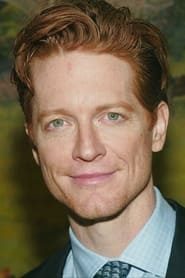
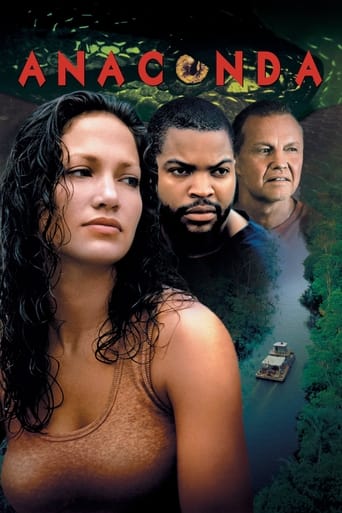
The plot of Anaconda starts simply enough: a documentary crew led by director Terri Flores (Jennifer Lopez) is navigating the Amazon River to find a forgotten indigenous tribe. Terri is ambitious but grounded, trying to hold her film together while managing a skeptical sound engineer, Danny (Ice Cube), and an academic, Dr. Cale (Eric Stoltz), who is also her ex-boyfriend. Their modest expedition is going fine, if a little boring.
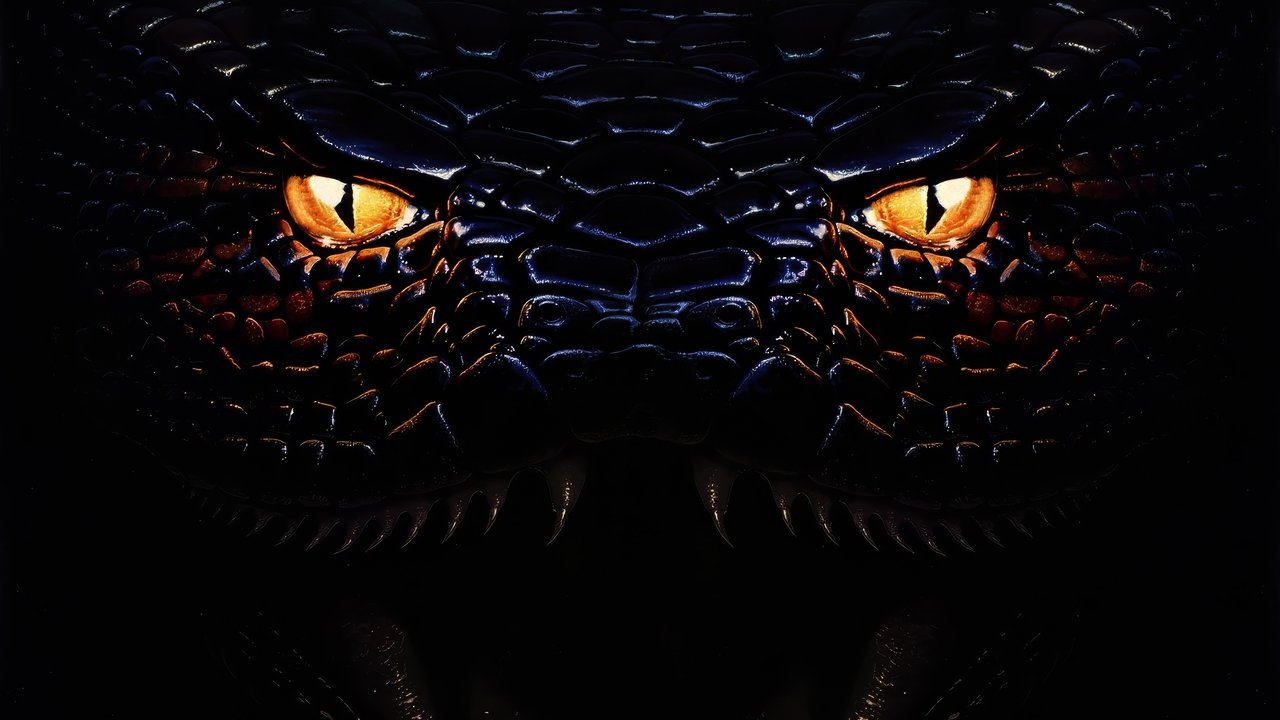
Then they find Paul Sarone (Jon Voight), a Paraguayan snake hunter stranded on the riverbank. He seems helpful at first, a grizzled local who knows the water. But after he takes advantage of a medical emergency to seize control of their boat, his real agenda becomes clear. Sarone isn't just a hunter; he's an obsessive, hunting a legendary 40-foot anaconda worth a fortune.
The film then shifts from a nature documentary into a hostage thriller on a boat. The crew, one by one, realizes they are prisoners on a madman's quest. Sarone steers them deeper into dangerous territory, using them and their vessel as bait for his prize.
It becomes a straightforward survival story, with the shrinking crew trying to outwit both a maniac and the giant, poorly-rendered snake he's chasing. The goal is no longer fame or discovery, but simply getting off the river alive.
Direction & Cinematography
Director Luis Llosa treats Anaconda with exactly the right amount of seriousness, which is to say, not much. The film knows it's a big, dumb creature feature, and Llosa leans into the absurdity without ever winking at the audience, which is crucial. He uses the Amazon setting for all it's worth, with plenty of wide shots of the vast, intimidating jungle to establish a sense of isolation.
What surprised me most was the pacing. At a lean 90 minutes, the film moves. There's very little fat. Llosa gets the inciting incident—the rescue of Sarone—out of the way quickly and escalates the threat steadily. His best trick is using lots of underwater point-of-view shots from the snake's perspective. You see the boat's hull from below or a character's dangling legs, and it's a simple, effective technique borrowed straight from *Jaws*.
But where the direction gets shaky is in the action itself. The attack scenes are a chaotic jumble of quick cuts, thrashing water, and screaming actors, often hiding the limitations of the animatronic and early CGI snake. It's functional, but it's not elegant. That said, he gets the tone right, and for a movie like this, tone is everything.
Cast & Performances
Jennifer Lopez's Terri Flores anchors Anaconda as the capable, if slightly generic, final girl. She’s believable as a director trying to keep her project and her crew from falling apart. Ice Cube, as the cameraman Danny, gets the film's best lines and serves as the audience surrogate, openly calling out the absurdity of their situation. He looks like he's having a good time, and it's infectious.
But let's be honest. You watch this movie for Jon Voight. As the snake-obsessed Paul Sarone, he delivers a performance that borders on performance art. With a bizarre, vaguely Cajun-Latino accent and a permanent, unnerving leer, he chews every piece of scenery he can find. He's menacing one moment and utterly ridiculous the next. I'll admit I didn't expect him to commit so completely to such a bizarre character choice, but the movie is infinitely better for it.
It bothered me slightly that the rest of the cast, including a pre-fame Owen Wilson and Jonathan Hyde as the stuffy British narrator, are mostly just snake food. Eric Stoltz spends most of the film unconscious after being stung by a wasp in the throat, a plot device so blatant it’s almost funny. His role is to be incapacitated so Sarone can take over, and that's it.
Character Psychology
Terri Flores's motivation is simple: she wants to make a name for herself with this documentary. She's driven and professional. Once Sarone hijacks the boat, her want shifts to a very basic need: survival. She doesn't undergo a massive psychological change; she's resourceful from the start and simply applies that resourcefulness to a much deadlier problem.
Paul Sarone is the real psychological puzzle here. His stated goal is to capture the snake for a million-dollar bounty, but it's clearly about much more. He's a man consumed by a legend, needing to conquer this primordial beast to validate his own mythic status. He's a classic monomaniac in the mold of Captain Ahab, and he doesn't need the money, he needs the victory.
Themes & Emotional Depth
On the surface, it’s a standard survival horror film. Man vs. Nature. But the real conflict isn't between the crew and the snake; it's between modern arrogance and the indifferent, primal power of the natural world. The documentary crew arrives with cameras and scripts, trying to package and define the Amazon. They think they can control the narrative.
Then Sarone appears, himself an agent of a different kind of human arrogance. He believes he can hunt, capture, and own a force of nature. What stayed with me after the credits is the idea that the anaconda isn't the monster. It's just an animal in its own habitat. The real monster is Sarone's obsession, a human failing that drags everyone else down with him.
Memorable Scenes & Dialogue
First, the waterfall scene. This is the snake's big coming-out party. As the crew tries to winch the boat over a blocked passage, the anaconda attacks. It plucks one of the crew members right out of the air in a moment of pure B-movie shock. The physics are nonsense, the CGI is rubbery, but the sheer chaos of the sequence, with the boat creaking and everyone screaming, works perfectly.
Second, and more famous, is Sarone's final moment. After being swallowed whole by the snake, the camera lingers on the creature's side, and you can see the shape of his body inside. Then, as it turns to face the camera, Sarone's face pushes against the snake's skin and he delivers a slow, slimy wink. It’s one of the most absurd and strangely perfect character beats in '90s horror. It confirms the movie is entirely in on its own joke.
The Ending — Does It Deliver?
The finale takes place in an abandoned riverside factory, where Terri and Danny make a final stand against a second, even bigger snake. It’s all fire, explosions, and a roaring CGI creature. It does not feel earned in a narrative sense; it feels like the requisite explosive ending for a '90s action-horror movie. It's loud and messy and exactly what the audience has been waiting for.
Personally, I think the film delivers the catharsis it promises. Seeing the creature finally defeated in a giant fireball is satisfying on a very basic level. The final shot, with our two survivors floating down the river as they finally spot the tribe they were looking for all along, has a nice, ironic touch. You're left with a feeling of goofy, exhausted relief.
What Works
Jon Voight's performance is the reason this film is still discussed today. He's not just over the top; he's in a different stratosphere, and his wild-eyed commitment is incredibly entertaining. The 90-minute runtime is perfect, ensuring the movie never gets bogged down. And Ice Cube's deadpan delivery of lines like "Is it just me, or does the jungle make you really, really horny?" provides the perfect counterpoint to the escalating madness.
Honest Criticism
The CGI has aged poorly, even for its time. The snake often looks like a rubbery cartoon, weightless and disconnected from the environment, which breaks the immersion during key attack scenes. The supporting characters are paper-thin; they exist only to increase the body count. That waterfall scene didn't land for me on a technical level, even if the chaos was amusing. The editing felt frantic and confused.
How It Compares
*Anaconda* is basically *Jaws* on a river, but without the artistry or suspense. Spielberg's film is a masterclass in tension, whereas *Anaconda* is a sledgehammer of schlock. But where *Anaconda* succeeds is in its total lack of pretension. It knows it's a carnival ride, not a serious drama.
A better comparison might be 1999's *Lake Placid*. Both are self-aware creature features with a great, scenery-chewing older actor (Voight here, Oliver Platt there) and a sassy script. I'd argue *Lake Placid* is the smarter, wittier film. But *Anaconda* has a certain earnest, dumb charm that *Lake Placid*'s irony sometimes lacks.
Legacy & Cultural Impact
Despite being savaged by critics upon release—earning multiple Razzie nominations, including Worst Picture—*Anaconda* was a surprise box office hit, grossing over $136 million worldwide. This success ensured its legacy, spawning a franchise that includes four increasingly low-budget sequels and a crossover with the *Lake Placid* series.
Over time, its reputation has softened considerably. It's now seen as a quintessential '90s camp classic, a go-to for bad movie nights. It helped solidify Jennifer Lopez's status as a bankable star and gave Jon Voight one of his most talked-about, if infamous, roles. It's a perfect example of a film failing as high art but succeeding wildly as low-brow entertainment.
Behind the Scenes
The giant animatronic snake was notoriously difficult to work with, frequently malfunctioning on set—a problem shared by its mechanical shark predecessor on *Jaws*. For many scenes, the actors were reacting to nothing that would be filled in later with very conspicuous CGI.
Jon Voight reportedly based some of his character's persona on a Brazilian man named Tarcisio 'Tatico' Filgueiras, a local boat owner the crew had met. And two of the film's taglines were "You can't scream if you can't breathe" and "When you can't breathe, you can't scream," a bizarre marketing choice that just adds to the film's goofy charm.
Who Should Watch It?
This is for anyone who loves creature features, '90s nostalgia, and unapologetically campy entertainment. If you enjoy watching a great actor make the most unhinged choices possible, you are the target audience.
If you're looking for genuine scares, tight directing, or a story with any real depth, you should skip it. This is not for the serious horror aficionado.
Final Verdict
Anaconda is not what you'd call a 'good' film in the traditional sense, but it is a profoundly entertaining one. It's a big, dumb, fun monster movie held together by Jon Voight's glorious train-wreck of a performance. The movie's greatest strength is that it never pretends to be anything more than what it is. I kept waiting for a moment of quiet subtlety, and it never came—thankfully. For a fun, schlocky night in, you could do a lot worse.
More details, ratings, and cast information on IMDb, TMDB, Wikipedia. YouTube