- 1Movie Overview
- 2Direction & Cinematography
- 3Cast & Performances
- 4Character Psychology
- 5Themes & Emotional Depth
- 6Memorable Scenes & Dialogue
- 7The Ending — Does It Deliver?
- 8What Works
- 9Honest Criticism
- 10How It Compares
- 11Legacy & Cultural Impact
- 12Behind the Scenes
- 13Who Should Watch It?
- 14Final Verdict
- Genre: Horror, Thriller, Drama
- Director: Susanne Bier
- Year: 2018
- Runtime: 2h 4m
- Language: English (EN)
- TMDB Rating: ⭐ 6.8/10
Movie Overview
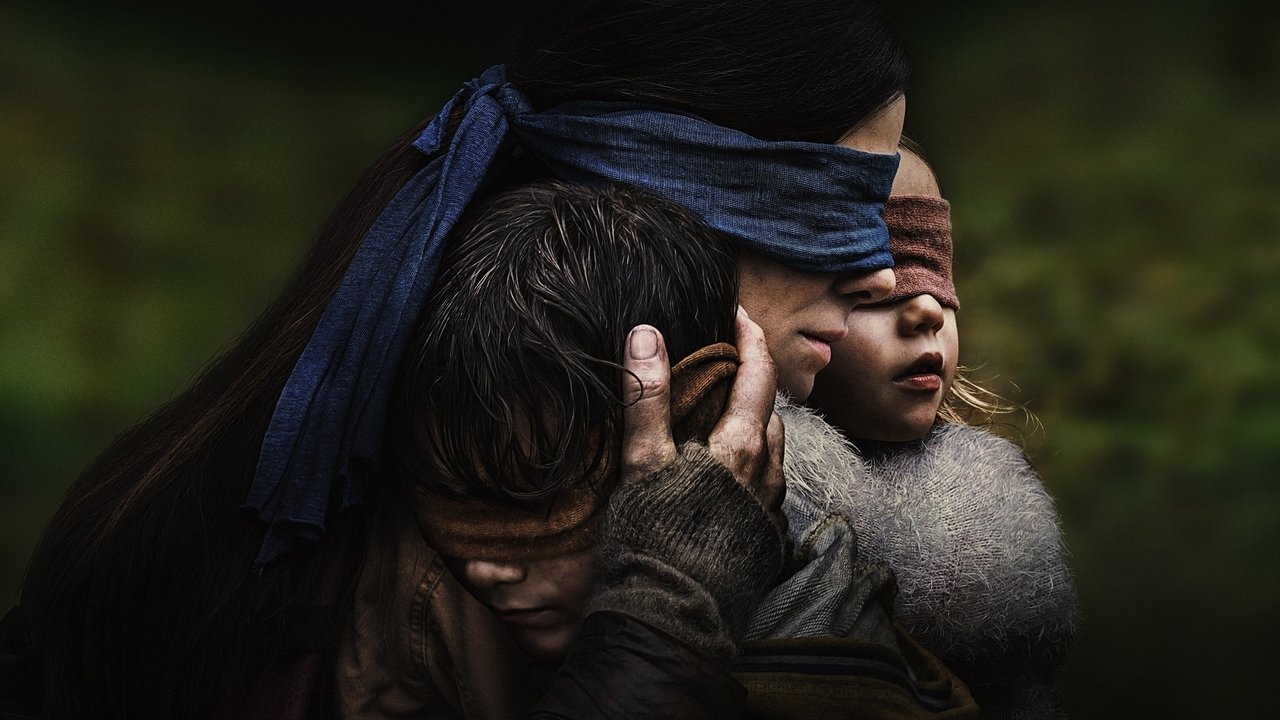
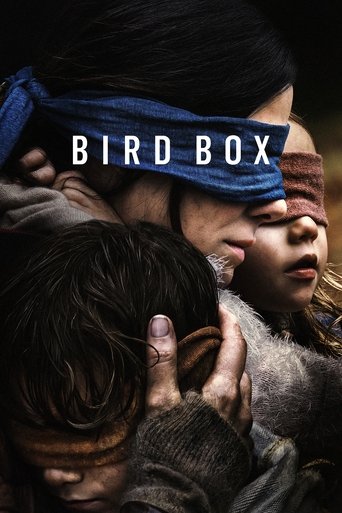
Bird Box throws you directly into the deep end, on a river with Malorie and two small children, all blindfolded. The film then fractures its timeline, alternating between this desperate present-day journey and the terrifying past, five years earlier, when the world collapsed. We see Malorie, then a detached and pregnant artist, witness the start of a mass hysteria caused by an entity that drives anyone who sees it to immediate, violent suicide.
She finds refuge in a suburban home with a ragtag group of survivors, including the pragmatic Tom and the abrasive Douglas. The house becomes a microcosm of a new society, governed by one rule: don't go outside, and if you must, never, ever open your eyes. The plot isn't about finding a cure; it's a pure survival narrative focused on a single, desperate goal: getting the children to a rumored sanctuary downriver.
But the real story is Malorie's. It's the journey of a woman who begins the apocalypse emotionally closed-off and must learn to be a protector, even if it means being a harsh and unloving one.
I kept waiting for the two timelines to converge in a way that would re-contextualize everything, and the film does deliver on that, though perhaps not as shockingly as it thinks.
Direction & Cinematography
Susanne Bier's direction in Bird Box is most effective when it leans into sensory deprivation. When the characters are blindfolded, the sound design does all the work. The rustle of leaves, the crunch of gravel, the disembodied whispers—Bier trusts that what we *can't* see is far more frightening than any monster she could show us. A lot of the tension comes from staging scenes where characters must navigate dangerous spaces, like a looted supermarket, relying only on their hearing and touch. It's a simple, effective gimmick.
But the choice to constantly cut between the river journey and the events in the house five years prior is a mixed bag. On one hand, it builds mystery. We know some catastrophe befell the original group, and the flashbacks slowly fill in the gaps. On the other hand, it often cuts away right when the tension in one timeline is peaking, which can feel less like building suspense and more like interrupting it. Personally, I think the river sequences are where the film's direction is tightest and most confident.
Cast & Performances
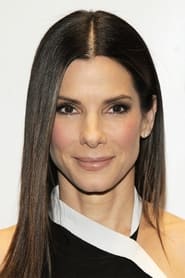
The weight of Bird Box rests squarely on Sandra Bullock's shoulders, and she carries it well. Her Malorie isn't a stock hero. Bullock makes the specific choice to play her as brittle and cold, especially with the children. The way she barks orders—'If you look, you will die!'—isn't for dramatic effect; it's the exhausted, terrified plea of someone who has seen connection lead only to loss. It's a physical, un-glamorous performance that sells the premise completely.
As Tom, Trevante Rhodes is the necessary heart of the film. He's the warmth to Malorie's ice, and their dynamic keeps the middle act from feeling too bleak. What surprised me most was how much he communicates with just his eyes in a film that's all about not looking. And then there's John Malkovich as Douglas, the cynical homeowner. Malkovich chews his lines with the exact amount of theatrical contempt you'd expect, acting as the group's resident devil's advocate. He's not subtle, but he's not supposed to be.
It bothered me slightly that a talent like Sarah Paulson is brought in for what is essentially an extended cameo in the opening act. She's great, but she's gone before the story really begins.
Character Psychology
Malorie's surface want is simple: survival. She wants to get herself and the two children from Point A to Point B without dying. But what she actually needs is to allow herself to connect to them, to be a mother instead of just a drill sergeant. Her initial detachment isn't a personality quirk; it's a trauma response. She won't even give the children names, calling them 'Boy' and 'Girl' because names are for people you can't afford to lose.
The entire river journey is a test of which instinct will win: the cold pragmatism that has kept her alive, or the empathy that she has suppressed for five years.
Themes & Emotional Depth
This is a film about the difference between surviving and living. The characters in the house are surviving—boarded up, rationing food, terrified. But Tom is the one who keeps asking if this is enough. He pushes for connection, for hope, for something resembling a life. Malorie initially represents the opposing view: hope is a liability, and connection is a weakness.
It's also about the nature of parenthood in a world without a future. Malorie's harshness is her form of love. She believes that teaching her children to be hard, to feel nothing, is the only way to prepare them for the world she knows. What stayed with me after the credits was the question of whether she was right, even if she ultimately changes her mind.
Memorable Scenes & Dialogue
The supermarket trip is the film's best set-piece. Driving with blacked-out windows, guided only by the car's GPS and proximity sensors, is a clever update on a classic horror trope. The tension inside the store, as they navigate by string and sound, feels genuinely dangerous. It's a perfectly contained sequence of suspense.
Later, there’s the moment Malorie prepares the children for the river. She sits them down and lays out the rules with a chilling lack of emotion. She tells them they will have to do everything she says, and that if they make a noise, she will have to hurt them to keep them quiet. The writing is brutal, and Bullock's delivery makes it clear this isn't a threat; it's a promise born of absolute desperation. That scene didn't land for me on first watch—it felt too cruel—but on rewatch, I noticed the subtle break in her voice that sells the pain it causes her.
The Ending — Does It Deliver?
The final leg of the journey, navigating the rapids blind, is the culmination of all of Malorie's training. It's tense and well-executed. Her arc feels earned; the choices she has to make under pressure force the change that the entire movie has been building toward. In that sense, the character ending works.
I'll admit I didn't expect the resolution of the plot itself to be so… straightforward. After 120 minutes of bleak, brutal survival, the nature of the sanctuary felt a little too neat, a little too symbolic. It provides emotional closure for Malorie, but it softens the film's edge right at the end, leaving you with a sense of relief rather than the disquiet that characterized the rest of the story.
What Works
The central premise is incredibly effective and mined for all its worth, creating sustained sequences of tension. Sandra Bullock gives a fierce, committed performance that grounds the high concept in believable human desperation. The film's non-linear structure successfully builds mystery around the fate of the original survivors, making the flashbacks as compelling as the present-day river journey.
Honest Criticism
The supporting characters in the house often feel like archetypes waiting for their turn to die, rather than fully realized people. The film's logic about the entities feels inconsistent, especially regarding the 'corrupted' humans who can see without dying. That whole subplot felt underdeveloped and raised more questions than it answered. The ending also feels a bit too tidy for the grim world the movie spent two hours building.
How It Compares
The most obvious comparison is *A Quiet Place*, which came out the same year and also centered on sensory-based horror. While *A Quiet Place* is a tighter, more disciplined film with clearer rules for its monsters, *Bird Box* feels larger in scope, showing the societal collapse on a broader scale. Personally, I think *A Quiet Place* is the better-crafted horror movie, but *Bird Box* has a more complex protagonist.
It also succeeds where a film like M. Night Shyamalan's *The Happening* failed. Both feature an invisible, nature-based threat, but *Bird Box* wisely focuses on the human drama and the mechanics of survival rather than getting bogged down in trying to explain the unexplainable.
Legacy & Cultural Impact
You can't talk about *Bird Box*'s legacy without talking about the numbers. Netflix claimed it was watched by over 45 million accounts in its first week, making it a genuine streaming phenomenon. It created a cultural moment, complete with memes and the infamous 'Bird Box Challenge,' proving that a streaming service could generate the kind of popular buzz once reserved for theatrical blockbusters. It didn't get any major awards attention, but its impact on streaming strategy was significant.
Behind the Scenes
The creatures were actually designed and filmed for a scene where Malorie hallucinates one. According to Sandra Bullock, the monster looked like 'a long fat baby' and was so unintentionally funny that everyone on set burst out laughing. They wisely cut it, deciding it was scarier to show nothing.
The screenplay, written by Eric Heisserer (who also wrote *Arrival*), was on the 2013 Black List, an industry survey of the most-liked unproduced scripts. It took five years to finally get made.
Director Susanne Bier is a Danish filmmaker who won the Academy Award for Best Foreign Language Film in 2011 for *In a Better World*.
Who Should Watch It?
If you're a fan of high-concept survival thrillers like *A Quiet Place* and don't mind some unresolved world-building, you'll probably have a good time. Viewers who need strict internal logic and get frustrated by characters making questionable decisions in a horror movie should probably steer clear.
Final Verdict
Bird Box is a genuinely effective and tense thriller that succeeds far more than it fails. While its landing feels a bit too soft and some of its supporting characters are thin, the journey there is a gripping one. The film's success is owed almost entirely to its killer premise and a commanding lead performance from Sandra Bullock. I wasn't expecting much, but the sheer craft of the suspense sequences won me over. Watch it for the harrowing river journey, but don't expect the destination to be as interesting as the trip.
More details, ratings, and cast information on IMDb, TMDB, Wikipedia. YouTube