- 1Movie Overview
- 2Direction & Cinematography
- 3Cast & Performances
- 4Character Psychology
- 5Themes & Emotional Depth
- 6Memorable Scenes & Dialogue
- 7The Ending — Does It Deliver?
- 8What Works
- 9Honest Criticism
- 10How It Compares
- 11Legacy & Cultural Impact
- 12Behind the Scenes
- 13Who Should Watch It?
- 14Final Verdict
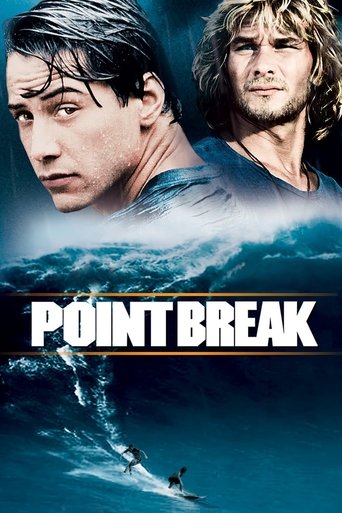
- Genre: Action, Thriller, Crime
- Director: Kathryn Bigelow
- Year: 1991
- Runtime: 2h 2m
- Language: English (EN)
- TMDB Rating: ⭐ 7.2/10
Movie Overview
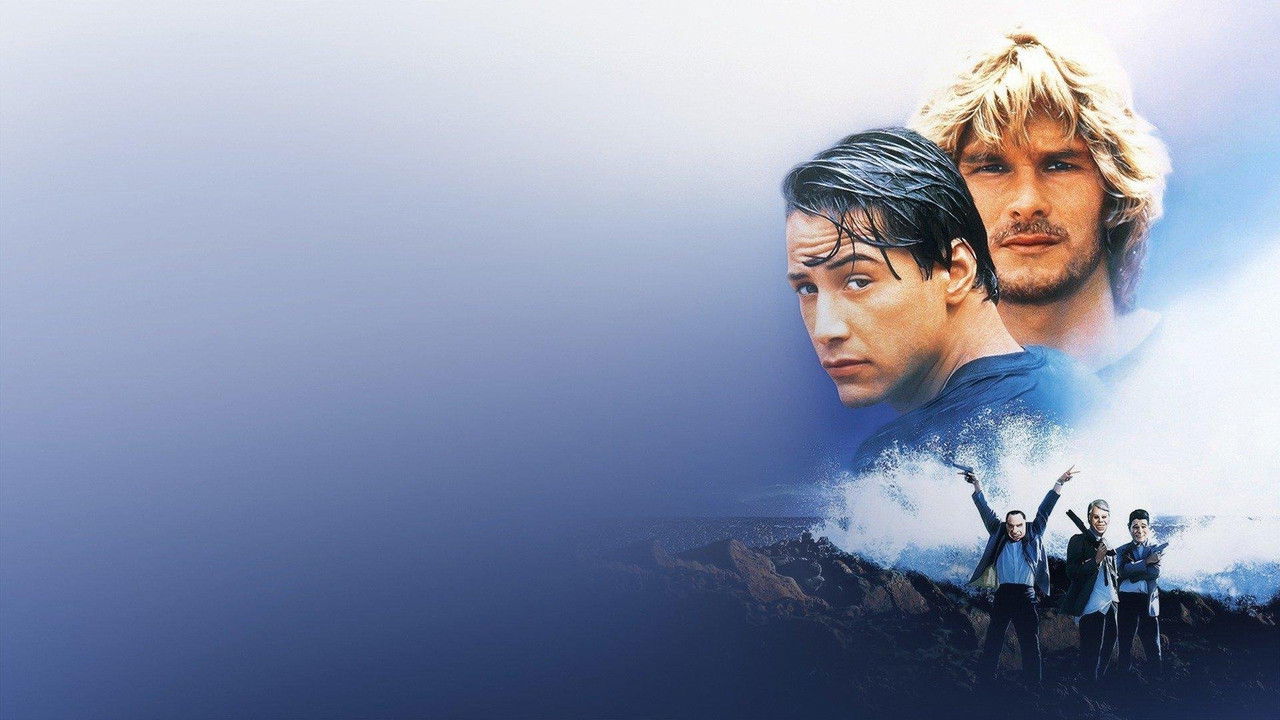
FBI rookie Johnny Utah arrives in Los Angeles with a fresh haircut and a limp from a college football injury. His assignment: infiltrate the surfing community to find a gang of bank robbers who wear presidential masks. What starts as a straightforward undercover operation gets complicated when he falls for surfer Tyler and develops genuine respect for her enigmatic friend Bodhi.
The Ex-Presidents aren't your typical thieves—they hit banks only during summer, timing jobs between swells. Utah's boss Angelo thinks they're just punks, but Utah starts seeing the method in their madness. The more time he spends catching waves with Bodhi's crew, the less certain he becomes about turning them in.
That final chase on the beach? It wasn't in the original script. Bigelow added it last minute when she realized the film needed more physical stakes.
By the third act, Utah isn't just chasing criminals—he's wrestling with whether the system he represents is any less corrupt than the outlaws he's hunting. The film smartly avoids making this conflict explicit, letting Reeves' conflicted stares do the work.
Direction & Cinematography
Kathryn Bigelow directs action like someone who understands adrenaline. The foot chase where Utah fires his gun wildly into the air captures his desperation perfectly—you can almost feel his lungs burning. She stages the surfing sequences with equal intensity, framing the waves as both playground and predator.
But what surprised me most was how she handles quieter moments. The scene where Bodhi describes his perfect wave plays like a religious vision, with Swayze's face half-lit by campfire glow. Bigelow lets the camera linger just long enough to make you believe in his philosophy.
On rewatch, I noticed how often she shoots Utah from slightly below eye level during FBI scenes, making the office feel oppressive. The framing changes when he's on the beach—suddenly we're at wave height, bobbing in the water with him.
Cast & Performances
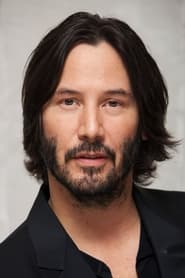
Keanu Reeves' Johnny Utah works precisely because he's so stiff early on. Watch how he holds his gun like it might bite him during the first shootout. That awkwardness makes his later physicality—like the infamous 'I am an FBI agent!' scream—feel earned rather than ridiculous.
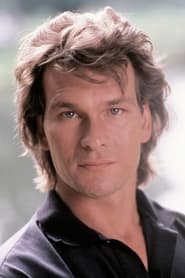
Patrick Swayze's Bodhi could've been a caricature, but he finds the quiet menace under the zen surfer act. The way he delivers 'It's not tragic to die doing what you love' with a smile chills more than any villain monologue.
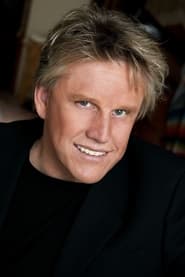
Lori Petty nearly steals the film as Tyler. Her reaction when Utah reveals his true identity—a mix of betrayal and reluctant understanding—gives the romance real weight. Gary Busey's Angelo, though, feels like he wandered in from a broader comedy at times.
Character Psychology
Johnny Utah wants to prove himself as an agent. What he needs is to question whether the badge means anything beyond institutional power. His football injury—mentioned early but never explored—hints at a guy who's always played by others' rules.
Bodhi preaches freedom but can't escape his own dogma. His insistence on 'one last job' reveals the same institutional thinking he claims to reject.
Themes & Emotional Depth
Point Break is really about the seduction of extremism. Bodhi's crew don't rob banks for money—they do it to feel alive, chasing a high that mirrors the surfing rush. The film doesn't judge this, but it does show the cost through Utah's fractured loyalty.
The most telling moment comes when Utah lets a suspect go free. It's not out of kindness, but because he's starting to believe Bodhi's worldview. The line between cop and criminal blurs with every wave they share.
Memorable Scenes & Dialogue
The skydiving sequence stands out because Bigelow shot it practically—you can see real terror on Reeves' face when his chute fails. The lack of CGI makes the danger palpable.
Bodhi's '100% pure adrenaline' speech works because Swayze delivers it while casually fixing a surfboard. The mundanity contrasts with the radical philosophy, making it feel lived-in rather than scripted.
That final shot of Utah throwing his badge into the ocean lands because we've watched him grip it like a lifeline for two hours. The gesture feels inevitable, not triumphant.
The Ending — Does It Deliver?
The ending surprised me on first watch—not the outcome, but how quiet it is. After all the chases and shootouts, Utah and Bodhi's final confrontation happens in whispering waves. It feels earned because their relationship was always about mutual respect, not just cat-and-mouse.
What stayed with me was Utah's choice not to win. He could arrest Bodhi, but that would validate the very system he's come to doubt. The ocean becomes the only judge that matters.
What Works
The surfing cinematography holds up because they used real surfers as doubles. Swayze and Reeves' chemistry sells what could've been a laughable bromance—their nighttime bonfire chat feels genuinely intimate. Bigelow's decision to shoot heists from the robbers' POV puts us uncomfortably on their side. And that bank robbery mask concept remains brilliantly silly.
Honest Criticism
The FBI office scenes drag with unnecessary macho posturing. John C. McGinley's haranguing boss character never rises above cliché. Some dialogue—like Tyler's 'You're gonna die, Utah'—lands with a thud. The romantic subplot feels tacked on compared to the central male bond.
How It Compares
Compared to The Fast and the Furious (which openly borrows its plot), Point Break has more philosophical heft. But it lacks the self-awareness of later Bigelow films like The Hurt Locker. Heat does the cop-criminal bond better, though no one shoots waves like Swayze.
Legacy & Cultural Impact
Though only a modest hit in 1991, Point Break became a cult classic through VHS and cable. It earned an Oscar nomination for Best Sound and influenced a generation of action films that blended extreme sports with crime plots. The 2015 remake failed precisely because it missed the original's soulful machismo.
Behind the Scenes
Reeves trained for months to surf but still needed a stunt double for big waves. The infamous 'shooting at the sky' scene was improvised when Reeves forgot his lines. Original casting had Johnny Depp as Utah and Matthew Broderick as Bodhi—imagine that version.
Who Should Watch It?
Action fans who appreciate practical stunts will love this. Anyone seeking deep character development or political nuance should look elsewhere. It's peak '90s cheese with surprising heart.
Final Verdict
Point Break earns its 8.2 rating by being more than the sum of its parts—it's a heist film, surfing ode, and existential drama rolled into one. The action sequences still thrill, but it's the moral ambiguity that lingers. Watch it for Swayze's career-best performance as a guru who might just be full of shit.
More details, ratings, and cast information on IMDb, TMDB, Wikipedia. YouTube