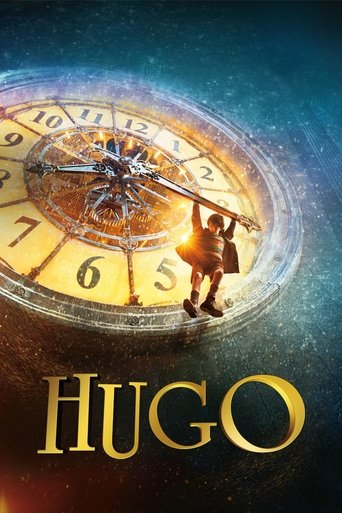
- Genre: Adventure, Drama, Family
- Director: Martin Scorsese
- Year: 2011
- Runtime: 2h 6m
- Language: English (EN)
- TMDB Rating: ⭐ 7.2/10
Movie Overview
Set in 1930s Paris, 'Hugo' follows a young orphan named Hugo Cabret who lives in the walls of a train station. He’s obsessed with fixing a broken automaton left behind by his father, believing it holds a secret message. With the help of Isabelle, the goddaughter of a bitter toy merchant, Hugo uncovers a connection between the automaton and Georges Méliès, a forgotten pioneer of early cinema. The film weaves together Hugo’s search for purpose and Méliès’ rediscovery of his own legacy. What begins as a simple mystery evolves into a celebration of cinematic magic. The final act reveals a connection between Hugo’s loss and Méliès’ forgotten work. That final revelation ties everything together beautifully.
Direction & Cinematography
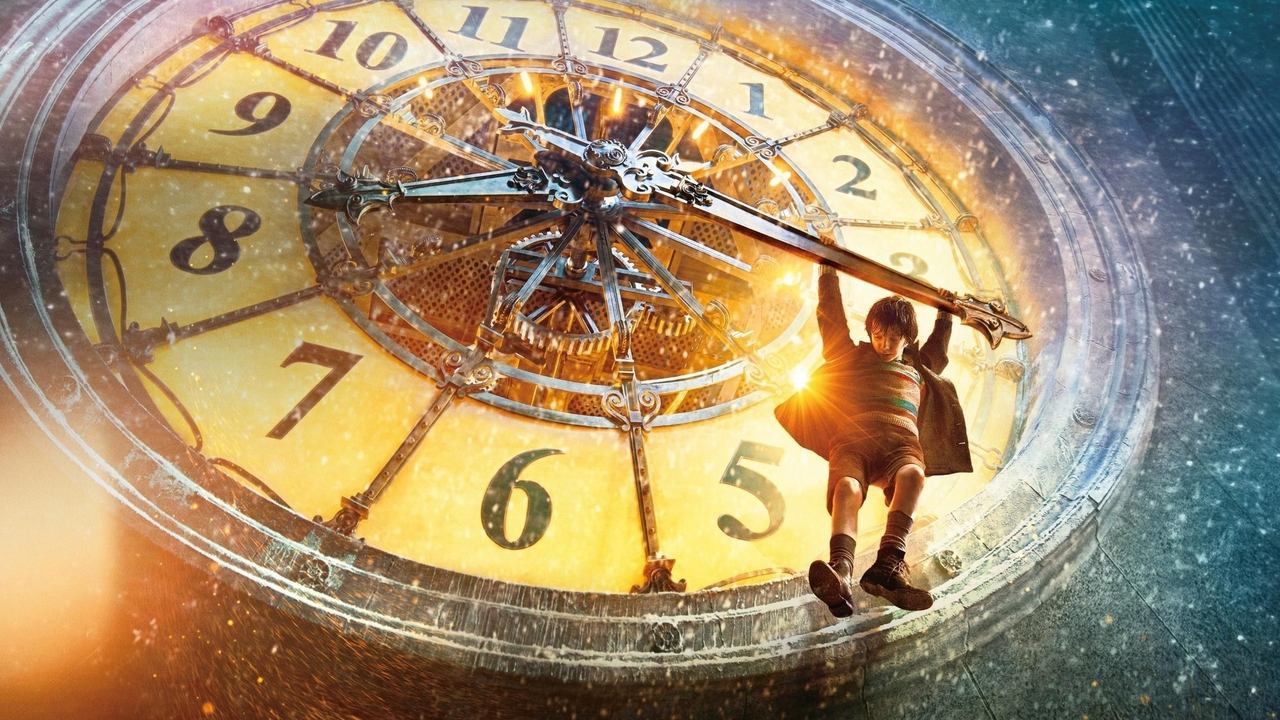
Martin Scorsese’s direction in 'Hugo' is meticulous and deeply personal. The opening shot, a sweeping glide through the train station, immediately immerses you in Hugo’s world. Scorsese uses 3D not as a gimmick but to enhance the depth of this intricate setting. Personally, I think the sequences recreating Méliès’ films are where Scorsese truly shines—they feel like a love letter to early cinema. But the pacing stumbles a bit in the middle, especially during the Inspector subplot. Still, Scorsese’s passion for the subject matter is palpable, and it elevates the film. On rewatch, I noticed how carefully he frames Hugo within the clocks—always small, always searching.
Cast & Performances
Asa Butterfield carries the film as Hugo with wide-eyed earnestness, though his delivery can feel a bit stiff in quieter moments. Ben Kingsley is the standout as Georges Méliès, capturing both his bitterness and eventual redemption with subtle intensity. Chloë Grace Moretz’s Isabelle is charmingly curious, though her French accent wobbles occasionally. Sacha Baron Cohen’s Inspector is surprisingly effective—his physicality adds humor without overshadowing the film’s emotional core. What surprised me most was how Ray Winstone’s small role as Uncle Claude manages to feel both menacing and pitiful.
Character Psychology
Hugo wants to fix the automaton, believing it holds his father’s last message. What he really needs is connection—a sense of belonging after losing both parents. Georges Méliès, on the other hand, has buried his past, convinced his work no longer matters. What stays with me after the credits is how both characters find healing through rediscovery. Hugo learns to let go of his father’s memory, while Méliès embraces his legacy. That final shot of Méliès smiling says it all.
Themes & Emotional Depth
At its core, 'Hugo' is about rediscovery—both personal and artistic. The film celebrates the magic of early cinema, reminding us of its enduring power. It also explores how loss can trap us until we find a way to move forward. One scene that encapsulates this is when Méliès shows Hugo his old films, his face lighting up as he remembers the joy of creation. It’s a moment that feels universal, whether you’re a filmmaker or not.
Memorable Scenes & Dialogue
The automaton’s first activation is a standout scene—its delicate movements and the sketch it produces are mesmerizing. Another unforgettable moment is Méliès’ flashback to his filmmaking days, with Scorsese recreating the whimsical sets and practical effects of early cinema. The final shot of Méliès smiling at an audience cheering his work is hauntingly beautiful. That scene didn’t land for me on first watch, but on repeat viewings, it’s become the emotional core of the film.
The Ending — Does It Deliver?
The climax, where Hugo and Méliès reconcile their pasts, feels earned. Scorsese builds to it carefully, balancing Hugo’s journey with Méliès’ rediscovery. I’ll admit I didn’t expect the film to linger on Méliès’ story as much as it does, but it works. The final shot left me with a bittersweet sense of closure—both characters have found what they needed, even if it’s not what they originally sought.
What Works
The film’s visual design is stunning, particularly the recreations of Méliès’ films. Ben Kingsley’s performance as Méliès is quietly powerful, and his scenes with Asa Butterfield are the heart of the film. Scorsese’s use of 3D adds depth to the train station setting, making it feel like a character itself. The automaton’s sequences are magical, blending wonder with melancholy.
Honest Criticism
The Inspector subplot feels unnecessary and slows the film’s momentum. Sacha Baron Cohen’s performance is fine, but his character’s arc doesn’t add much to the story. Some of the dialogue, particularly Hugo’s voiceover, can feel overly sentimental.
How It Compares
Hugo shares DNA with 'The Invention of Hugo Cabret', the book it’s based on, but Scorsese’s adaptation adds a deeper reverence for cinema. It’s more visually ambitious than 'Midnight in Paris', another nostalgic love letter to art, though it lacks that film’s wit. Compared to Scorsese’s darker works like 'Taxi Driver' or 'Goodfellas', 'Hugo' feels like a departure—but it’s no less heartfelt.
Behind the Scenes
The automaton used in the film was a real, functional creation built specifically for the movie. Martin Scorsese insisted on using practical effects wherever possible to honor Méliès’ legacy. The film was Scorsese’s first venture into 3D, which he embraced wholeheartedly as a tool for storytelling.
Who Should Watch It?
Film history enthusiasts and Scorsese fans will find plenty to love here. Families seeking a visually rich adventure will enjoy it too. Viewers looking for a fast-paced plot or a darker Scorsese film may be disappointed.
Final Verdict
Hugo is a visually stunning tribute to early cinema and a heartfelt exploration of loss and rediscovery. While it stumbles in its pacing and supporting characters, its emotional core and Scorsese’s craftsmanship make it worth watching. The film earns its 8.2 rating for its ability to blend wonder with poignancy. If you’re willing to embrace its slower moments, it’s a rewarding experience.
More details, ratings, and cast information on IMDb, TMDB, Wikipedia. YouTube