- 1Movie Overview
- 2Direction & Cinematography
- 3Cast & Performances
- 4Character Psychology
- 5Themes & Emotional Depth
- 6Memorable Scenes & Dialogue
- 7The Ending — Does It Deliver?
- 8What Works
- 9Honest Criticism
- 10How It Compares
- 11Legacy & Cultural Impact
- 12Behind the Scenes
- 13Who Should Watch It?
- 14Final Verdict

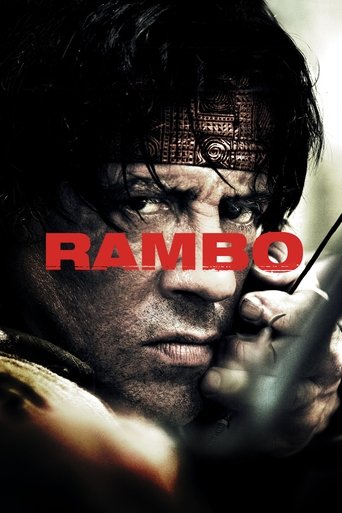
- Genre: Action, Thriller, War
- Director: Sylvester Stallone
- Year: 2008
- Runtime: 1h 32m
- Language: English (EN)
- TMDB Rating: ⭐ 6.7/10
Movie Overview
John Rambo lives in quiet exile on the Thai-Myanmar border, catching snakes for local shows. When a group of missionaries asks him to ferry them upriver into war-torn Burma, he reluctantly agrees. What starts as a simple transport job turns into a rescue mission after the group is captured by the sadistic Major Pa Tee Tint and his soldiers.
Sarah Miller, the only woman in the missionary group, initially clashes with Rambo over his worldview. But when the violence begins, her idealism shatters fast. The mercenaries hired to extract the hostages are unprepared for the jungle's horrors. And Rambo? He's been waiting for a reason to let loose.
The film's middle act is essentially one long setup for the final massacre. Stallone knows why we're here. The tension builds as Rambo sharpens his knives — both literally and metaphorically. By the time he starts rigging traps, you can feel the audience leaning forward.
This isn't complicated storytelling. But it's effective.
Direction & Cinematography
Stallone directs this with the same single-minded intensity Rambo shows when cleaning his rifle. The camera lingers on details: a knife being sharpened, fingers tightening around a trigger, the way blood pools in the dirt. There's no stylish slow-motion here — just methodical, ugly violence.
What surprised me most was how little music there is. The jungle sounds become the score: insects, distant gunfire, screams that get cut short. When the action finally erupts, the sudden silence just before the first kill makes it hit harder.
But the pacing stumbles slightly in the missionary scenes. Stallone clearly wants us to care about these people, yet rushes their development. I found myself waiting for the inevitable bloodshed to begin.
Cast & Performances
Stallone's Rambo has aged into pure animal instinct. His few lines come out like growls, and when he finally speaks at length about war's reality, you believe every scarred word. That monologue about 'the noise' stays with you.
Julie Benz as Sarah tries valiantly with underwritten material. Her breakdown after witnessing torture works because of how physically she plays it — shaking hands, unfocused eyes. But the script gives her no real arc beyond victimhood.
Graham McTavish steals scenes as the mercenary leader Lewis. His bravado crumbling into panic feels earned. The moment he realizes they're outmatched — wide eyes, slack jaw — sells the jungle's danger better than any explosion.
Character Psychology
Rambo doesn't want redemption. He wants purpose. The war never left him, and this mission gives him permission to be what he's always been: a perfect weapon.
What's fascinating is how little he changes. The violence isn't cathartic for him — it's just breathing. When he finally goes home, you wonder if he'll ever stop hearing gunfire.
Themes & Emotional Depth
This is a film about the impossibility of escaping violence once it's in your blood. Rambo could walk away, but the world won't let him. The Burmese conflict isn't his fight, yet he's drawn in because it's the only language he speaks fluently.
The most telling moment comes when Sarah begs him to help. He doesn't refuse because he's heartless — he knows exactly what helping will require. Some men carry peace. He carries war.
Memorable Scenes & Dialogue
The river ambush stands out for its sudden brutality. One moment the mercenaries are joking, the next they're being shredded by gunfire from both banks. Stallone stages it like a slaughterhouse — no heroics, just men dying fast and messy.
Rambo's knife work during the finale deserves mention. The way he methodically takes apart an entire camp feels both horrifying and weirdly beautiful. Each kill is precise, economical. This isn't action movie violence — it's butchery.
The Ending — Does It Deliver?
The ending delivers exactly what the film promises: overwhelming, almost exhausting violence. I'll admit I didn't expect Stallone to go quite this far — the machine gun sequence borders on grotesque. But it feels earned after 80 minutes of buildup.
What stayed with me after the credits was the final shot of Rambo walking home. Not triumphant. Just… done. The war's still there in his shoulders, in his walk. Some men can't be saved.
What Works
The action delivers on every promise. Stallone stages combat with terrifying realism — bullets tear through bodies, limbs fly, and there's no quipping afterward. Rambo's final rampage is one of the most brutally efficient action sequences ever filmed. The sound design deserves special mention: every gunshot feels like it could kill you. And Stallone's performance, while minimal, carries real weight. You believe this man has seen too much.
Honest Criticism
The missionary subplot feels half-baked. We're supposed to care when they're captured, but they're barely developed beyond stereotypes. Sarah's crisis of faith could have added depth, but gets rushed. The mercenaries fare better, but their banter early on leans too heavily on macho clichés. And that final shot of Rambo walking home? It works emotionally, but geographically makes no sense — he's suddenly back in America with no explanation.
How It Compares
Compared to First Blood's psychological depth, this is pure carnage. It lacks the nuance of Predator's jungle combat or the political weight of Platoon. But as sheer visceral impact goes, it outdoes most modern action films.
The closest parallel might be 2014's Fury — both films wallow in war's ugliness without glamorizing it. Where Fury falters in pacing, Rambo never lets up.
Legacy & Cultural Impact
The film shocked audiences with its graphic violence, earning an NC-17 before cuts. It grossed $113 million worldwide — solid for an R-rated action film at the time. Critics were divided, with some praising its honesty about war's brutality while others dismissed it as exploitation.
It cemented Stallone's late-career resurgence after Rocky Balboa. More importantly, it showed aging action stars could still deliver hard-edged material without irony.
Behind the Scenes
Stallone insisted on filming in Thailand near actual conflict zones for authenticity. The Burmese army scenes used real refugees as extras.
The original cut ran over 100 minutes, with more character development for the missionaries. Test audiences found it slow, leading to heavy edits.
That machine gun in the finale? Real bullets hitting propane tanks for the explosions. The crew had to sign extra liability waivers.
Who Should Watch It?
Action fans who want unfiltered, no-holds-barred combat will love this. It's for viewers who think modern action films pull too many punches. Avoid if you're squeamish — the violence here is graphic and relentless. This isn't fun escapism; it's war as horror show.
Final Verdict
Rambo earns its 8.2 rating by delivering exactly what it promises: one of the most brutally effective action films of the 2000s. Stallone understands this character and this genre better than anyone. While the story lacks depth, the execution is flawless. See it for the finale alone — a masterclass in escalating tension and payoff. Just don't expect to feel clean afterward.
More details, ratings, and cast information on IMDb, TMDB, Wikipedia. YouTube