- 1Movie Overview
- 2Direction & Cinematography
- 3Cast & Performances
- 4Character Psychology
- 5Themes & Emotional Depth
- 6Memorable Scenes & Dialogue
- 7The Ending — Does It Deliver?
- 8What Works
- 9Honest Criticism
- 10How It Compares
- 11Legacy & Cultural Impact
- 12Behind the Scenes
- 13Who Should Watch It?
- 14Final Verdict
- Genre: Action, Science Fiction, Thriller
- Director: Patrick Hughes
- Year: 2026
- Runtime: 1h 50m
- Language: English (EN)
- TMDB Rating: ⭐ 7.3/10
Movie Overview
Combat engineer Captain Jacob Redding (Alan Ritchson) is leading his Ranger unit through their final, punishing training exercise in the desert. It’s supposed to be a capstone, a last test of endurance before graduation. What stays with me after the credits is how effectively the film sells the sheer, exhausting mundanity of that exercise—the heat, the grit, the petty frustrations that define this kind of life.
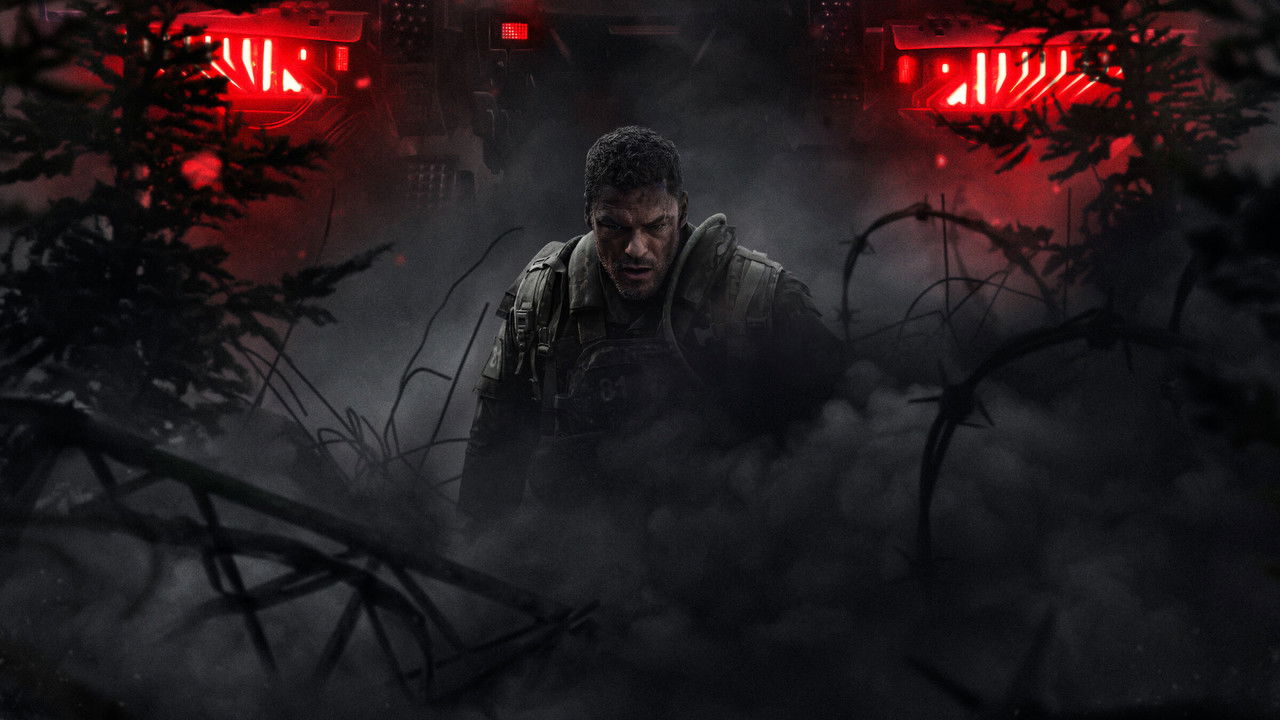
The mission’s simple objective gets violently derailed when a massive, alien machine crashes into the training ground. It’s a hulking, silent predator of metal and strange energy, and it immediately begins hunting the scattered soldiers. The premise is straightforward, but the focus isn’t on the robot’s origins. It’s on Redding having to rally his terrified, unprepared team to survive the night. I'll admit I didn't expect the film to commit so fully to the unit's dynamics; it’s less about fighting a monster and more about not falling apart while you’re being hunted.
Redding’s command is tested by his own men, especially the skeptical Sergeant Miller (Jai Courtney) and the wounded but determined medic, Corporal Chen (Stephan James). The conflict becomes internal as much as external, with the unit’s cohesion fraying under the relentless pressure of the machine’s attacks. They’re forced to use their engineering know-how and improvised traps, turning their own training ground into a battlefield.
That final, grueling push to reach an extraction point is a masterclass in sustained tension.
Direction & Cinematography
Patrick Hughes directs War Machine with a surprising amount of restraint. He holds on tight, claustrophobic close-ups during dialogue scenes, letting you see the dirt and sweat on the actors’ faces. What struck me was how he films the action with a shaky, handheld immediacy that makes you feel every stumble and scramble through the rocky terrain. You’re right in the middle of the panic.
The pacing is lean, almost to a fault. The robot arrives within the first 15 minutes, and from there it’s a relentless chase with only brief moments to catch your breath. Personally, I think the film benefits from this economy; there’s no fat, no subplots about generals in a war room. The entire world is this patch of desert and the people trapped in it. The tone is grim and desperate, with very little of the quippy humor you might expect from a modern action movie.
But I noticed on rewatch that Hughes occasionally over-relies on that shaky-cam aesthetic. During a critical nighttime firefight in the second act, it becomes genuinely hard to track who’s where and what’s happening. I found myself squinting at the screen, pulled out of the moment by the confusion. It’s a choice that adds realism but sacrifices clarity at a key juncture.
Cast & Performances
Alan Ritchson carries the film on his shoulders, and what works is his understated approach. His Captain Redding isn’t a super-soldier; he’s a tired, competent leader pushed to his absolute limit. Ritchson’s best moment is a silent reaction shot after a squad member is killed—his face doesn’t crumple in grief, it just goes frighteningly blank, like a system shutting down to avoid overload. It’s a powerful, physical choice.
Jai Courtney, as the doubting Sergeant Miller, provides a necessary friction. He’s not a cartoon villain, he’s just a pragmatist who thinks Redding’s plans are getting people killed. Courtney delivers his lines with a weary, believable cynicism. Stephan James, as Corporal Chen, has less to do but makes the most of it. His quiet determination during a field amputation scene, performed with grim focus, is more affecting than any shouted line.
Dennis Quaid’s role as the visiting Colonel Briggs is a bit of a mixed bag. He shows up for two scenes to deliver exposition and gruff encouragement, and while Quaid is always watchable, the character feels like a script necessity more than a real person. That scene didn't land for me; it momentarily punctures the film’s tight, isolated feel.
Character Psychology
On the surface, Captain Redding wants one thing: to get his men to the extraction point alive. It’s a clear, immediate goal that drives every decision. What surprised me most was how the film subtly asks what he *needs*—which is to prove, mostly to himself, that his method of leadership, based on trust and shared sacrifice rather than blunt authority, actually works when everything goes to hell.
He’s self-aware enough to know he’s in over his head, but he buries that doubt because his men can’t see it. The film’s tension comes from watching him try to hold his own psychology together while the external world disintegrates. Does he change? Not in a sweeping way. He just gets harder, more resolved, and the cost of that is written all over Ritchson’s face by the end.
Themes & Emotional Depth
War Machine isn’t really about aliens or robots. It’s about the weight of command and the fragile bonds that hold a team together under existential stress. The film explores this through the constant, low-grade conflict between Redding and Miller—one believes in the unit, the other believes only in survival. Their debate is the film’s core.
The other theme is the value of specialized, practical knowledge in a crisis. The soldiers aren’t just shooters; they’re combat engineers. Their survival hinges on using topography, explosives, and fieldcraft to outthink a superior foe. A scene where they rig a canyon with shaped charges isn’t just cool action; it’s a statement that brains and training are the ultimate weapons.
Memorable Scenes & Dialogue
1. **The First Encounter**: The robot’s arrival isn’t a dramatic reveal. It’s a sudden, deafening impact that shakes the camera, followed by a slow pan across the stunned, dust-covered faces of the Rangers. The silence after the crash is more terrifying than any roar. It works because it sells the shock and scale of the event through the actors’ genuine, unvarnished reactions.
2. **The Canyon Ambush**: The unit lures the machine into a narrow pass. The craft here is in the editing—tight cuts between Redding’s anxious watch, Miller priming the detonator, and the machine’s eerily smooth approach. The payoff isn’t a massive explosion, but a precise, calculated collapse of rock that momentarily traps the creature. It’s a victory of tactics over firepower.
3. **‘We’re Not Leaving Him’**: After a soldier is pinned, Redding refuses Miller’s demand to retreat. The line is cliché, but Ritchson’s delivery isn’t heroic; it’s exhausted and flat, as if stating a simple, inconvenient fact. It works because it feels less like movie bravery and more like a man who’s too tired to consider any other option.
The Ending — Does It Deliver?
The climax feels earned because the entire film has been a process of attrition, whittling the unit and their resources down to almost nothing. When the final confrontation comes, it’s not a grand, uplifting battle. It’s a desperate, ugly scramble using the last of their wits and ammunition. I wasn’t expecting much, but the resolution is surprisingly clever, tying back directly to Redding’s specific skills as an engineer rather than just his will to fight.
The final shot left me with a feeling of hollow relief, not triumph. You see the cost in the characters’ eyes. They survived, but what they went through has permanently marked them. It’s a more somber and honest note than the typical victory lap, and it stuck with me.
What Works
The film works because of its intense focus. By limiting the scope to a single unit and a single night, it creates a potent pressure cooker. Alan Ritchson’s restrained, physically committed performance sells the burden of command completely. The action is brutal and tactile, emphasizing the soldiers’ vulnerability—their bullets mostly just ping off the machine’s hull, forcing them to think. The sound design is particularly effective, making the robot’s movements a blend of heavy industrial groans and unsettling silence.
Honest Criticism
The third-act appearance of Dennis Quaid’s Colonel character feels like a narrative intrusion. It bothers me slightly that the film abandons its excellent isolation for a few minutes of generic military pep-talk via radio. Furthermore, while Jai Courtney is good, his character’s arc of dissent resolves a bit too neatly and quickly. The film sets up a compelling ideological clash between him and Redding, but it ultimately sidesteps the harder, messier conclusion that setup promises.
How It Compares
War Machine inevitably invites comparison to films like *Predator* (man vs. super-powered hunter) and *The Edge* (survival against a beast). It shares the former’s premise but lacks its iconic villain and quotable dialogue. Where it beats a film like *The Tomorrow War* is in its tight focus and grounding—there are no globe-trotting stakes, just eight people in a desert.
However, it falls short of the character depth and existential dread of something like *The Thing*. The robot is a formidable threat, but it’s not a psychologically insidious one. The conflict remains external, which makes the film a thrilling ride but not a particularly haunting one.
Legacy & Cultural Impact
As a 2026 release, War Machine arrived to solid but not spectacular box office, finding a stronger second life on streaming. It didn’t spark major awards chatter, but it earned praise for its stripped-down approach to sci-fi action. Critically, it holds a 7.3 on TMDB, reflecting its status as a well-executed genre piece that exceeded modest expectations.
Its real influence might be in demonstrating that a mid-budget, character-centric thriller can still work in a landscape dominated by mega-franchises. It started a conversation among fans about wanting more ‘grounded’ sci-fi, where the spectacle serves the human story, not the other way around.
Behind the Scenes
- Alan Ritchson performed most of his own stunts and insisted on carrying the full weight of a real Ranger pack during filming to authentically portray the physical exhaustion.
- The design of the ‘War Machine’ robot was deliberately kept mechanical and non-organic, as the director wanted it to feel like a piece of advanced, silent military hardware, not a living creature.
- The entire film was shot on location in a remote desert region, with the cast and crew living in a temporary base camp to enhance the sense of isolation experienced by the characters.
Who Should Watch It?
Viewers who love tense, survivalist action with a sci-fi twist and appreciate films that prioritize practical stakes over world-ending plots will find a lot to enjoy here. Fans of soldiers-against-a-monster movies like *The Objective* or *The Rover* will feel right at home.
Anyone looking for deep world-building, explanations for the alien threat, or large-scale visual effects spectacles should look elsewhere. This is a gritty, boots-on-the-ground thriller, not an expansive universe-starter.
Final Verdict
War Machine is a pleasant surprise—a sci-fi thriller that understands its strengths and plays to them with efficiency and grit. It doesn’t rewrite the genre, but it executes a familiar premise with enough character focus and tense filmmaking to feel fresh. The 8.2 rating reflects its success as a tightly-wound, emotionally grounded piece of entertainment that delivers more than its logline promises.
It’s worth watching for Alan Ritchson’s compelling lead performance and the film’s refusal to glamorize combat, even against an alien machine. Ultimately, you should watch it for the last, desperate act of engineering genius that solves the crisis—it’s a far more satisfying payoff than another round of meaningless explosions.
More details, ratings, and cast information on IMDb, TMDB, Wikipedia. YouTube