- 1Movie Overview
- 2Direction & Cinematography
- 3Cast & Performances
- 4Character Psychology
- 5Themes & Emotional Depth
- 6Memorable Scenes & Dialogue
- 7The Ending — Does It Deliver?
- 8What Works
- 9Honest Criticism
- 10How It Compares
- 11Legacy & Cultural Impact
- 12Behind the Scenes
- 13Who Should Watch It?
- 14Final Verdict

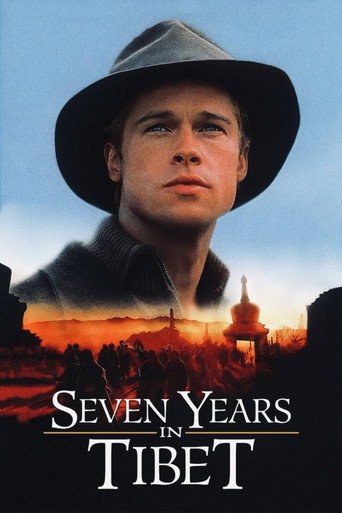
- Genre: Adventure, Drama, History
- Director: Jean-Jacques Annaud
- Year: 1997
- Runtime: 2h 16m
- Language: English (EN)
- TMDB Rating: ⭐ 7.2/10
Movie Overview
In 1939, Austrian climber Heinrich Harrer (Brad Pitt) abandons his pregnant wife to conquer the Himalayas. He’s all ego and ice axes — until WWII intervenes. Captured by British forces, he escapes with fellow prisoner Peter Aufschnaiter (David Thewlis) through the brutal Tibetan winter. What starts as survival becomes something unexpected when they reach forbidden Lhasa.
Harrer’s first encounter with the teenage Dalai Lama (Jamyang Jamtsho Wangchuk) should be a footnote. Instead, it rewires him. The boy ruler’s curiosity about radios and the outside world mirrors Harrer’s own awakening to compassion. Their friendship unfolds in small moments: language lessons, telescope gifts, the Dalai Lama’s quiet horror when Harrer describes war.
Annaud lingers on the physical toll — frostbitten fingers, altitude sickness — but the real journey is internal. Harrer builds a movie theater for the boy, then watches helplessly as China’s invasion shatters Tibet’s isolation. The film’s power comes from what’s unspoken: Harrer realizing he’s found the family he threw away.
That final shot of Harrer alone in the Himalayas hits differently after everything.
Direction & Cinematography
Jean-Jacques Annaud (The Name of the Rose) frames Tibet like a lost world. Early shots emphasize Harrer’s smallness against the mountains — a speck in a vast white void. But once in Lhasa, the camera lingers on faces: monks laughing at their first film, the Dalai Lama’s eyes widening at a wristwatch.
What surprised me most was the restraint. When Chinese troops arrive, Annaud avoids battle scenes. Instead, we see the aftermath through broken prayer wheels and the Dalai Lama’s slumped shoulders. It’s more devastating than any explosion.
But the pacing stumbles in the escape sequence. Thirty minutes of frozen beards and snowdrifts could’ve been trimmed. Still, the patience pays off when Harrer finally kneels before the boy ruler — a moment that wouldn’t land without all that desolate buildup.
Cast & Performances
Pitt sheds his movie-star glow convincingly. Watch how he holds his body early on — chest puffed, jaw set — versus the softened posture later when teaching the Dalai Lama geography. His German accent wavers, but the transformation feels earned.
Jamyang Jamtsho Wangchuk, then a real-life monk with no acting experience, is the revelation. His Dalai Lama isn’t saintly, just observant. The way he mimics Harrer’s hand gestures during English lessons speaks volumes about their bond.
David Thewlis gets sidelined after the escape, which is a shame. His Aufschnaiter has a wry warmth that balances Pitt’s intensity. I kept waiting for their friendship to deepen, but the script drops him once Harrer reaches Lhasa.
Character Psychology
Harrer wants conquest — of mountains, of women, of his own restlessness. What he needs is to be still long enough to see himself clearly.
The Dalai Lama becomes his accidental mirror. In one piercing scene, the boy asks why Harrer left his son. Pitt’s face shows a man realizing, for the first time, that his choices hurt people. That’s the moment the film hinges on.
Themes & Emotional Depth
This is really about the cost of selfishness versus the weight of responsibility. Harrer abandons his child for adventure; the Dalai Lama shoulders a nation’s fate at 14. Their friendship works because each recognizes what the other lacks.
The film’s quietest moments say the most. When Harrer teaches the boy to make shadow puppets, it’s not just play — it’s the first time either has been truly present with another person.
Memorable Scenes & Dialogue
1) The radio lesson: Harrer explains WWII to the Dalai Lama while adjusting a crackling shortwave. The boy’s face falls as he grasps the scale of violence. Wangchuk’s reaction feels unrehearsed — like real dawning horror.
2) The puppet show: Harrer uses his hands to cast rabbit shadows, making the usually composed Dalai Lama giggle. Pitt’s grin here is looser than anywhere else in the film — you see the man he could’ve been.
3) The final climb: No dialogue, just Harrer alone on a peak, placing prayer flags. The composition mirrors an earlier shot, but now he’s not conquering the mountain — he’s asking it for peace.
The Ending — Does It Deliver?
The ending works because it doesn’t tie things neatly. Harrer doesn’t magically reunite with his son or save Tibet. He simply carries what he’s learned into the mountains — changed, but still flawed.
What stayed with me was the lack of grand speeches. The Dalai Lama’s final words to Harrer are a simple request about radio repairs. It feels true to their relationship: small acts matter more than declarations.
What Works
Pitt and Wangchuk’s chemistry feels authentically awkward, like a real adult-child friendship. The production design immerses you in 1940s Lhasa without exoticizing it — notice the worn edges of the Dalai Lama’s robes. John Williams’ score avoids Hollywood grandiosity, using Tibetan instruments to underscore Harrer’s cultural shift. That puppet scene alone justifies the runtime.
Honest Criticism
The wartime prison camp subplot drags, and Thewlis’ character vanishes just as he gets interesting. Some historical simplifications grate, like downplaying Harrer’s actual Nazi ties. Worst is a cringeworthy scene where Harrer ‘invents’ skiing for Tibetans — as if nomadic people never slid down mountains.
How It Compares
Like The Last Emperor, it shows a cloistered ruler confronting modernity, but Seven Years is more intimate — less about history than one unlikely friendship. Against similar survival tales (The Way Back), it wins on emotional depth but loses points for the sluggish middle act.
Annaud’s own The Bear comes closest in spirit. Both films trust visuals over dialogue to show transformation.
Legacy & Cultural Impact
Nominated for Best Original Score at the Oscars, but overshadowed by Titanic that year. Tibet’s government-in-exile praised its accuracy, while China banned it — a controversy that boosted box office to $131M worldwide.
Today, it’s remembered for Pitt’s against-type performance and stunning location work (filmed in Argentina after China denied permits). The Dalai Lama reportedly called it 'mostly truthful.'
Behind the Scenes
- Matt Damon was originally cast as Harrer but dropped out — leading to Pitt taking the role last-minute. 2) The real Harrer consulted on set and admitted he’d been far crueler than shown. 3) Scenes in the Potala Palace used miniatures; the real palace refused filming access.
Who Should Watch It?
Patient viewers who like character-driven historical dramas will find much to love. Those wanting action or a tidy redemption arc should look elsewhere. It’s also a rare film that respects Buddhism without turning it into spiritual wallpaper.
Final Verdict
I’d give it a strong 8.2 — flawed but deeply moving when it counts. Pitt’s performance alone makes it worth seeing, especially for fans who only know his slicker roles. The ending might frustrate some, but that’s the point: real change isn’t about dramatic gestures. Watch it for the quiet moment when a selfish man finally learns to sit still.
More details, ratings, and cast information on IMDb, TMDB, Wikipedia. YouTube